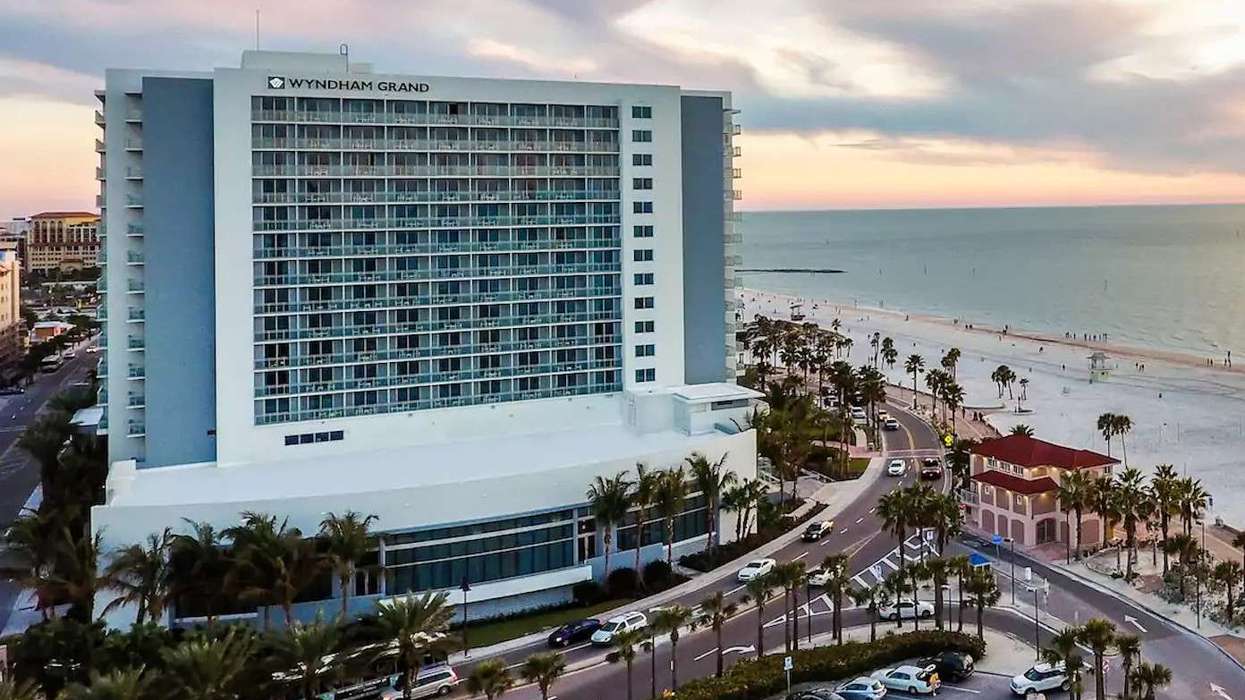

- Travelers compare short-term rental options.
- 30 percent of small-hotel guests consider rentals.
- Booking.com users compare both options more often.
The report found that 30 percent of guests who booked a bed and breakfast, inn or small hotel had also considered a short-term rental for the same trip, compared with 16 percent of large-hotel guests. Among travelers who compared both options, 60 percent booked a hotel and 35 percent booked a short-term rental.
Which trips face more competition?
Competition varies by trip type and length. Thirty percent of travelers on trips that combined work and leisure compared hotels with short-term rentals. The rate was 18 percent for leisure trips and visits to family, 21 percent for special-event trips and 12 percent for business trips.
 Business trips had a 12 percent rate.Photo credit: iStock
Longer stays also led to more comparisons. The survey found 16 percent of travelers staying one night considered both options, compared with 25 percent of those staying seven to 13 nights. When couples or groups made accommodation decisions together, 51 percent compared different types of accommodation. The rate was 32 percent when one person made the decision alone.
Younger travelers were more likely to compare the two options. Among travelers under 35, 23 percent considered both a hotel and a short-term rental when booking a trip in the previous 12 months, compared with 14 percent of those over 55. In the previous two years, 41 percent of travelers had tried an accommodation type they had not used before. Among this group, 39 percent tried a whole-home short-term rental, while 32 percent tried a hotel.
How booking sites affect competition
The booking platform also affects how often travelers compare accommodation types. On Booking.com, which lists hotels and short-term rentals together, 45 percent of guests compared both options. The rate was 29 percent among those who booked directly with a property.
 Booking.com led recent bookings at 34 percent, ahead of direct bookings and Airbnb.Photo credit: iStock
Booking.com accounted for 34 percent of travelers’ most recent bookings, followed by direct bookings at 20 percent and Airbnb at 18 percent. In 2026, Airbnb also began listing independent and boutique hotels alongside short-term rentals.
Price is another factor. Eighty-two percent of guests who booked an independent property said they would consider a short-term rental at the same or a slightly lower price. The figure was 74 percent among large-hotel guests. Across all travelers surveyed, 48 percent said they would consider a short-term rental at the same price as a hotel.
What makes guests choose hotels?
The report identifies several reasons travelers choose hotels over short-term rentals. Better location ranked first, cited by 44 percent of respondents. Breakfast included followed at 38 percent, while free cancellation and a kitchen were each cited by 31 percent.
Hotel loyalty programs also affect the final choice. Members considered short-term rentals at almost the same rate as non-members, at 35 percent and 36 percent, respectively. However, 56 percent of loyalty members booked a hotel, compared with 40 percent of non-members.
Hotel and short-term rental rates also followed similar seasonal patterns in the U.S. markets of Hilton Head Island and Ocean City, rising during peak summer demand and falling in the off-season.
The report recommends that operators compare their rates with short-term rentals and maintain a presence on booking platforms where travelers can see both options.
A separate HAMA survey found that 97 percent of hotel asset managers expect RevPAR growth in 2027, mostly at modest levels.