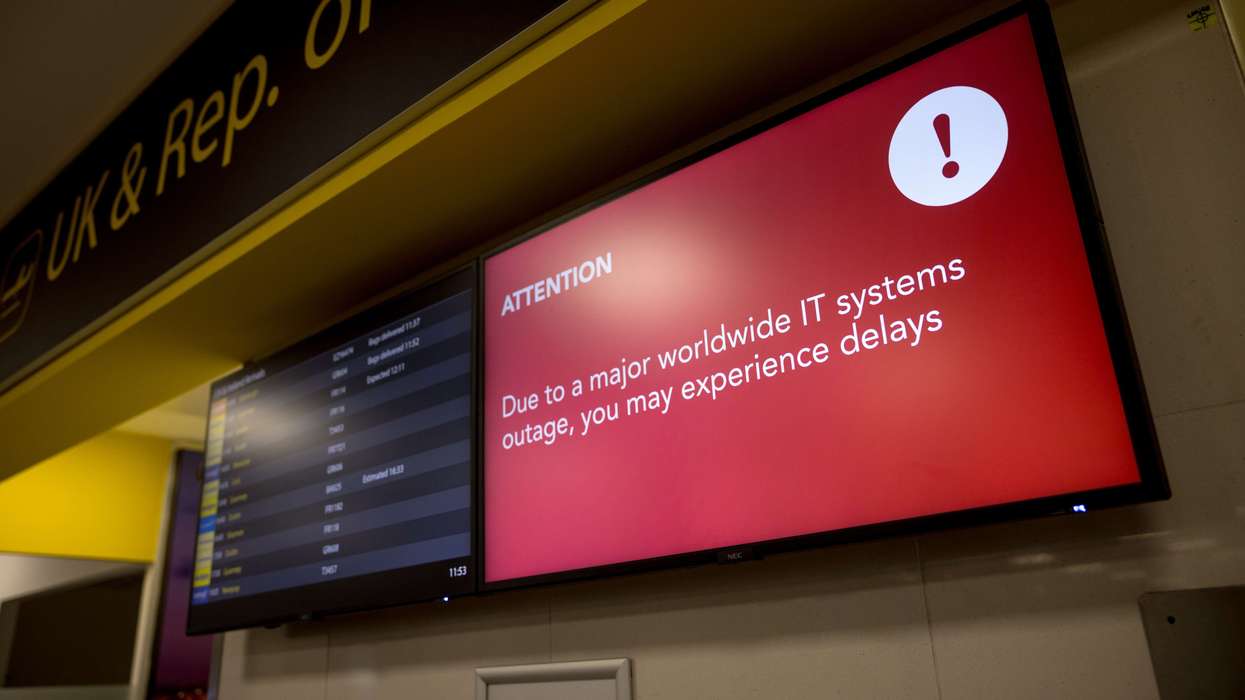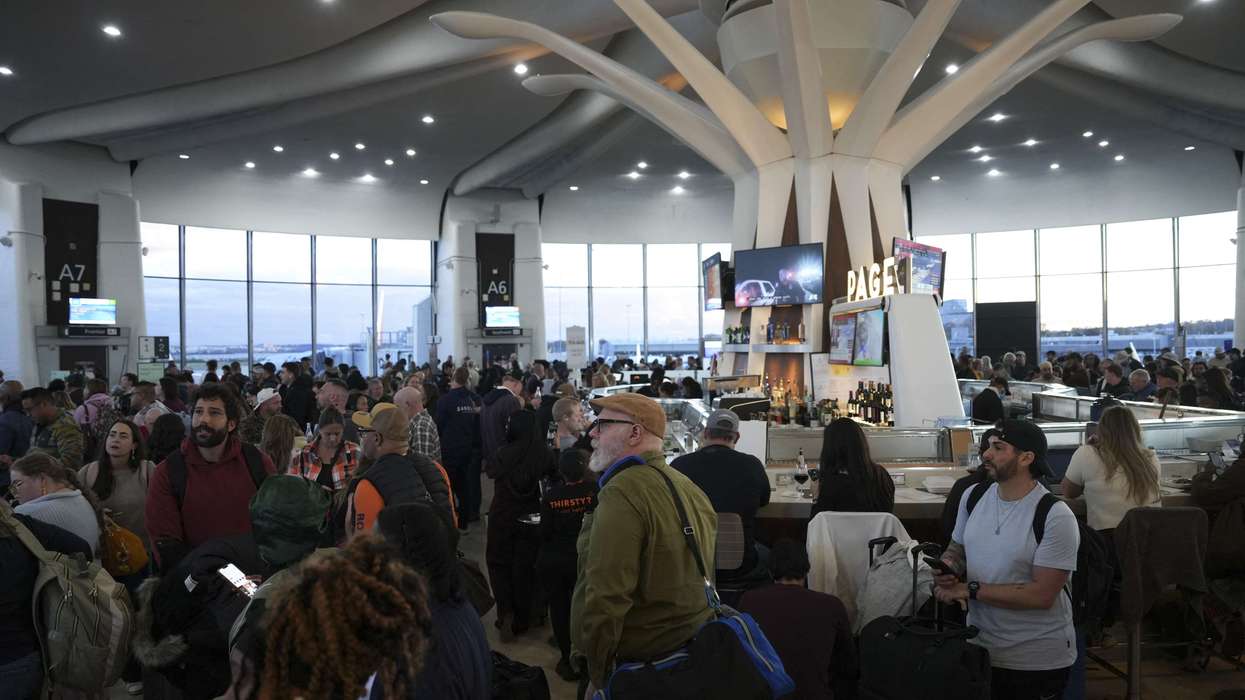

- Nationwide ground stop lasted more than four hours.
- Failure hits all 22 Air Route Traffic Control Centers.
- More than 3,200 flights canceled, 10,000 delayed.
THE FEDERAL AVIATION Administration lifted a nationwide ground stop Friday night after a telecommunications failure disrupted air traffic control across the U.S. The failure halted departures for more than four hours, stranded passengers and forced airlines to divert aircraft.
The FAA issued the order at 3:54 p.m. EST on Nov. 13, Reuters reported, citing a communications problem at all 22 Air Route Traffic Control Centers. The centers handle all flights above 18,000 feet.
The order applied to departures. Flights already in the air continued to their destinations. International flights were handled case by case, and some flights over the oceans and within Alaska and Hawaii were cleared to depart, ABC News reported.
The failure affected communications, radar data and radio frequencies controllers use to direct aircraft. Some facilities declared an “ATC Zero” condition, meaning they could not provide air traffic services.
The FAA lifted the order at about 8:15 p.m. EST after testing its systems to confirm they were stable.
Thousands of flights delayed, canceled
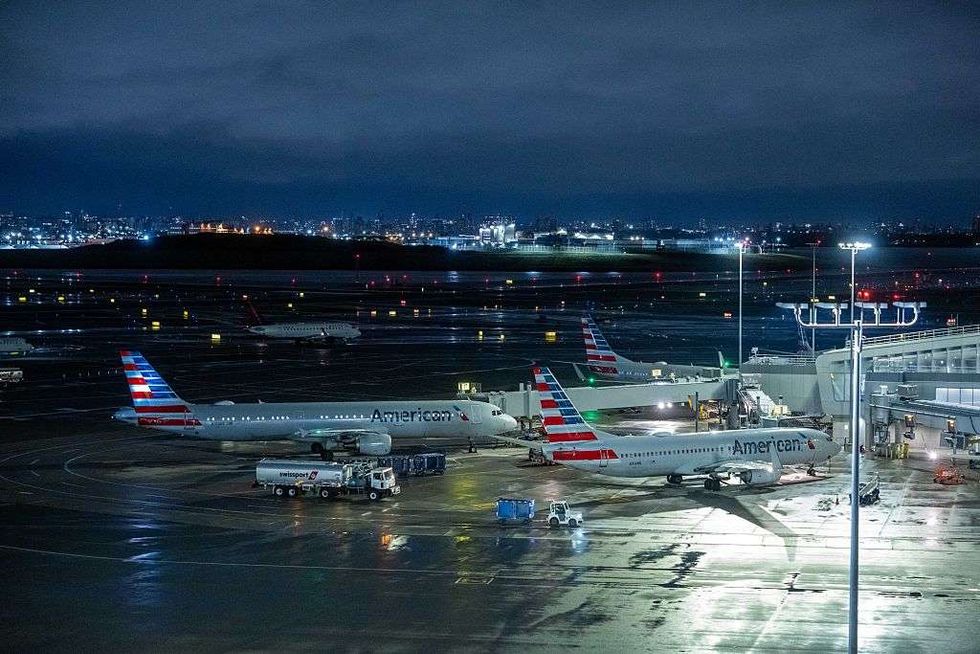 More than 10,000 U.S. flights delayed, 3,200 canceled, and 827 diverted by Friday evening.Photo by Adam Gray/Getty Images
More than 10,000 flights within, into or out of the U.S. were delayed and more than 3,200 canceled by Friday evening, according to FlightAware data cited by ABC News. At least 827 flights had been diverted by early evening, The Associated Press reported.
Passengers faced missed connections and long waits for rebooking. NBA, NHL and college teams were stranded, and cargo flights were delayed, the AP reported.
Operations had resumed by Saturday, but airlines were still repositioning aircraft and crews and working through delays.
Officials blame overloaded equipment
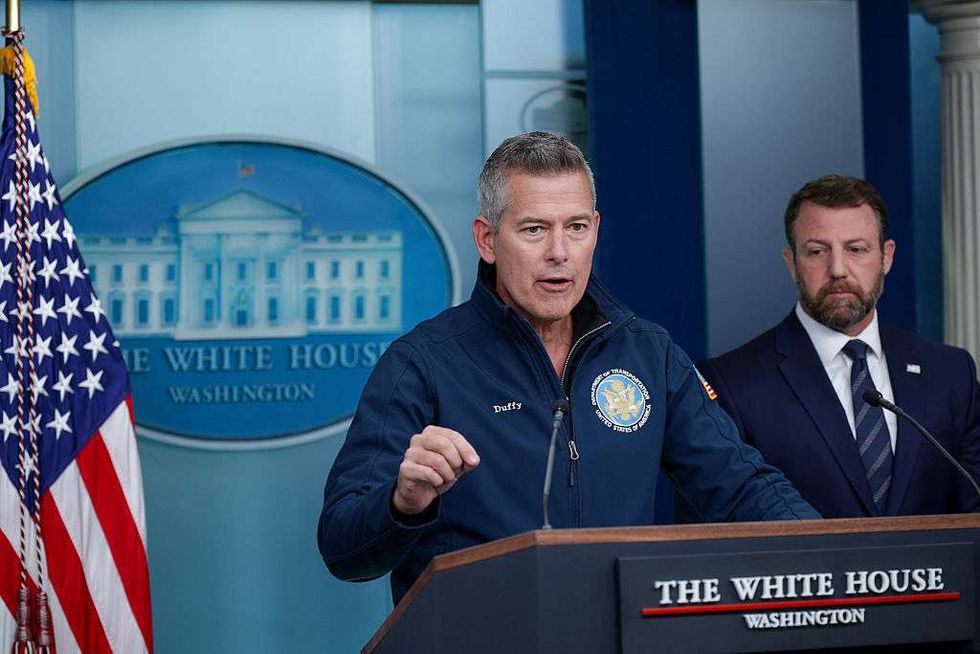 U.S. Transportation Secretary Sean Duffy and Homeland Security Secretary Markwayne Mullin address nationwide FAA ground stop during White House briefing following major communications outage.Photo by Alex Wong/Getty Images
Transportation Secretary Sean Duffy explained the ground stop at a White House briefing Friday night.
“At 3:36 p.m., we experienced instability for our radar and our communications and our centers and our TRACONs across the country,” Duffy said. “At that point we issued a ground stop, we had over 3,500 airplanes in the air. They all engaged and last time I looked we had less than 400 in the airspace as they were all coming in to safely land. And we navigated it with our well-known procedures that we have when these incidents happen. We didn't lose all telecom, we didn't lose all radar, but that instability because of abundance of caution and making sure we keep the American flyer safe, we did the ground stop.”
Duffy blamed the country’s aging air traffic control infrastructure.
“The president for the last year has been asking Congress to fully fund a full build of a brand new air traffic control system,” he said. “We have TDM telecom–so this is analog telecom. Our switches, our routers actually got overloaded with data and they. started to give us inconsistency in the data from those routers, and because of that we shut the system down. Now, I have already replaced some of those switches with President Trump and our new IP switches did not go down. It's the old hardware that went down.”
Homeland Security Secretary Markwayne Mullin said in his own statement there was no indication of a cyberattack. He said new equipment and technology being installed had overwhelmed the older system.
“We have seen zero evidence that this is a cyberattack or an SI attack,” Mullin said. “This is a national security risk because our air traffic control system is outdated and it hasn’t been a priority from Congress. This is what happens when Congress kicks the can down the road.”
Asked whether a cyberattack could be ruled out, he said, “There’s nothing completely certain right now.”
The timing drew scrutiny. Three days before the outage, the FAA had expanded its AI-supported SMART traffic management tool to all 22 centers.
Duffy said the system gives controllers recommendations but is not connected to the FAA’s core radar and automation systems. Air Space Intelligence, which built SMART, denied that its technology played any role.
The precise cause remains under investigation, including questions about the network’s backup systems and safeguards against another nationwide outage.
Congress approved $12.5 billion for air traffic control modernization in 2025. On Friday, the White House and the Transportation Department urged Congress to approve another $30.1 billion, Reuters reported.
The ground stop was the second nationwide halt of U.S. departures since the Sept. 11, 2001, attacks. The first came in January 2023, when the system that distributes notices to pilots failed.
Separately, a global Microsoft outage disrupted travel companies Thursday and Friday, hampering airline customer support and hotel email and internal communications, Asian Hospitality reported.
Mullin, however, said the outage was not related to the ground stop.