
- Deloitte: Rising costs slow U.S. summer travel demand.
- 81 percent of surveyed travelers plan hotel stays this summer.
- Higher-income travelers show interest in hotels and upgrades.
SUMMER TRAVEL DEMAND in the U.S. is slowing due to rising costs, but Americans who plan to vacation are not scaling back their trips, according to Deloitte. Travelers are budgeting more for longer stays, upgrades and international travel.
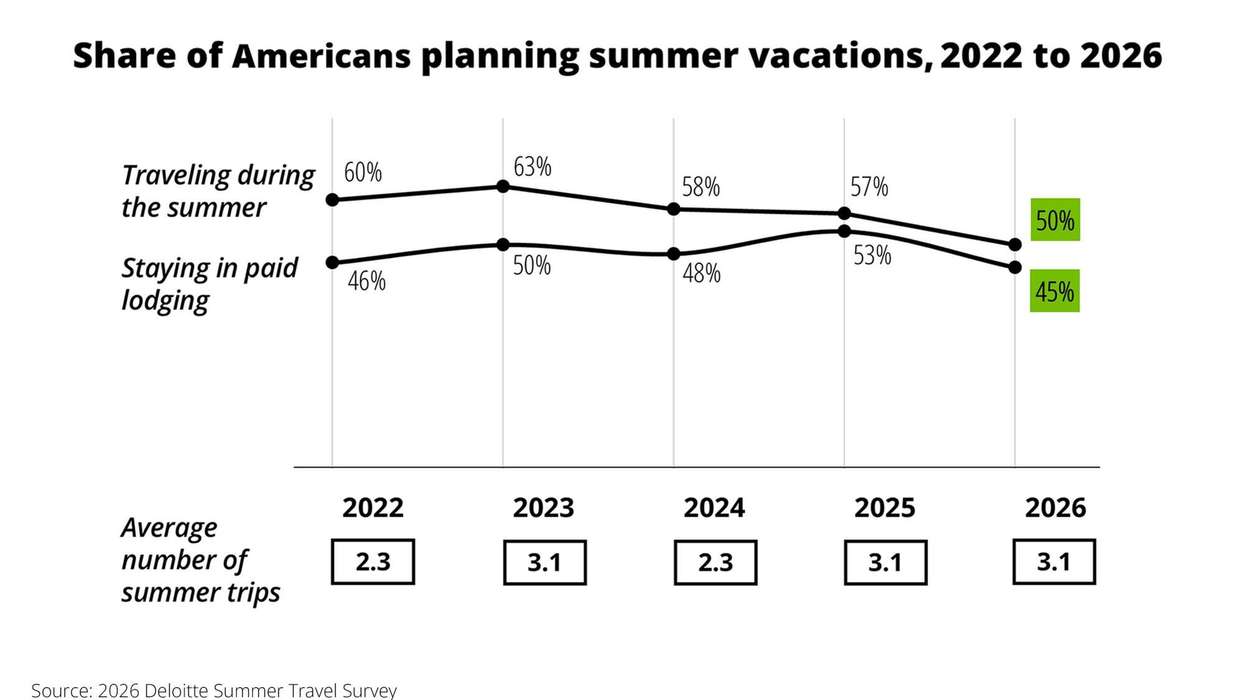
Deloitte’s “2026 Summer Travel Survey” found that 45 percent of Americans plan to take a summer vacation involving paid lodging this year, the lowest level in six years. Travelers expect to spend an average of $4,069 on their longest summer trip, up 17 percent from 2025.
“Amid pricing pressures, those who are packing their bags this summer intend to spend, indicating that many are putting a premium on experiences,” said Kate Ferrara, vice chair and U.S. transportation, hospitality and services sector leader at Deloitte. “Providers can capitalize on this opportunity by focusing on enhancing the travel experience through upgrades and partner offerings. Those who are traveling have already decided it’s worth the investment, so leaning into the emotional connection to enhance vacation’s value could be a differentiator this summer.”
The findings are based on a Deloitte survey conducted April 2 to 9 among 4,003 U.S. consumers and point to travel trends shaped by finances, consumer priorities and demographics.
Among Americans not traveling this summer, affordability was the main reason, the study found. About 35 percent said they cannot afford a trip, while 32 percent said travel costs were too high. Everyday expenses also continued to affect travel decisions, particularly among lower-income households.
Deloitte found households earning less than $100,000 a year saw the biggest drop in travel participation compared with middle- and higher-income groups.
Travelers planning vacations are maintaining trip frequency while increasing spending, the report said. Survey respondents expect to take an average of 3.1 summer trips this year, unchanged from last year, while Gen Z respondents expect to take 3.4 trips and millennials 3.3 trips.
Travel budgets are shifting toward longer trips and upgrades, including airfare and lodging. Deloitte also reported increased interest in premium airfare options and upgraded tickets year over year.
About 81 percent of surveyed travelers said they plan to stay in hotels at least once during the summer season, compared with 80 percent last year. Interest in private rentals also rose to 29 percent from 25 percent.
Among travelers planning to fly, 61 percent expect to take domestic flights, while nearly one-third plan international travel. Europe remains the top international destination. Higher-income travelers also showed greater interest in full-service hotels, destination resorts and travel upgrades.
Deloitte found travelers are placing more importance on reliability and comfort when choosing airlines and accommodations, while price has become less important.
Technology is reshaping travel planning, particularly among younger travelers. Adoption of generative AI for travel planning rose to 25 percent this year from 15 percent in 2025, with millennials leading usage. Younger travelers are also using short-form video content to plan itineraries and destinations.
“New generations are shifting the leisure travel landscape,” said Eileen Crowley, U.S. transportation, hospitality and services leader at Deloitte. “Whether it's turning to tech for itinerary planning or leaning into luxury bookings, these are trends the industry can tap into as they look to capture and build loyalty with younger travelers.”
Work and leisure travel continue to overlap. About 34 percent of travelers surveyed said they plan to work during their longest summer trip, up from 23 percent last year, with millennials the most likely to combine travel and remote work.
The findings suggest that while rising costs are keeping some Americans home this summer, travelers who do take trips are spending more.
The broader demand picture remains strong during holiday travel periods. A recent study by AAA Travel found that approximately 45 million Americans will travel at least 50 miles from home for Memorial Day between May 21 and 25, setting a record for the holiday travel period. As in previous years, most travelers — 39.1 million — are expected to drive, while 3.66 million are projected to fly.