
- The Highland: Extended-stay hotels recovered in Q1.
- Demand rose, supply growth eased and occupancy increased.
- Demand and occupancy gains lifted financial performance.
EXTENDED-STAY HOTELS RECOVERED in the first quarter after three quarterly RevPAR declines, according to The Highland Group. Demand rose, supply growth eased and occupancy increased for the first time in two years in a first quarter.
Highland’s “U.S. Extended-Stay Hotels: First Quarter 2026” report found extended-stay hotel supply increased 4.6 percent from the same quarter in 2025. The increase was the largest first quarter supply gain since 2019, excluding reopening-related disruptions in 2021, though growth slowed from 5 percent in the second half of 2025.
“The five-month trend of accelerating demand and moderating supply increases is a good indicator of near-term RevPAR growth for extended-stay hotels,” said Mark Skinner, The Highland’s partner.
Fewer extended-stay rooms under construction and high interest rates could further slow supply growth in coming quarters.
Demand drives recovery
Total extended-stay hotel demand rose 5.4 percent, the largest quarterly increase since the first quarter of 2022, Highland said. All three extended-stay hotel segments recorded record demand during the quarter. The increase outpaced broader hotel industry demand trends.
Demand growth lifted occupancy. Extended-stay hotel occupancy rose year over year for the first time since 2023 and averaged 13.5 percentage points above comparable hotel classes during the quarter.
Extended-stay hotels have long maintained an occupancy premium over the broader hotel market, averaging about 13 percentage points. The premium widened during downturns, peaking at 16.8 percentage points in early 2021.
Revenue trends show strength
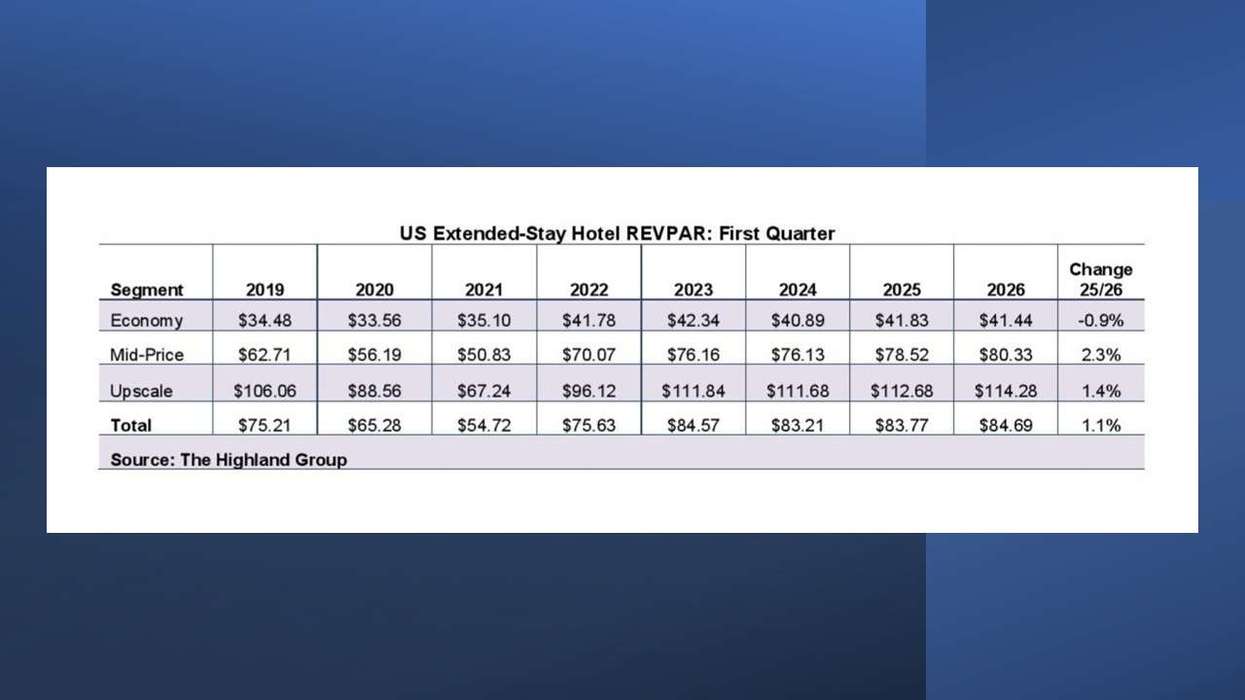
Demand and occupancy gains lifted financial performance. Extended-stay room revenues rose 5.8 percent in the first quarter of 2026, the largest quarterly increase since the fourth quarter of 2024.
Total extended-stay hotel average daily rate rose 0.4 percent. Economy extended-stay properties posted lower rates than a year earlier, though pricing pressure eased during the quarter and trends pointed to improvement in April.
RevPAR growth returned. Mid-price extended-stay hotels led gains and outperformed comparable hotel segments. Economy extended-stay hotels recorded a 0.9 percent decline in RevPAR but outperformed broader economy hotels.
Mid-price extended-stay hotels strengthened their position over time. In 2019, mid-price extended-stay RevPAR was slightly above the broader mid-price hotel segment. Seven years later, the segment improved its position despite supply growth.
Upscale extended-stay hotels lagged broader upscale hotel performance as exposure to urban markets slowed recovery after the pandemic.
Extended-stay hotels entered 2026 with rising demand, slower supply growth, higher occupancy and pricing gains. If those trends continue, occupancy, average daily rate and RevPAR could increase in coming quarters.
Highland reported extended-stay hotels built on first quarter momentum with strong March performance. Supply growth slowed as demand posted its largest monthly gain in four years, lifting occupancy for a second straight month.