

- Booking.com: Travelers want control.
- Clear feature prices improve booking intentions.
- Test profits before expanding flexible pricing.
TRAVELERS WANT MORE control over what they pay for and how a trip feels, according to Booking.com’s 2027 Travel Predictions. For hotel owners, the shift raises a business question: can flexible pricing improve profits, or will it simply reduce package revenue?
Booking.com’s online survey of 28,230 adults who plan to travel, across 32 countries and territories, in July and August. The findings show that 81 percent would choose a destination mainly by how they want to feel, while 66 percent want packages that let them remove services they do not expect to use.
“Travelers are challenging the conventions of how, why and with whom we travel, and technology is giving them more freedom to do it with confidence,” said Paul Hennessy, Booking.com’s chief marketing officer.
Choice changes the equation
 Changing health and dietary habits reshape travel choices. Photo credit: iStock
Booking.com links demand for flexible packages to changing health and lifestyle habits, including medications that reshape appetites, sobriety culture and macro-conscious eating. In the survey, 67 percent of respondents said a health, body or lifestyle change has influenced their choice of destination or activities in recent years. Separately, 58 percent said their diet would influence where they stay or travel.
For hotels, the financial effect starts with what a package includes. Allowing guests to remove an item lowers the price they pay, but it can also reduce the cost of serving them. The result depends on how much revenue the hotel loses, which costs it avoids and whether guests buy other services instead.
The findings show that many travelers want the option. Whether offering it makes financial sense is left to operators.
Clear prices matter
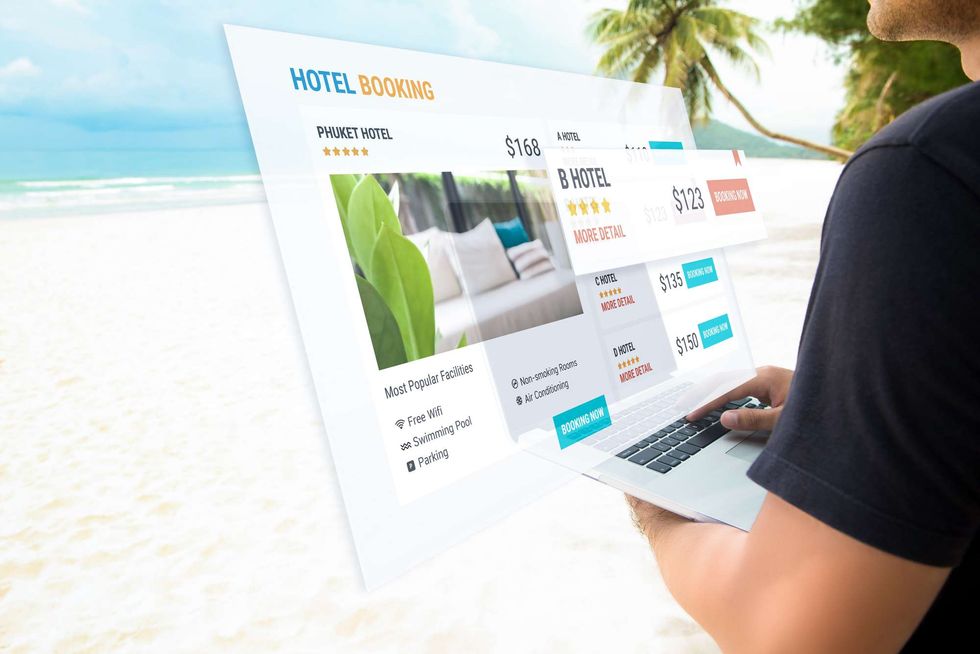 Transparent pricing builds trust, but profitability depends on delivery costs.Photo credit: iStock
A February 2026 study in the International Journal of Hospitality Management examined attribute-based pricing, which lets guests select individual room features instead of choosing only from preset packages.
In an experiment, researchers Basak Denizci Guillet, Yongli Zhang, Melih Madanoglu and Lisa Gao tested three pricing formats: traditional room pricing, customizable pricing without individual feature prices and customizable pricing with those prices displayed. They found that showing feature prices reduced perceived complexity compared with traditional pricing. It also improved fairness perceptions and booking intentions compared with both other formats.
The study supports transparent pricing, but it measured customer responses to room-pricing formats, not the financial results of hotels adopting flexible packages. Guests may be more willing to book when they understand the price of each option, but the hotel still needs to determine whether the resulting revenue covers the cost of providing it.
Test before expanding
 Review package services to balance guest value and operating costsPhoto credit: iStock
For hotel owners, the findings point to a practical first step: review what each package includes, how often guests use each service and what those services cost to deliver. Low-use items may be candidates for optional pricing, but removing them could weaken the perceived value of a stay.
The Booking.com survey measures stated preferences, not actual purchases. Operators should therefore test a flexible offer against an existing package at one property or within a specific guest segment. Booking conversion, total revenue per stay, contribution margin and guest satisfaction can show whether the change improves performance.
Investors should seek evidence from these tests before assuming flexible pricing will improve returns. Developers considering new amenities should also assess whether expected demand can cover construction and operating costs.
Profit remains the test
 More choice may attract guests, but profits depend on executionPhoto credit: iStock
Booking.com’s research shows that many travelers want more choice, while the academic study suggests that transparent feature pricing can improve customer responses. Neither proves that every hotel will earn more by unbundling its services.
For owners and operators, the priority is to identify which options guests value and whether those choices improve financial performance. The opportunity lies not in selling more add-ons, but in earning a stronger return from the services guests are willing to buy.
Separately, Access Point Financial found that debt costs, lender selectivity and margin pressure, not just construction costs, are determining which U.S. hotel projects proceed. Developers are turning to renovations, brand conversions and acquisitions as financing hurdles stall new builds.