
- Occupancy up 1.8 percent, third consecutive quarterly gain.
- Room revenue rose 10.3 percent to $5.85 billion.
- RevPAR rose 5.5 percent, above 5.4 percent comparable-hotel gain.
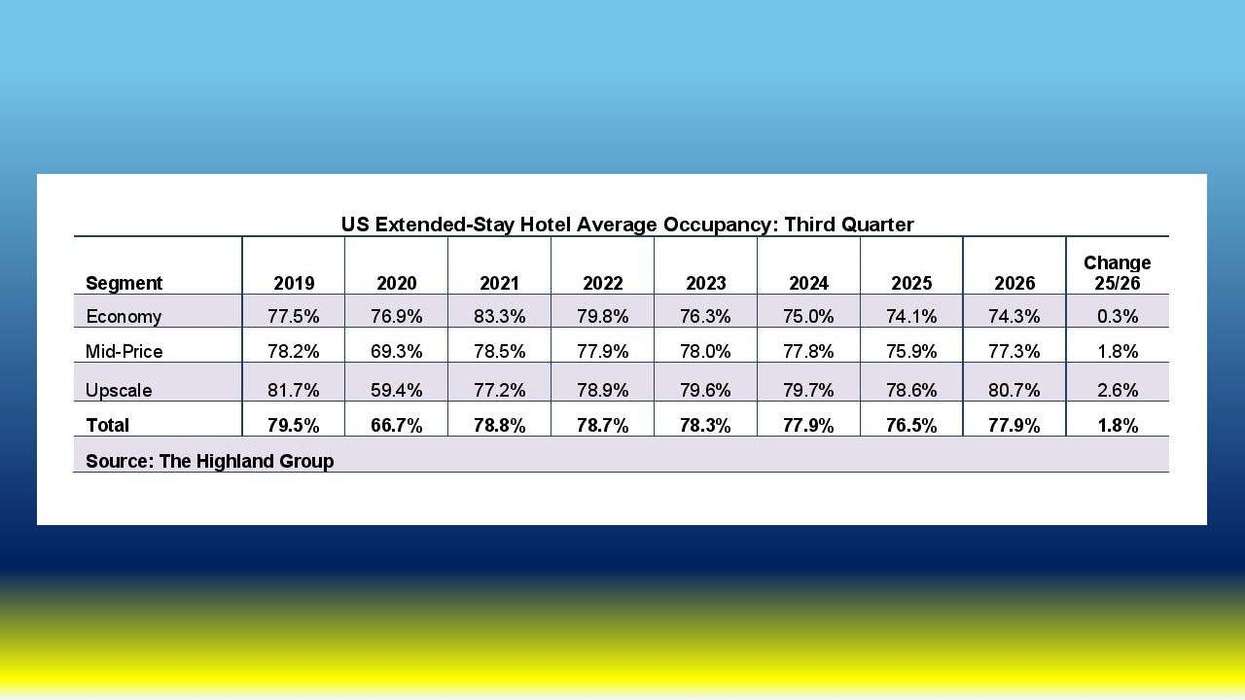
EXTENDED-STAY HOTELS in the U.S. posted their largest quarterly occupancy gain in 12 years in the third quarter, excluding the COVID-19 recovery period, according to The Highland Group. Occupancy rose 1.8 percent to 77.9 percent from 76.5 percent, the third consecutive quarterly increase, as demand growth outpaced supply.
The group’s “US Extended-Stay Hotels: Third Quarter 2026” report found room revenue, ADR and RevPAR posted their largest quarterly increases in more than three years. Room revenue rose 10.3 percent to $5.85 billion, ADR 3.6 percent to $124.95 and RevPAR 5.5 percent to $97.35.
“Extended-stay hotel average occupancy is expected to increase at least through the end of 2026 and the near-term outlook for more gains in [RevPAR] is very good,” said Mark Skinner, partner at Highland Group.
Demand and revenue growth
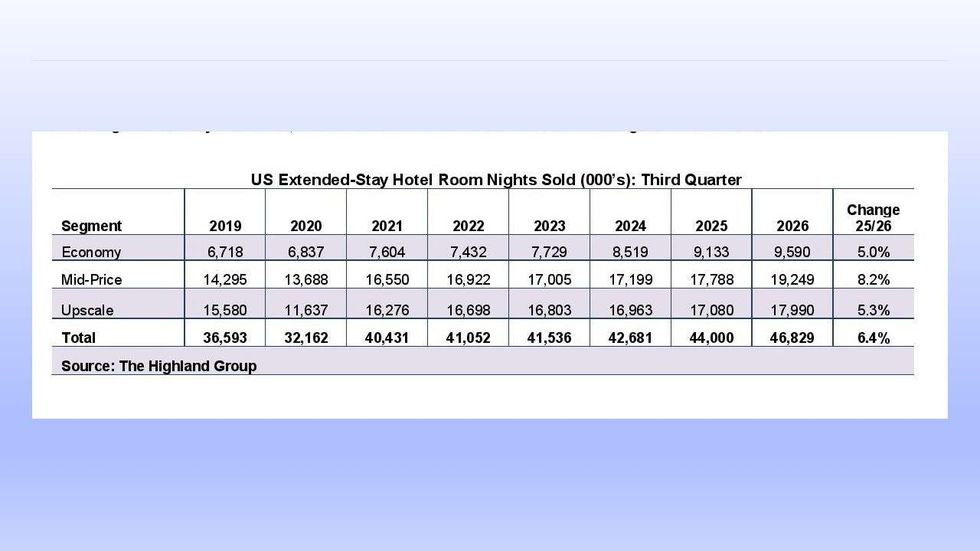 Extended-stay demand rose 6.4 percent to 46.8 million room nights in the third quarter.Data source: The Highland Group
Demand rose 6.4 percent to 46.8 million room nights, the largest increase since the fourth quarter of 2019, excluding the 2020 recovery. Demand growth has exceeded the 5 percent long-term annual average since February, Highland Group found.
Room revenue growth has accelerated for five consecutive months. Mid-price extended-stay hotels led with a 12.3 percent increase to $2.30 billion, followed by upscale at 9.1 percent to $2.96 billion and economy at 8.4 percent to $584.5 million.
Mid-price demand rose 8.2 percent, upscale 5.3 percent and economy 5 percent. The report described mid-price extended-stay hotels as one of the hotel industry’s strongest-performing segments.
Occupancy, rates and RevPAR
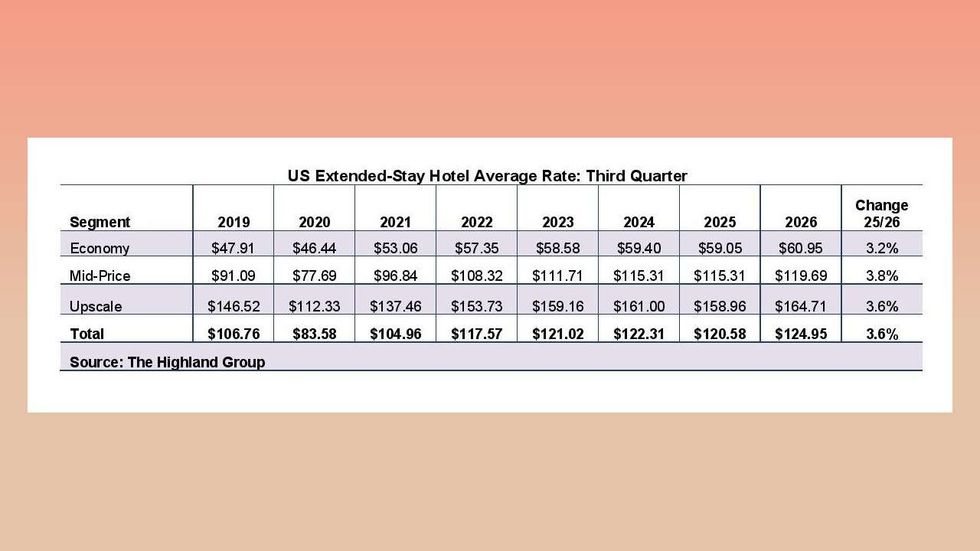 Extended-stay ADR rose 3.6 percent to $124.95, the largest gain in more than three years.Data source: The Highland Group
Occupancy was 11.4 percentage points above the average for comparable hotel classes, which exclude luxury and upper-upscale hotels because they have negligible extended-stay supply. Upscale occupancy rose 2.6 percent to 80.7 percent, mid-price 1.8 percent to 77.3 percent and economy 0.3 percent to 74.3 percent.
Extended-stay hotels favored ADR growth over occupancy, while comparable hotels posted larger occupancy gains and a smaller ADR increase, the report said. Extended-stay ADR rose 3.6 percent, compared with 2.6 percent for comparable hotels, according to STR/CoStar. Mid-price ADR rose 3.8 percent to $119.69, upscale 3.6 percent to $164.71 and economy 3.2 percent to $60.95.
The RevPAR gain was the largest since the first quarter of 2023 and above the 5.4 percent increase for comparable hotels. Upscale RevPAR rose 6.3 percent to $132.89, mid-price 5.7 percent to $92.48 and economy 3.5 percent to $45.31.
The occupancy premium over comparable hotels was 10 percentage points in 2019, which the report described as typical of the past 25 years. It peaked at 12 points in 2024 before narrowing to 11.4 points. The ADR ratio against comparable hotels gained almost one percentage point over the past year, while the RevPAR ratio has held near 112 percent for three years.
Mid-price extended-stay RevPAR rose to 101 percent of RevPAR for all mid-price hotels, from 90 percent in 2019, despite higher supply growth. The ratio declined fractionally over the past year. Economy extended-stay hotels gained almost one percentage point in RevPAR relative to all economy hotels over 12 months. Upscale extended-stay RevPAR relative to all upscale hotels fell about 5 percent over seven years, largely because of the segment’s concentration in urban submarkets, but improved slightly year over year.
Supply growth remains below average
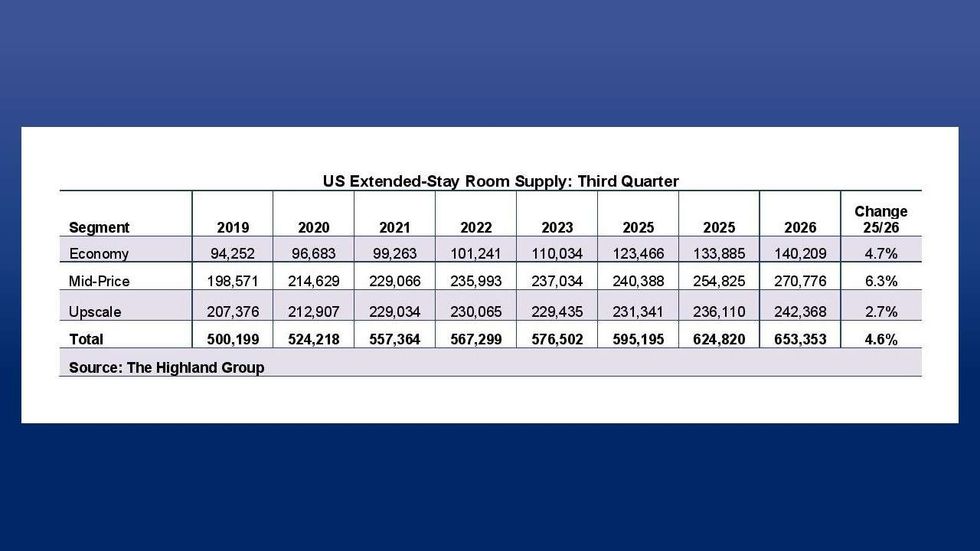 Extended-stay supply growth is expected to remain below the long-term average in 2026.Data source: The Highland Group
The U.S. had 653,353 extended-stay rooms open at the end of the third quarter. The net gain of 28,533 rooms was 4 percent lower than the previous year’s net gain. Room nights available rose 4.6 percent, down from 5 percent in the third quarter of 2025.
Mid-price supply rose 6.3 percent to 270,776 rooms, economy 4.7 percent to 140,209 and upscale 2.7 percent to 242,368. Supply growth rose above 5 percent in the second half of 2025 but has stayed below that level every month this year.
With fewer rooms under construction, Highland Group expects full-year 2026 supply growth to remain below the long-term average. The report said high interest rates and construction costs make a significant acceleration in supply growth very unlikely.
Highland Group defines extended-stay hotels as properties with a fully equipped kitchenette in each guest room that accept reservations and do not require a lease. Its estimates cover all hotels in each brand or company and are not based on same-store data.
In September, extended-stay demand rose 7.8 percent and room revenue 12.9 percent to $1.897 billion, according to the group’s September report. Occupancy reached 77 percent, 11.1 percentage points above comparable hotel classes.