
- AHLA says AI should support hotel workers.
- Study: 15 percent say AI improved frontline work.
- Hotel turnover fell to 5.35 percent in June.
HOTELS SHOULD USE artificial intelligence to support employees, not replace them, according to an American Hotel & Lodging Association report. It argued hotel leaders should focus less on what jobs AI can perform and more on what tasks it can remove from employees’ workloads so they can do their jobs better.
AHLA released “AI and the Hotel Workforce: How Technology Is Supporting People and Improving Hotel Operations” on Nov. 4 at The Hospitality Show. It produced the report with hospitality software company Actabl that supplied much of its labor data.
“Hospitality has always been a people business and will always be a people business,” said Rosanna Maietta, AHLA president and CEO. “AI doesn’t replace what makes our industry special. It gives our people more room to deliver it.”
Managers gain, front line lags
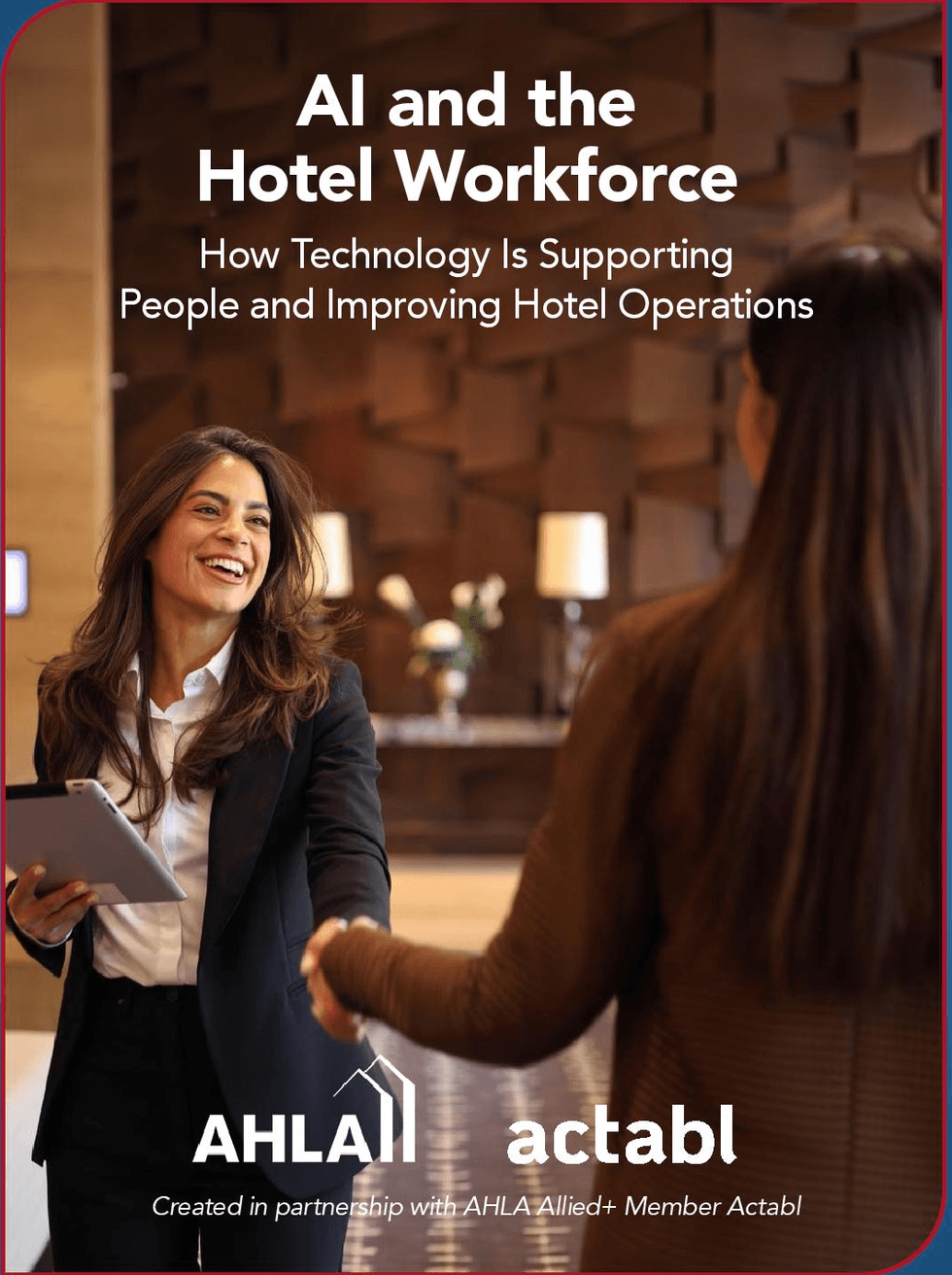 AI speeds up routine work, but frontline benefits remain limitedPhoto credit: American Hotel & Lodging Association
The report cited a separate 2026 benchmark study, “The State of AI in the Hotel Industry,” in which 90 percent of respondents said AI was helping routine work get done faster. The report, however, does not say who conducted that study or how many people took part.
In the same study, 38 percent of respondents named operational efficiency as the area where AI provides the most value, compared with 28 percent who chose revenue growth. While 84 percent said AI had improved their own work, 15 percent said it had improved frontline work.
The report said that gap may be one of the industry’s biggest opportunities.
For frontline staff, the report pointed to AI tools that find approved procedures, support onboarding and training, flag exceptions and coordinate work across departments. For managers, it said AI can surface data problems such as missed punches, reduce last-minute overtime and free time to coach employees.
In the first half of 2026, hours per occupied room fell 3.1 percent at full-service hotels and 3.5 percent at select-service hotels using Actabl’s Hotel Effectiveness tool, even as occupancy rose. The report cited HotelData’s H1 2026 labor costs report as pointing to tighter alignment between staffing and workload. It does not attribute the decline to AI.
HotelData’s analysis of Actabl data put hotel turnover at 5.35 percent in June 2026, down from 5.84 percent in June 2025 and 6.07 percent in June 2024. Average turnover fell from 5.73 percent in 2024 to 5.32 percent in 2025 and 5.15 percent in the first half of 2026. The report also cited a 5.7 percent June turnover rate for accommodation and food services from the Bureau of Labor Statistics.
The report said turnover has declined alongside advances in technology, including AI, but that technology “cannot solve retention on its own.” It argued that earlier, more predictable schedules help employees plan around childcare, school and family commitments. Managers can also shift spare hours to training, deep cleaning, preventive maintenance or guest service.
Adoption versus results
 Hotels prioritize upgrading existing systems and simplifying vendors over adding platforms.Photo credit: iStock
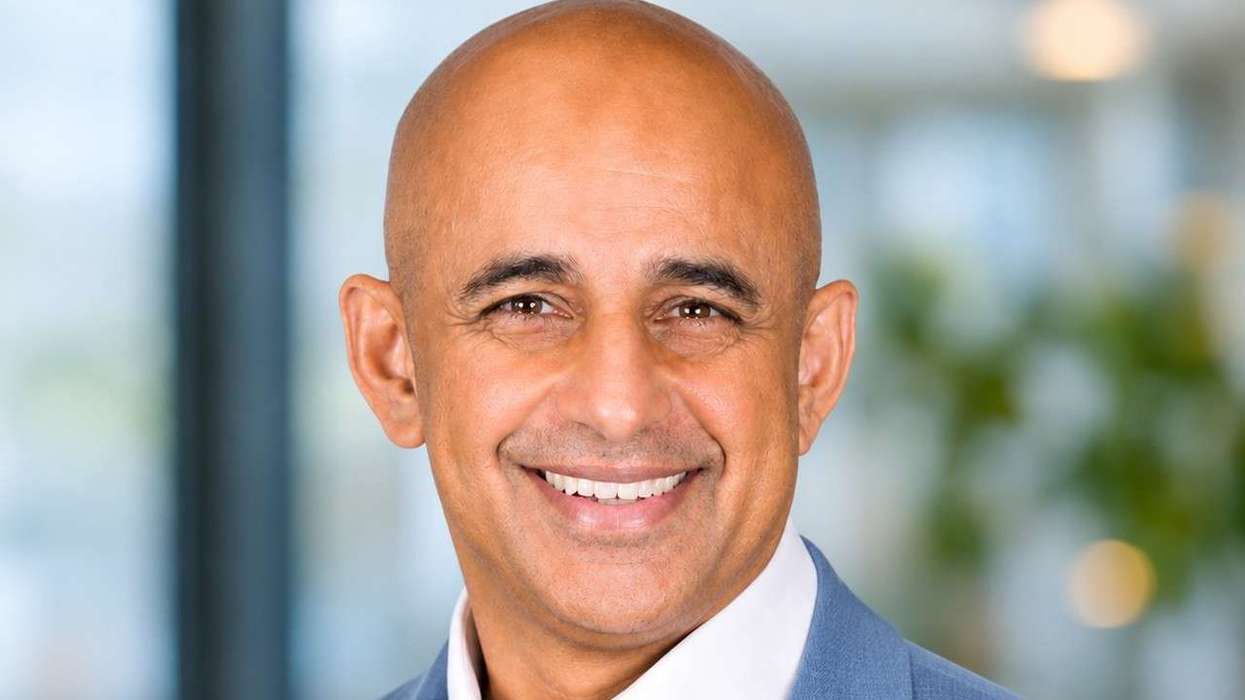
The report’s case study featured Cote Hospitality, where CEO Agnelo Fernandes uses AI to support two internal programs. G.U.I.D.E. pairs rising leaders with mentors across disciplines and properties, and G.R.A.C.E. covers service standards, onboarding and training. Cote uses AI to develop department standards, analyze employee feedback and find where service expectations and employee experience may be misaligned.
Steven Moore, Actabl CEO, said managers make better decisions when they have better information.
“When they spend less time chasing updates, they spend more time supporting one another,” he said.
A September report from the NYU School of Professional Studies Jonathan M. Tisch Center of Hospitality, travel technology company RateGain and HEDNA pointed to the same gap between adopting AI and getting results from it. “The State of Distribution 2026,” based on more than 270 hotel brands and 58,000 properties in 53 countries, found that more than half of hotels use or are procuring generative AI. Fewer than one in 10 reported cutting manual work by more than 30 percent.
That report, which covers sales, revenue and distribution teams, found that more than 80 percent of hotel commercial teams spend one to two days a week on manual reporting. It said disconnected systems, fragmented data and vendor fragmentation continue to hold teams back. Hotels are directing technology budgets toward improving existing systems and reducing vendor complexity, not adding platforms.