
- Navan: Business travel rose 13.5 percent, beating leisure in H1.
- Travel spending rose 21.5 percent; volume increased 8.8 percent.
- Hotel bookings rose 11.1 percent; international bookings up 9.8 percent.
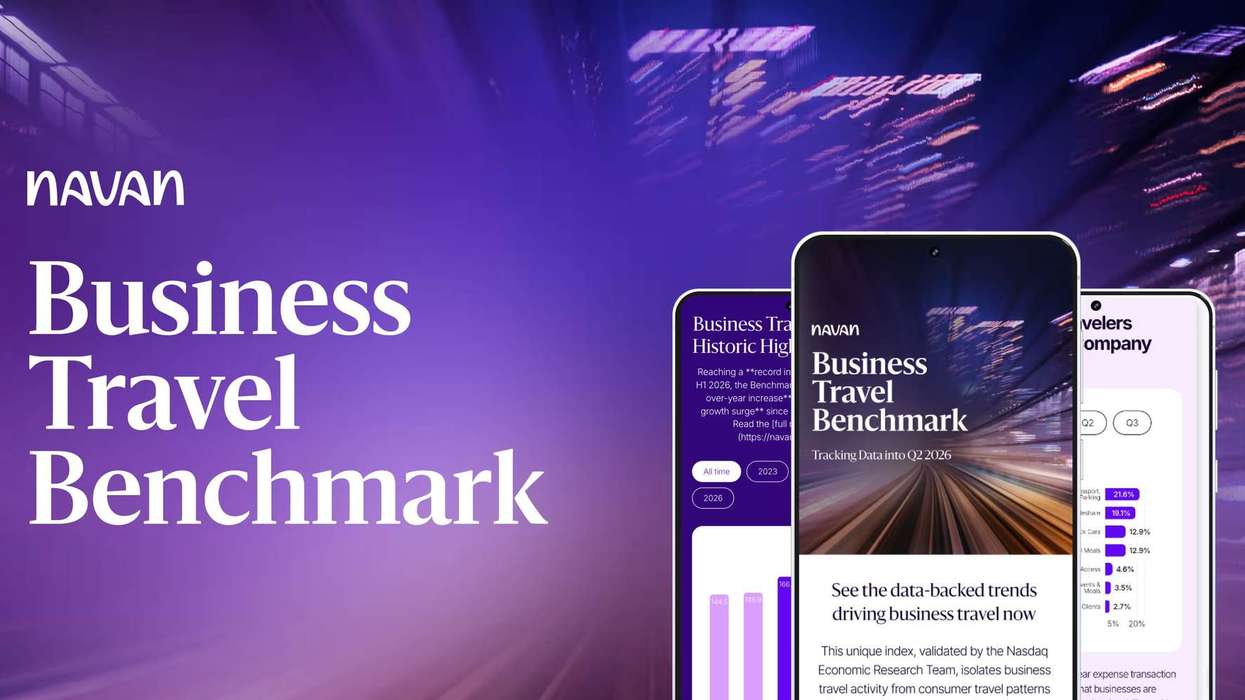
BUSINESS TRAVEL OUTPACED leisure travel in the first half of 2026, according to the Navan Business Travel Benchmark. Corporate travel volume rose 13.5 percent year over year versus 0.5 percent growth in leisure travel.
The TSA Passenger Index stood at 121.1, creating a record 68-point gap between the benchmark and the index, according to Navan, a corporate travel and expense management company. Since its launch in the first half of 2023, the Navan BTB increased 63.6 percent, compared with 7.2 percent for the TSA Passenger Index.
The overall benchmark reached a record 189.1 in the first half of the year.
“Travel is highly seasonal but the divergence between business and leisure in the first half of this year was more pronounced than we’ve seen,” said Aurélien Nolf, Navan’s chief financial officer. “Even as broader travel plateaued, businesses kept investing in face-to-face interactions because of its essential role in driving growth, serving customers and building teams. In line with our expectations, the BTB grew by 13.5 percent year-over-year as corporate travel remained strong and resilient.”
Meanwhile, companies increased travel despite rising costs, the study showed. Domestic travel spending rose 21.5 percent year over year as travel volume increased 8.8 percent. Hotel bookings increased 11.1 percent and international hotel bookings rose 9.8 percent.
Airfares also increased year over year, with domestic average ticket prices up 14.4 percent and international fares up 9.1 percent, the report found. Premium cabin bookings also increased, rising 17 percent on domestic routes and 19.3 percent on international routes.
Professional services led business travel growth with a 44.6 percent increase year over year, followed by government and public sector at 28.5 percent, transportation and logistics at 27.8 percent, energy and utilities at 26.2 percent and non-profit organizations at 22.9 percent, Navan said.
Ground transportation spending rose, with taxi and rideshare up 23.7 percent year over year and public transport, tolls and parking up 19.8 percent. Internet access expenses fell 29.4 percent as complimentary inflight Wi-Fi became available.
Phil Mackintosh, Nasdaq chief economist, said the partnership with Navan provides a data-backed view of travel as an economic indicator.
“The latest benchmark shows that companies are continuing to invest in reaching new markets to drive growth and are absorbing higher costs as a sign of confidence that business will keep moving,” he said.
Separately, Hilton Worldwide Holdings and Navan are creating a direct connection between hotels and travel management companies to improve corporate hotel bookings by combining Hilton’s distribution framework with Navan’s travel technology and booking platform.