
- Amadeus: Most U.S. travelers use AI for trip planning.
- Most travelers want digital assistants for booking.
- Travelers do not expect AI as a paid service.
NEARLY THREE-QUARTERS OF U.S. travelers, or 74 percent, use artificial intelligence to plan trips, according to a new Amadeus report. AI use is expanding across travel, but trust declines when it moves from making suggestions to taking action.
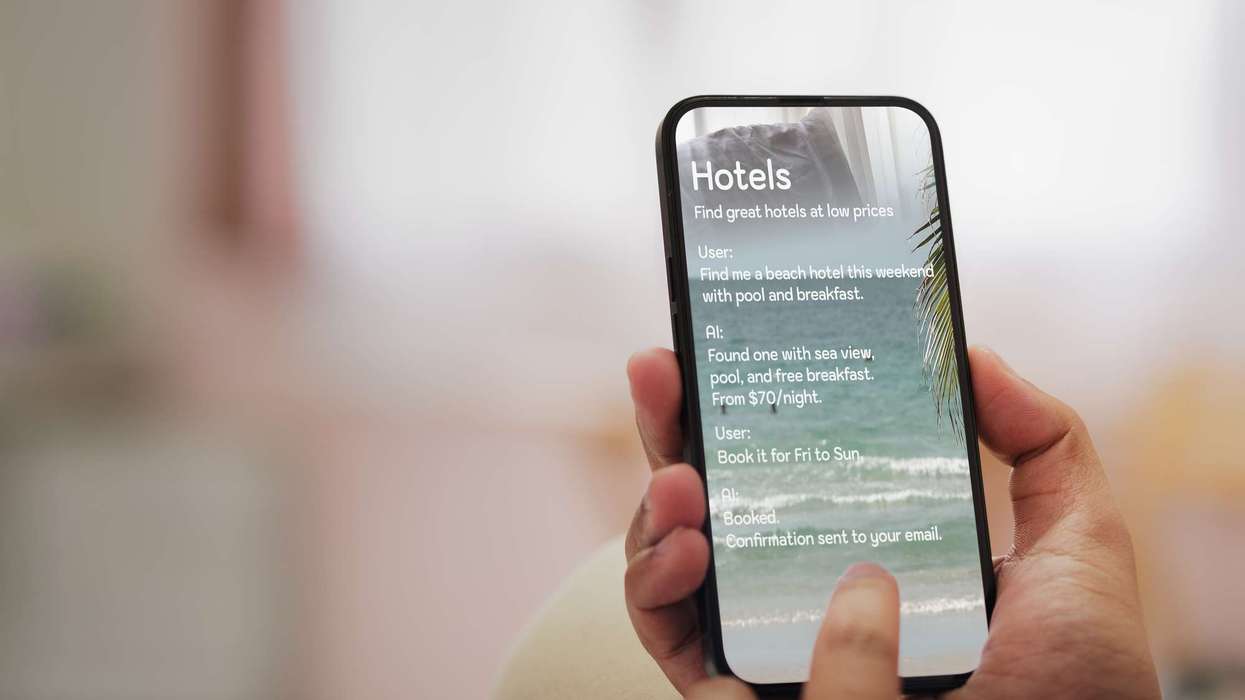
The Amadeus report, Tailored Horizons, found that 65 percent of travelers are interested in booking and paying through an AI assistant. However, only 20 percent would allow AI to spend within a set budget without further approval.
“Travelers are increasingly turning to AI for inspiration, personalization, and real-time support. Trust remains essential to that journey,” said Rajiv Rajian, Amadeus executive vice president and chief commercial officer for the Americas. “AI can help simplify choices and make travel planning more relevant, but travelers still want confidence, reassurance and ultimately the final say when it comes to making important travel decisions.”
Around 85 percent of travelers said AI tools save time and provide personalized recommendations. AI is used to find hotels, routes, and ground transportation, while 53 percent use it for inspiration and 49 percent for real-time information during trips.
The largest group, 43 percent, would allow AI to spend only under certain conditions. Around 29 percent would not allow it.
Personalization drives AI adoption, the study said. Travelers ranked local guidance after arrival as the most useful capability, at 55 percent, followed by budget-aware suggestions, at 52 percent, and real-time rebooking when plans change, at 49 percent.
Personalization and data concerns
AI has generated unexpected travel options for many users. Around 43 percent said they had received such recommendations more than once, while 26 percent said it had happened at least once.
However, 64 percent said AI recommended familiar destinations or options instead of expanding their choices, indicating room for improvement in personalization. Travelers do not expect AI to become a paid service. Half said travel companies should offer AI assistance at no extra cost, while only 4 percent said it would justify a premium price.
Trust also depends on transparency, control and data use, Amadeus said. Travelers were most willing to share information to find better prices or deals, cited by 55 percent; save time when searching or booking, 51 percent; and receive better recommendations, 46 percent.
Travelers were most willing to share travel preferences, at 63 percent, followed by budget preferences, at 58 percent, and booking history, at 48 percent. Willingness dropped for payment details, at 21 percent, and identity information, at 19 percent.
Travelers still seek human support
Despite growing AI use, travelers continue to verify its recommendations, the study said. Nearly nine in 10 cross-check AI suggestions before booking, with 42 percent always visiting other travel websites and 47 percent doing so sometimes.
Only 11 percent rely solely on AI recommendations. When problems arise, 37 percent prefer phone support and 25 percent prefer in-person assistance, compared with 7 percent who prefer AI bots or conversational assistants. Only 17 percent would trust AI alone to plan a trip, while 51 percent prefer a combination of AI and human expertise.
Jay Richmond, Amadeus vice president of solutions consulting, said AI will shape travel personalization by recognizing traveler preferences and context, anticipating needs, and supporting better decisions while keeping travelers in control.
In a separate Amadeus report, generating qualified leads and standing out in a competitive market were identified as the top challenges facing hotel and venue sales teams worldwide in 2026. As planners consider more options, response speed is playing a larger role in purchasing decisions.