
- AIHG will tie its fees to hotel performance.
- AI adoption does not automatically lead to productivity.
- Owners must assess how much risk to share.
FORMER REMINGTON HOSPITALITY CEO Sloan Dean launched AI Hospitality Group, an AI-focused hotel management company. The bigger story is its decision to tie more than 80 percent of its management fee to hotel profit performance.
That shifts the focus from which technology an operator uses to how much of the financial outcome it is willing to share with the owner. AIHG said it will manage hotels under management agreements, take responsibility for the P&L and use AI to run operations rather than sell owners another software platform.
“Hotel owners don't have a tools problem. They have an operating model problem,” Dean said at the launch.
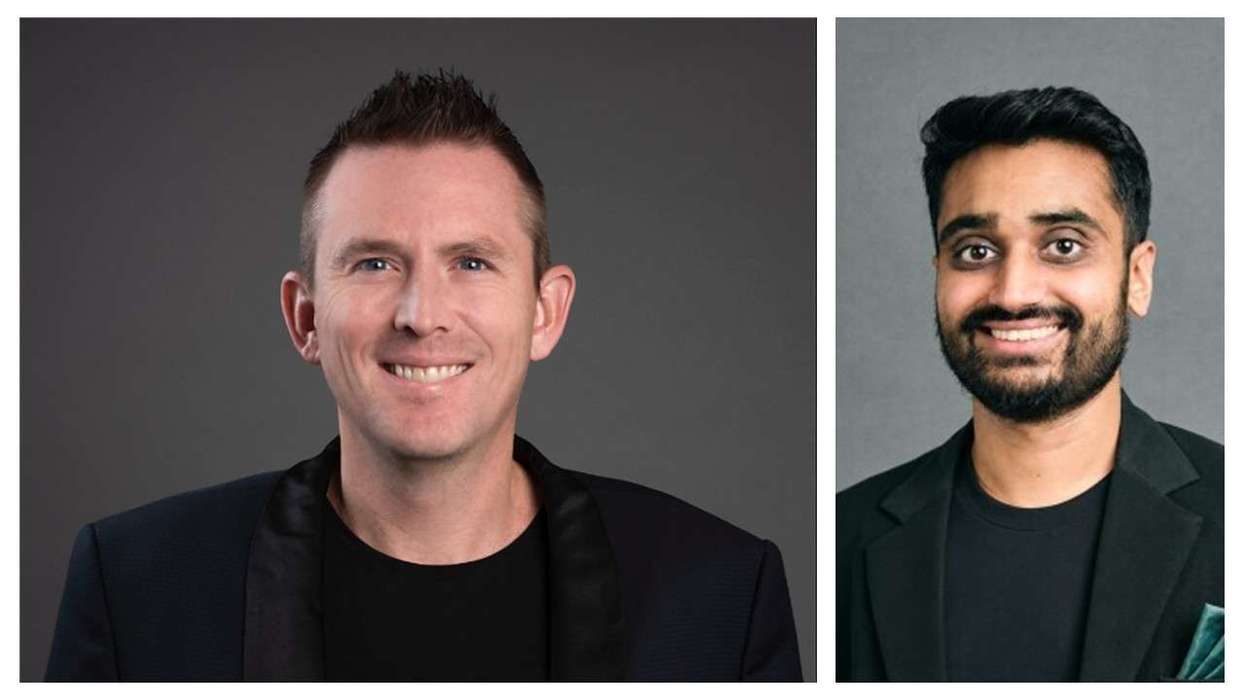
Dean is joined by Co-Founder and CTO Kishan Dahya, a third-generation hotelier, along with COO Eve Moore and founding partner and head of data and analytics Zach Cunningham.
AIHG said it has more than 60 AI agents connected to more than 20 hotel systems, covering functions such as accounting, recruiting, procurement, revenue management and commercial operations.
The company said its model is designed to keep employees focused on guest-facing work while AI handles more back-office and administrative functions. According to AIHG, more than 80 percent of the management fee will come from an incentive tied to profit performance rather than a conventional fee linked to room revenue.
NYU SPS and BCG said in a 2026 analysis that AI creates value when it is integrated into hotel operations and produces measurable business outcomes. That makes the launch relevant beyond AI itself. If an operator's compensation depends heavily on profit growth, the management relationship becomes more closely tied to the property's financial outcome.
Hotels look to capture value
 Photo credit: iStock
Hotel owners are facing a labor-cost problem while also trying to capture value from new technology.
A March 2026 study from NYU School of Professional Studies and Boston Consulting Group found that labor costs account for about half of hotel gross operating margins. It also found that 65 percent of North American hotels reported staffing shortages in 2025, while labor costs rose 11.2 percent year over year.
AI can address some of that pressure without eliminating entire jobs. The study cited one deployment where AI-supported housekeeping scheduling reduced room preparation time by 20 percent, and another where AI-enabled waste tracking cut food waste by roughly 50 percent within eight months.
But adoption does not automatically lead to productivity. The State of Distribution 2026, produced by NYU SPS, RateGain and HEDNA, found that more than half of hotels use or are procuring generative AI. Yet fewer than one in 10 report that AI has reduced manual work by more than 30 percent, and more than 80 percent of commercial teams still spend one to two days a week producing and analyzing reports manually.
The issue, then, is not simply whether hotels have AI. Data, system integration and workflow design determine whether the technology produces measurable operating gains. That is the problem AIHG is trying to address through its management model rather than through another software rollout.
What changes for owners
 Photo credit: iStock
The new model will coordinate existing hotel systems rather than require owners to replace their technology stacks, putting integration, workflow redesign and AI deployment inside the management company's own responsibility.
For owners, that changes the questions worth asking. Instead of focusing on the number of AI tools an operator uses, they can examine what happens to GOP, labor costs, revenue productivity and forecast accuracy, and what happens to the operator's compensation if those gains do not materialize.
AIHG said the model is designed to produce more than 500 basis points of GOP margin improvement at a full-service hotel. However, that remains a company target and has not yet been demonstrated across a managed portfolio.
The first test will come from its early deployments. AIHG identified The Ameswell Hotel in Mountain View, California, and two properties associated with Parable Hospitality as design partners, measuring time to hire, RFP response speed and revenue forecast accuracy. Those measures will matter more than how many agents the company runs.
NYU SPS and BCG said their 2026 analysis shows that AI needs the right data foundations and operating model to produce measurable value. For developers and investors, repeatable results could eventually affect assumptions about labor costs, administrative expenses and hotel margins. But automating a task does not necessarily improve GOP.
Similarly, faster reporting does not guarantee better decisions and reducing corporate work can shift administrative responsibilities onto property teams if the operating model is not redesigned around the technology.
The AI skills gap
 AI Hospitality GroupPhoto credit: AI Hospitality
AIHG will also face a skills challenge. NYU SPS and BCG found that only 2.9 percent of full-time employees in travel and tourism have AI skills, compared with 21 percent in technology and media. That makes training and workflow design as important as the technology itself.
Meanwhile, owners should also examine who controls the underlying data, who is responsible for system integration and how automated decisions will be reviewed when human intervention is needed.
Accor's ALL Concierge is another recent example of hotel companies using AI to shape how guests discover and book stays. As AI increasingly mediates that discovery, it is becoming a distribution question alongside OTA commissions, brand technology fees and guest-acquisition costs.
The management fee deserves the same scrutiny. By tying most of its compensation to profit growth, AIHG is giving owners a clearer way to test whether the operator's incentives match the property's financial goals. But owners still need to define the baseline, measurement period and costs that count before deciding whether the arrangement transfers meaningful risk or simply relabels it.
That is why AIHG's first operating results will matter more than its launch. If the company produces sustained GOP improvement, stronger labor productivity and maintained guest satisfaction, those results could show that an AI-native operator can change the economics of hotel management. If the gains stay limited to individual tasks, the launch will look more like another version of the technology model hotels have already been buying.
Either way, the number to watch is the hotel's P&L, not the agent count. For owners and investors, the central question is whether an operator is willing to put its compensation behind that P&L — and whether the eventual results justify the risk.