
- Accor, Hilton and IHG launched AI discovery tools in 2026.
- Booking commissions typically range from 15–30 percent.
- Third-party platforms drove most independent hotel bookings in 2025.
ACCOR'S ALL CONCIERGE is the latest example of how hotel owners, franchisees and corporate leadership are using artificial intelligence to put more focus on how guests find and book stays. The way AI mediates that discovery is becoming a distribution-strategy question, alongside OTA commissions, brand-technology fees and guest-acquisition spend.
Accor’s new AI-powered conversational tool, which the company moved from pilot to full-scale rollout this month, guides guests from initial travel inspiration through booking and post-stay support, according to Accor. Hilton and IHG also introduced comparable tools of their own this year, positioning conversational AI as a competitive front across the industry rather than a single company's experiment.
Accor's conversational approach
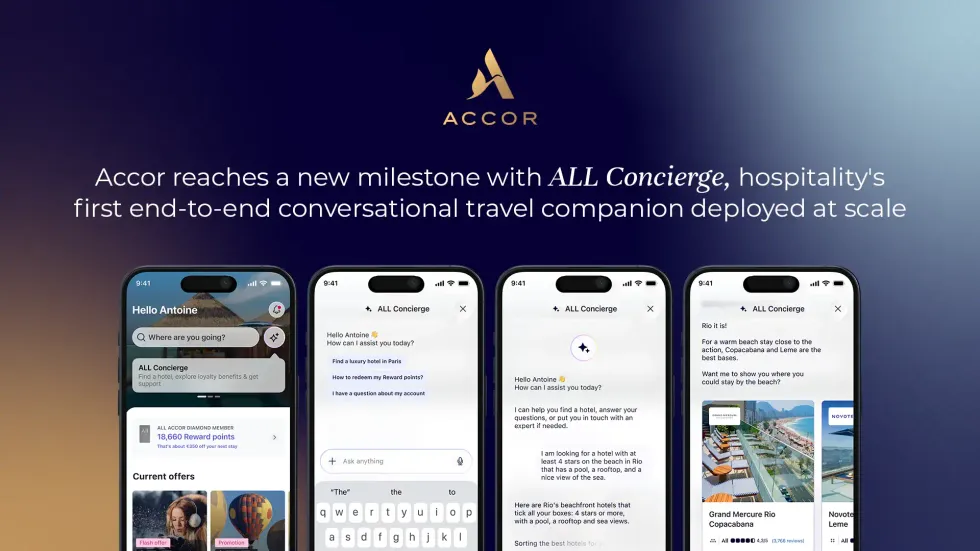 Accor advances AI with ALL Concierge, a conversational travel companion deployed at scale.Photo credit: Accor
ALL Concierge processed more than 1 million guest conversations since its pilot began in July 2025, insights the company said it used to refine the platform ahead of this wider launch. The tool is available across ALL.com, the ALL Accor app, WhatsApp and iMessage, supporting 11 languages on the website and four languages across five points of sale on mobile, with broader coverage planned by year-end.
“Every great concierge remembers your name and anticipates what you need before you ask,” said Alix Boulnois, Accor's chief commercial, digital and tech officer. “For decades, that level of attention was the privilege of a few. Today, we are making it available to every guest, everywhere, at any hour. And yet, behind every exceptional stay, there will always be a person who cares.”
Our teams are the heart of Accor. What changes today is that they will have a companion just as tireless and attentive, freeing them to focus on what no technology will ever replicate: the human connection that makes hospitality truly memorable.”
Accor has not disclosed adoption figures for the wider rollout. Whether the tool measurably shifts booking behavior away from third-party platforms will depend on guest uptake over time, according to the phased rollout timeline Accor outlined in its announcement.
Boulnois said that Accor's hotel teams remain central to the guest experience even as the tool takes on more of the conversation, adding that support staff can step in whenever a request needs a human touch.
Hilton and IHG are moving in parallel
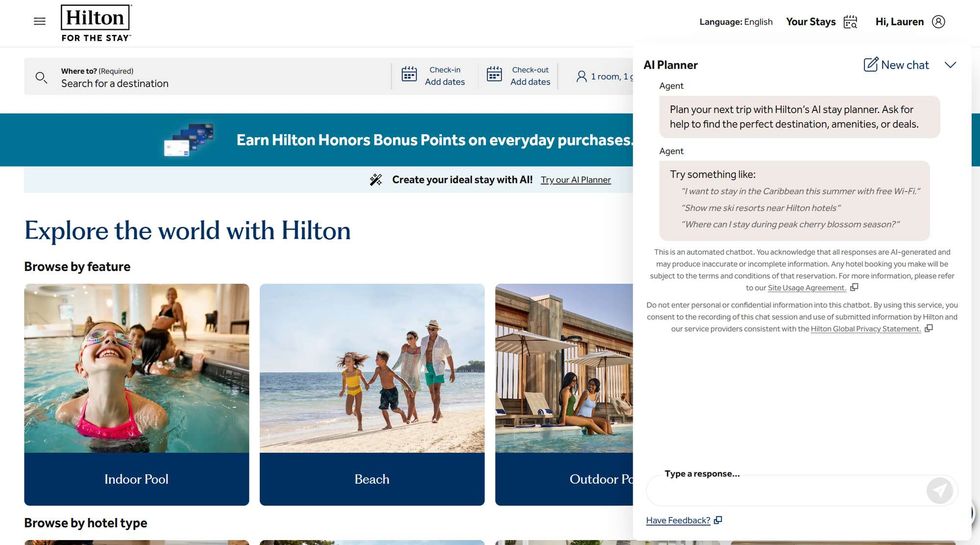 In March, Hilton launched its AI Planner for curated travel discovery.Photo credit: Hilton Worldwide Holdings
Hilton introduced its own generative AI-powered digital concierge, the Hilton AI Planner, in March, initially in beta to a limited share of hilton.com traffic before expanding, according to Hilton's press release announcing the tool. The tool helps travelers identify destinations, compare properties and explore amenities through conversational search, per the release.
"The launch of the Hilton AI Planner marks another step forward in our journey to reimagine the travel experience for Hilton guests," said Michael Leidinger, Hilton's senior vice president and chief information officer.
IHG Hotels & Resorts launched a beta version of AI-powered conversational search on IHG.com and the IHG One Rewards app in July, the company said. The tool is designed in part to help hotel owners increase their properties' visibility in AI-driven searches, and that it plans to roll out an AI-optimized hotel content platform over the coming months to help owners' properties surface more effectively.
"With these capabilities in place, and more to follow, we are very well positioned to harness the power of AI at scale and deliver rich, inspiring and seamless travel experiences that delight our guests and deliver benefits to our hotel owners," said Elie Maalouf, IHG's chief executive officer, according to the company's release.
Accor also introduced The Butler, a separate AI tool built for hotel staff that provides guidance and information and connects employees with human experts when needed, according to Accor's announcement.
Why it matters to hotel owners and franchisees
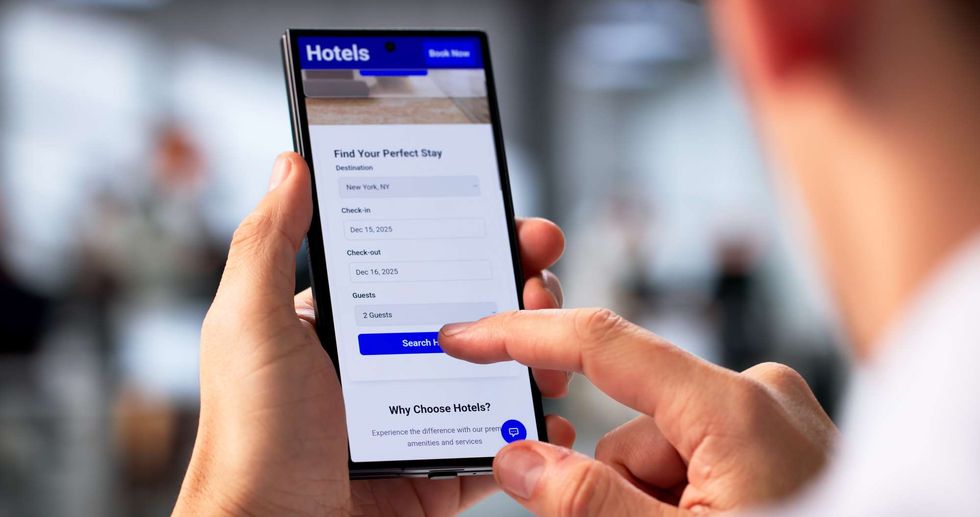 OTAs typically charge hotels 15 percent to 30 percent commissions per booking.Photo credit: Istock
The scope of the shift is larger than any single brand's tool, according to Longwoods International's traveler research. The study found that among U.S. travelers who used AI to plan a trip, 54 percent used it to find attractions and activities, 44 percent for travel inspiration and 42 percent for dining options — the same early-journey stages that OTAs and general search engines have historically captured before a guest reaches a hotel brand's own channels, per the study.
Online travel agencies have charged hotel owners commissions typically ranging from 15 percent to 30 percent per booking, depending on the platform, region and partner tier, according to rate disclosures across major OTAs. A 2026 industry report tracking approximately 90 million bookings found that OTAs sourced about 63 percent of independent hotel reservations in 2025, with the share reaching closer to 80 percent in some markets, according to Cloudbeds' State of Independent Hotels report.
For owners and franchisees, that puts AI-native discovery closer to the center of distribution economics rather than at the periphery. A brand's ability to capture guests earlier in the journey — and retain the resulting guest data — can affect guest-acquisition costs and loyalty-program value over time, though the effect will vary by brand, market and how quickly travelers shift habits away from established OTA use.
That raises practical questions for owners and multi-brand operators evaluating brand agreements: how these tools are funded within brand-technology fees, whether participation is mandatory or optional across a portfolio, and what data or reporting owners will receive on whether the tools are actually reducing OTA dependency rather than simply adding a new guest-facing feature.
IHG said its intent to help owners' properties surface more prominently in AI search results, but neither Accor, Hilton nor IHG has yet published data quantifying a shift in booking share away from third-party platforms.
That does not mean AI concierges automatically lower distribution costs. All three tools remain in partial or phased rollout, according to each company's own announcement, and the broader shift toward AI-mediated trip planning could just as easily create a new dependency — on AI platforms rather than OTAs — if hotel brands need visibility inside third-party AI tools to be discovered at all.
However, the AI Readiness Report by Mindtrip, Sabre, Sojern and MMGY Travel Intelligence found that 54 percent of travelers have used AI to plan a trip, while 75 percent plan to use it for future travel. The report also found that only 22 percent of destination marketing organizations offer AI trip-planning tools on their websites, and 26 percent have a documented AI strategy.