
- About 66,900 U.S. hotels were targeted, 33 percent of the global total.
- GuestReservations.com accounted for roughly half of identified ads.
- Owners need to measure potential booking and revenue leakage.
THIRD-PARTY BOOKING SITES are competing for travelers searching for specific U.S. hotels, potentially diverting bookings from properties’ direct channels. That could add costs for hotel owners as dissatisfaction rises among guests who feel misled by the booking process.
Operto’s “State of Predatory OTAs 2026” report identified about 575,000 ad impressions in the U.S. market during a 31-day study. It counted about 1.1 million ads targeting 204,000 hotels worldwide from May 22 through June 21. The U.S. accounted for approximately 66,900 targeted properties, or 33 percent of the global total.
“A guest typing a hotel’s name into Google is one of the strongest signals of direct booking intent a hotel can get. Our research shows that, on average, nine sites can be waiting to intercept that guest before they reach the hotel’s website,” said Tim Major, Operto’s CEO.
Paying for existing demand
North American hotels faced an average of 6.6 competing ads per property, compared with 3.9 globally. GuestReservations.com accounted for about 540,000 ads worldwide, followed by ReservationDesk.com with 240,000 and BookOnline.com with 90,000. Nine domains accounted for the advertising activity identified in the study.
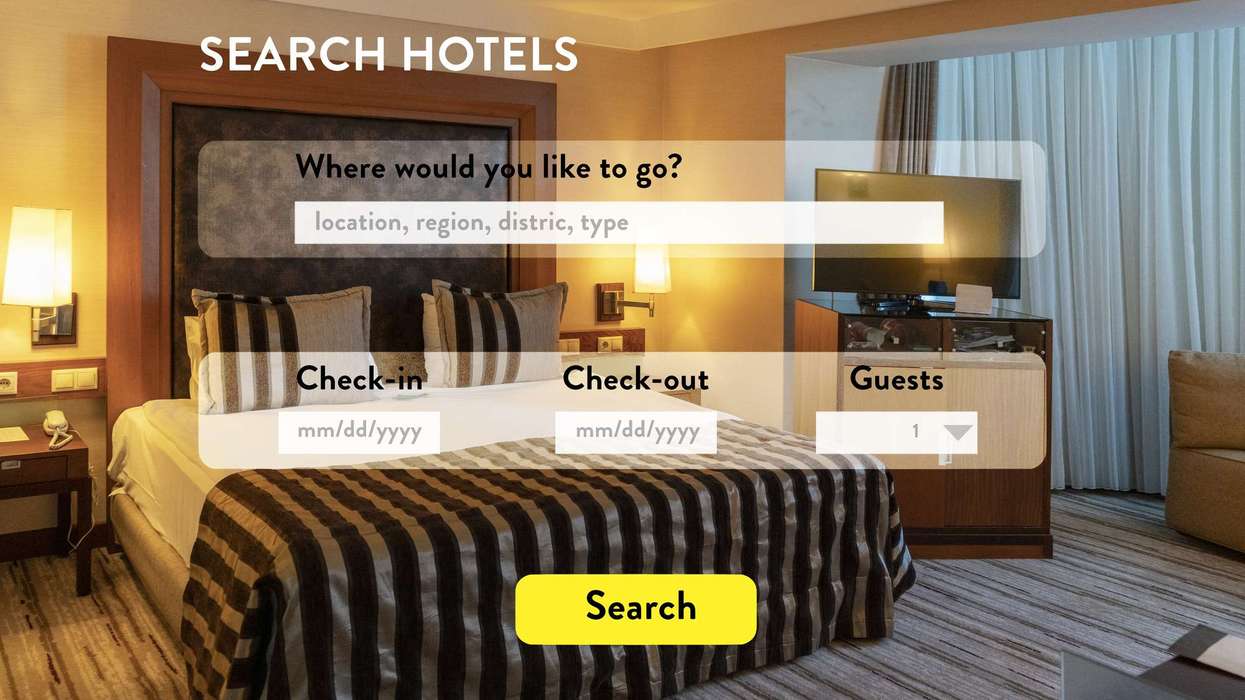
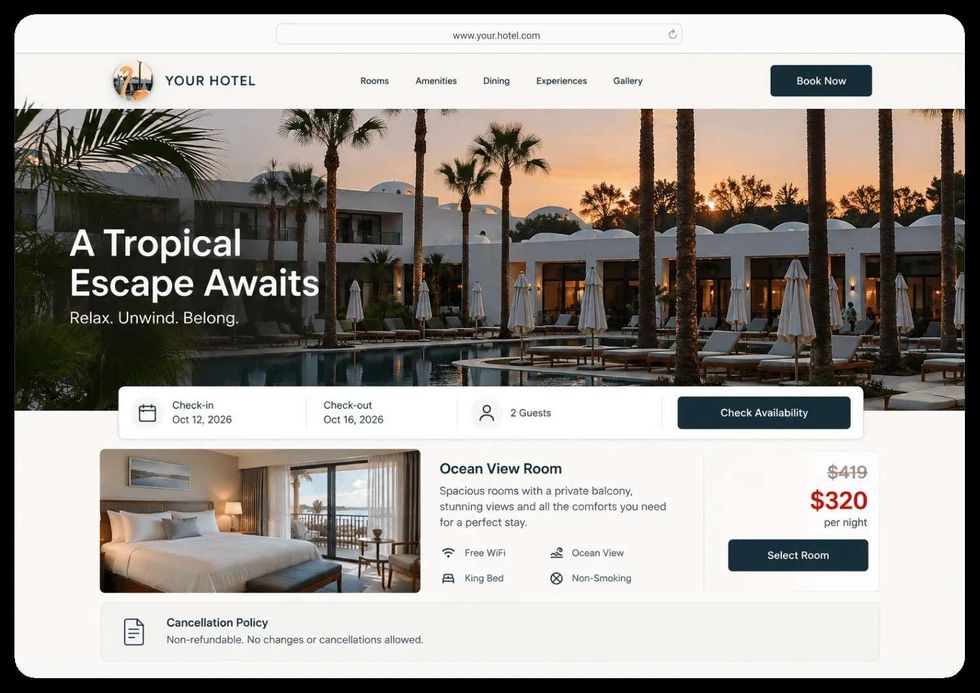 Predatory OTAs bid on hotel brand names, diverting direct bookings and profiting from existing demand. Photo credit: Operto
Operto classifies these sites as predatory OTAs because they bid on hotel names without direct contractual relationships with the properties they advertise. Their pages may reproduce hotel names, photographs and branding, potentially confusing guests about whether they are booking directly.
Traditional OTAs can introduce travelers to hotels they might not otherwise discover. Ads targeting a hotel’s own name, however, can compete for guests who have already selected that property. If those guests book through an intermediary, the hotel may incur distribution costs without receiving the same customer-acquisition benefit.
Operto reported that affected hotels in its customer base received between 5 percent and 25 percent of bookings through predatory OTAs before adopting brand protection measures. These figures reflect the company’s customers, not the wider hotel industry.
The hidden cost to owners
 Booking confusion, disputed cancellations and hidden fees undermine guest trust.Photo credit: Operto
Operto reviewed 232 publicly available Better Business Bureau complaints against GuestReservations.com filed between July 2023 and May 2026. Among those reviewed, 38 percent said guests believed they had booked directly with a hotel, while 46 percent referenced cancellation policies complainants described as deceptive or false. Another 34 percent cited hidden or undisclosed fees. The categories overlap and do not establish how common these problems are across all bookings.
Intercepted reservations may also distort channel data. If they appear as ordinary OTA bookings, owners and revenue managers may overestimate the demand an intermediary generates, affecting distribution strategy and commission negotiations.
Consider a hypothetical hotel with $5 million in annual room revenue. If $500,000 comes from bookings that could have been secured directly, and the avoidable distribution cost is 15 percent, the potential annual saving is $75,000. At an 8 percent capitalization rate, that equates to about $938,000 in implied asset value. This illustration is not an estimate of actual losses and assumes the bookings can shift to direct channels without replacement acquisition costs.
What operators should do
 Manage every booking channel while protecting direct-booking opportunities and guest trust.Photo credit: iStock
SiteMinder’s Changing Traveller Report 2026 found that 26 percent of surveyed travelers planned to begin hotel research on an OTA, compared with 21 percent on a search engine. It also found that 18 percent of travelers who started on an OTA planned to book directly. The findings support the importance of managing multiple booking channels but do not establish a causal link to predatory advertising.
Regulatory scrutiny is also increasing. Reuters reported on Oct. 7 that the Federal Trade Commission was preparing action involving Booking Holdings over allegedly deceptive hotel ads. At the time, no complaint had been filed. Separately, a San Francisco lawsuit alleges that Booking supplied inventory to GuestReservations.com through Priceline Partner Solutions. These remain allegations, not final findings.
Major said hotel staff may see different search results from travelers in other locations.
“The challenge for hoteliers is visibility. A general manager can search the property from the front desk, see nothing unusual, and reasonably assume there isn’t a problem, while a guest hundreds of miles away is being shown a completely different set of results,” he said. “Hotels need to understand who is advertising against their brand, how much direct demand may be leaking through those channels, and what that is costing them.”
For owners and investors, the priority is to compare branded-search visibility with booking sources, distribution expenses and net revenue by channel. Operto measured advertising activity, not completed bookings or total industry losses. Establishing the financial impact requires property-level evidence, not ad counts alone.