
- Travelers mistake deceptive sites for hotel websites.
- 87 percent want rules against deceptive booking sites.
- AHLA backs state booking-disclosure bills for 2027.
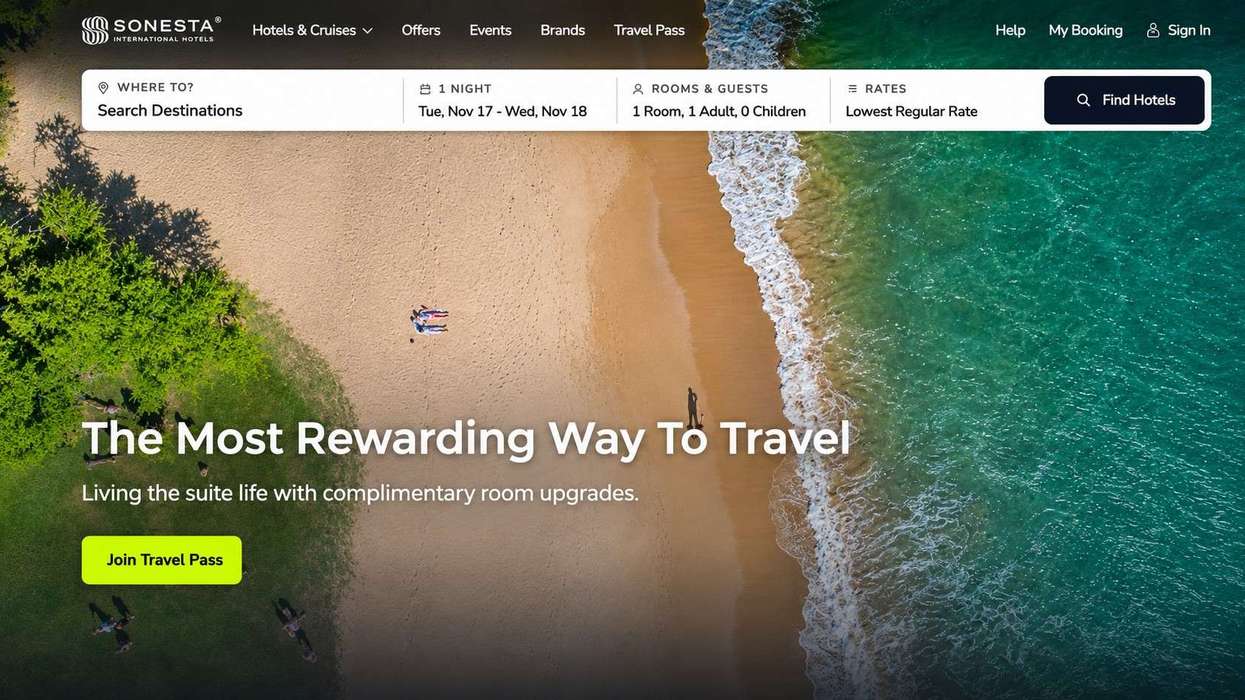
ABOUT HALF OF consumers mistook deceptive booking sites for official hotel websites in a survey commissioned by the American Hotel & Lodging Association. The findings point to risks for hotels beyond consumer confusion, including lost direct bookings, higher distribution costs and guest complaints.
In the survey, conducted by Seven Letter Insight, 22 percent of consumers said they had booked through a website they believed was a hotel’s official site, only to discover another company operated it. Meanwhile, 87 percent said they want rules to protect travelers from deceptive booking sites. Through its Look Before You Book campaign, AHLA launched a national campaign Nov. 13 to protect travelers from booking scams and is offering a free consumer guide and hotel booking safety checklist ahead of the holiday travel season.
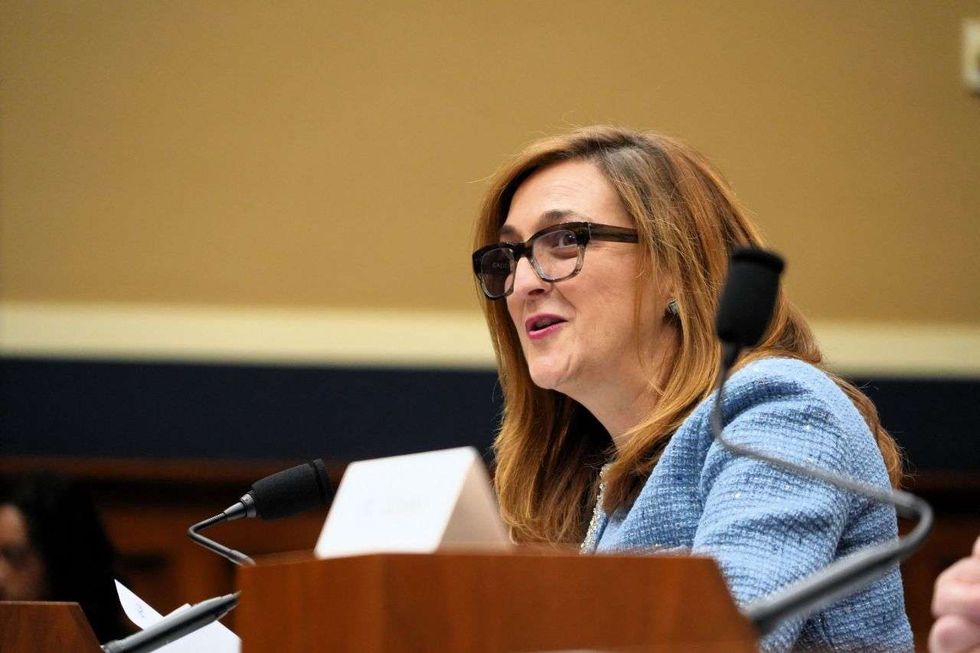 AHLA President and CEO Rosanna Maietta urged travelers to book directly with hotels and use its resources to avoid scams.Photo credit: Rosanna Maietta/LinkedIn
“Booking direct with a hotel is the most secure way to avoid scams,” said Rosanna Maietta, AHLA president and CEO. “As consumers make their holiday travel plans, our ‘Look Before You Book’ campaign offers practical tools to help them book with confidence. We will continue working with our state and federal partners to strengthen enforcement and help make sure consumers don’t get scammed and have their plans ruined.”
Survey shows booking confusion
 Survey finds 52 percent mistook one deceptive booking site for an official hotel website, while 44 percent did so with another.Photo credit: American Hotel & Lodging Association
When shown two examples of deceptive booking sites, 52 percent of consumers mistook one for an official hotel website and 44 percent made the same mistake with the other. AHLA said the results show how difficult it can be for travelers to tell a hotel’s own website from a deceptive one.
That confusion carries costs for hotels. When a traveler searching for a specific property books through an intermediary that appears to represent it, the hotel can lose a direct reservation and incur distribution costs, the association said. Disputes over payment, cancellation terms or reservation details can also reach hotel staff, who must handle complaints about transactions they did not manage.
Research published in October by Operto, which sells brand-protection software to hotels, indicates how widespread the practice is. Its State of Predatory OTAs 2026 report identified about 1.1 million ads targeting searches for 204,000 hotels in 205 countries and territories from May 22 to June 21, based on an analysis of Google’s Ads Transparency Center. Affected hotels faced an average of 3.9 competing ads globally and 6.6 in North America.
Operto defines predatory OTAs as third-party sites that bid on a hotel’s name in paid search and send guests to their own booking pages. Unlike traditional distribution partners, Operto says, these sites hold no direct contract with the properties they advertise and target guests who have already chosen a hotel.
For owners, the findings turn branded search into a revenue question: a hotel needs to know who is bidding on its name and where that traffic goes. For developers, protecting a new property’s name in search becomes part of building its direct-booking business from opening day.
AHLA pushes disclosure rules
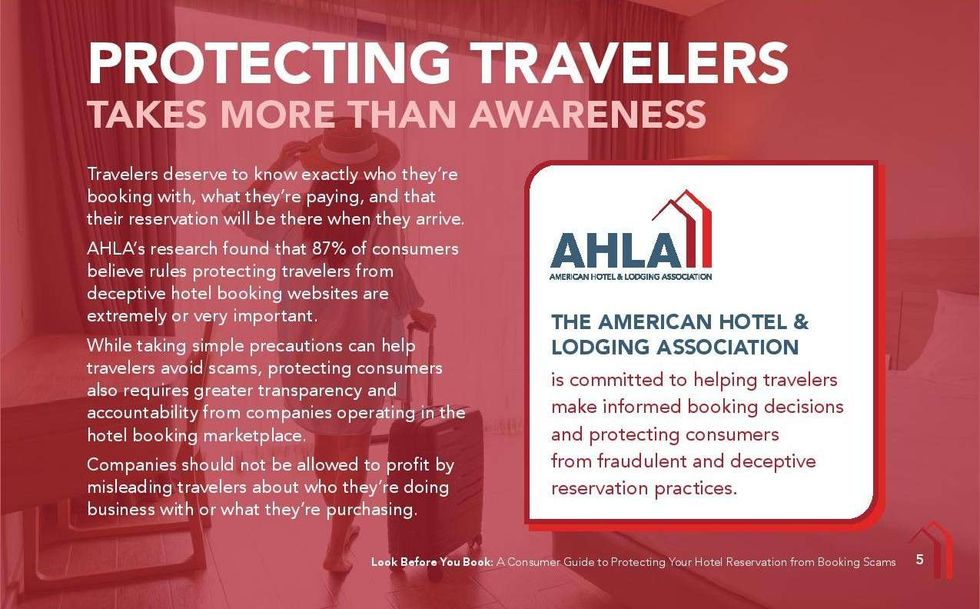 AHLA guide urges travelers to spot booking scams, verify reservations and book through official hotel channels.Photo credit: American Hotel & Lodging Association
AHLA’s guide explains how to spot fraudulent booking sites, recognize red flags in search results, verify a reservation directly with the hotel and act after a scam. The checklist advises travelers to check web addresses for misspellings, extra words or unusual characters; question unusually low rates and suspicious payment requests; and book through a hotel’s official website, mobile app or reservation line. Travelers who suspect fraud can report it to the Federal Trade Commission.
AHLA is also working with legislative leaders across the country to introduce booking-disclosure bills when state legislatures convene in 2027. The bills would require third-party booking sites to clearly disclose that they are not affiliated with the hotels they list.
If passed, the rules would let travelers see who runs a booking site before they pay and could reduce the reservations hotels lose to look-alike sites. AHLA said it would also press regulators to strengthen enforcement.