
- CoStar, TE raise 2026 ADR, RevPAR forecast by 1 and 2.2 pp.
- Occupancy expected to grow after prior forecast of decline.
- Demand growth likely to moderate, with ADR and RevPAR still rising.
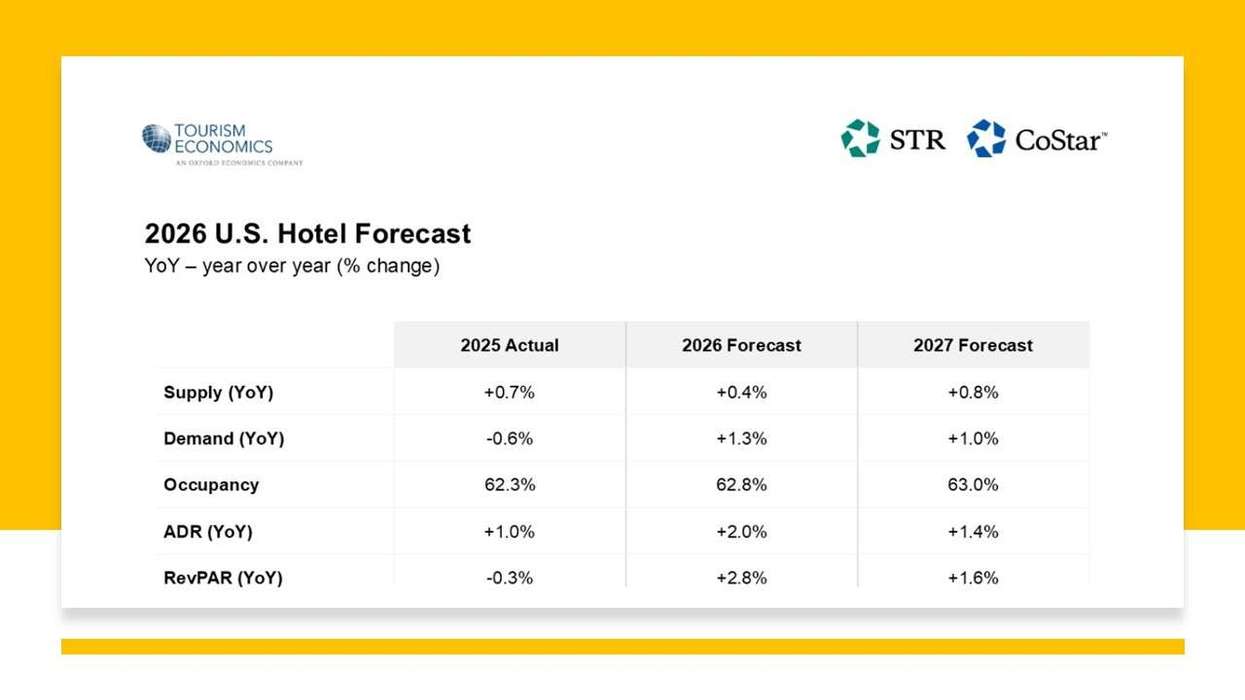
COSTAR AND TOURISM Economics raised their 2026 ADR and RevPAR forecast by 1 and 2.2 percentage points, respectively. Occupancy is now expected to grow, after previously being forecast to decline year over year.
Demand growth is likely to moderate, with ADR and RevPAR still increasing, though below inflation, the research agencies said in a statement.
“The cautious optimism that framed our outlook earlier in the year has made way for a more robust forecast, driven by stronger demand from the group and transient segments,” said Jan Freitag, CoStar’s national director for hospitality analytics. “Since our last revision, the industry has seen sustained performance growth, with room demand up by more than 8 million room nights year over year through the first four months of 2026. For the remainder of the year, we expect demand growth to moderate, but the pace will remain conducive to ADR and RevPAR gains, even though both will continue to increase below inflation.”
Aran Ryan, Tourism Economics director of industry studies, said travel activity appears resilient heading into summer.
“Stable job markets and rising household wealth are supporting leisure travel demand despite higher fuel prices,” he said. “Group travel is also improving alongside strong corporate profits, while international visitation remains weak, with hopes of a World Cup bounce. Looking ahead, easing inflation should support a slightly stronger economy next year.”
“GOP is expected to rise on increasing total revenues, with the largest growth contribution coming from the rooms department,” said Freitag. “However, expenses are expected to grow at a higher rate, resulting in continued pressure on profit margins.”
In January, CoStar and TE raised their 2026 occupancy, ADR, and RevPAR forecasts by 0.1 percentage points, while cutting supply growth by 0.2 points and demand by 0.1 points.