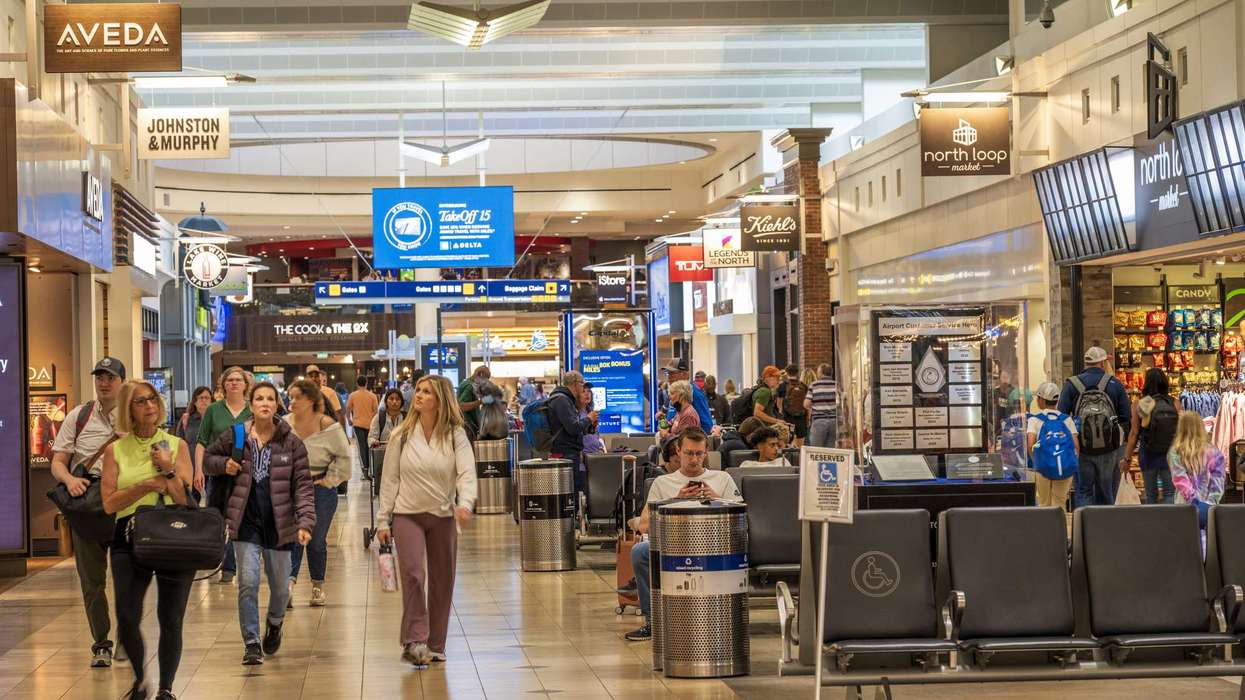

- Overseas air arrivals fell 8 percent year over year.
- World Cup rate gains varied with baseline occupancy.
- Owners should separate event-week rates from underlying demand.
INTERNATIONAL AIR ARRIVALS to the U.S. fell 6.1 percent year over year in the second quarter of 2026, to 10.3 million, according to the National Travel and Tourism Office. The World Cup, which began June 11 and was only partly captured in the quarter, did not reverse the decline.
NTTO’s “Survey of International Air Travelers” found that overseas arrivals fell 8 percent, while arrivals from Canada and Mexico declined 0.9 percent and 0.5 percent, respectively. The headline decline is not the only concern for hotels. The bigger issue is which guests are disappearing and what their loss could mean for occupancy and pricing power.
Overseas visitors stayed an average of 17.5 nights and spent $1,938 per trip, compared with 9.4 nights and $1,129 for Canadian visitors, the report said. These figures do not establish hotel spending, but they highlight differences in trip duration and expenditure across source markets. A sustained decline in long-haul travel could put pressure on hotels that depend on international guests to support room demand.
That distinction matters when assessing the World Cup’s hotel impact. An HVS analysis of 11 U.S. host markets estimated $680 million in incremental room revenue during match weeks. ADR rose in every market, while occupancy fell below HVS’s estimated no-tournament baseline in seven. HVS found that markets with higher expected occupancy generally achieved larger rate gains.
New York illustrates the relationship. HVS estimated baseline occupancy of 89.4 percent without the tournament and an average daily rate gain of $62.27. Houston, with baseline occupancy of 61.2 percent, recorded a rate gain of about $17. The comparison suggests that hotels in markets with less spare capacity had greater scope to raise rates when event demand arrived.
Put the two datasets together and the risk becomes clearer. Pricing power during peak periods depends partly on how full a market already is. New York City alone received 2.6 million international air visitors in the second quarter. If overseas demand continues to weaken, gateway markets could lose some of the occupancy that supports rate increases during major events.
The NTTO figures do not prove that this is happening, but they give owners a reason to test that exposure.
Why it matters now
 Owners are budgeting, investors are reassessing valuations and developers are eyeing the 2028 Olympics.Photo credit: iStock
Owners are preparing budgets, investors are valuing hotels on recent performance and developers are assessing projects ahead of future events, including the 2028 Summer Olympics in Los Angeles. The risk is that event-week results could distort assumptions about demand beyond the tournament.
Tourism Economics revised its 2026 forecast for international arrivals to 69.9 million, implying growth of 2.4 percent rather than the previously projected 3.4 percent. The revised outlook included weaker projections for several European markets, including the UK and Germany. The UK was the largest overseas source market in NTTO’s second-quarter data, while Germany ranked among the top five. The tournament also exposed a trade-off in hotel pricing.
HVS found that aggressive event-period rates priced out some transient travelers and displaced group and meeting business to other dates or markets. The effect was particularly evident in Seattle, Philadelphia and Atlanta, where stadiums sit near major convention hotel clusters. Group business is often booked well in advance, making it harder to replace when event pricing changes the economics for planners.
The risk beyond event-driven revenue
 Hotel owners should track bookings, cancellations, group business and overseas guest exposure.Photo credit: iStock
The immediate priority is to compare international arrival trends with hotel-level occupancy, ADR and RevPAR. The NTTO tracks international travel patterns and visitor characteristics, while CoStar STR’s hotel performance glossary defines the metrics used to assess occupancy, room pricing and revenue.
Owners should also monitor booking pace, cancellations, group business and the share of demand generated by overseas guests. These indicators can help operators assess exposure to weaker international travel.
Developers and investors should be cautious about treating major sporting events as evidence of lasting demand growth. HVS’s findings show that event-related revenue gains can coexist with weaker occupancy relative to expectations.
The next test will come from third-quarter international arrival data and hotel performance reports. Comparing those measures should help establish whether inbound weakness persisted through the tournament and whether host markets retained gains after match-related demand subsided.
Meanwhile, the NTTO findings establish the central issue: international arrivals declined despite a major global event. For the lodging industry, the question is whether that weakness reflects a temporary shift in travel or a broader challenge for hotels exposed to overseas demand. Answering it requires comparing visitor trends with actual hotel room demand, pricing and revenue performance.
Separately, a proposed class-action lawsuit against Expedia Group has raised questions about competition in hotel pricing. Filed in federal court in Washington state on October 2, the suit alleges that Expedia restricts hotels from offering lower rates on their own websites and uses search-ranking practices to penalize properties offering lower prices through competing booking platforms.
The plaintiffs argue that these practices limit price competition and keep U.S. hotel rates higher across booking channels. Expedia has called the allegations meritless. The claims have not been proven in court.