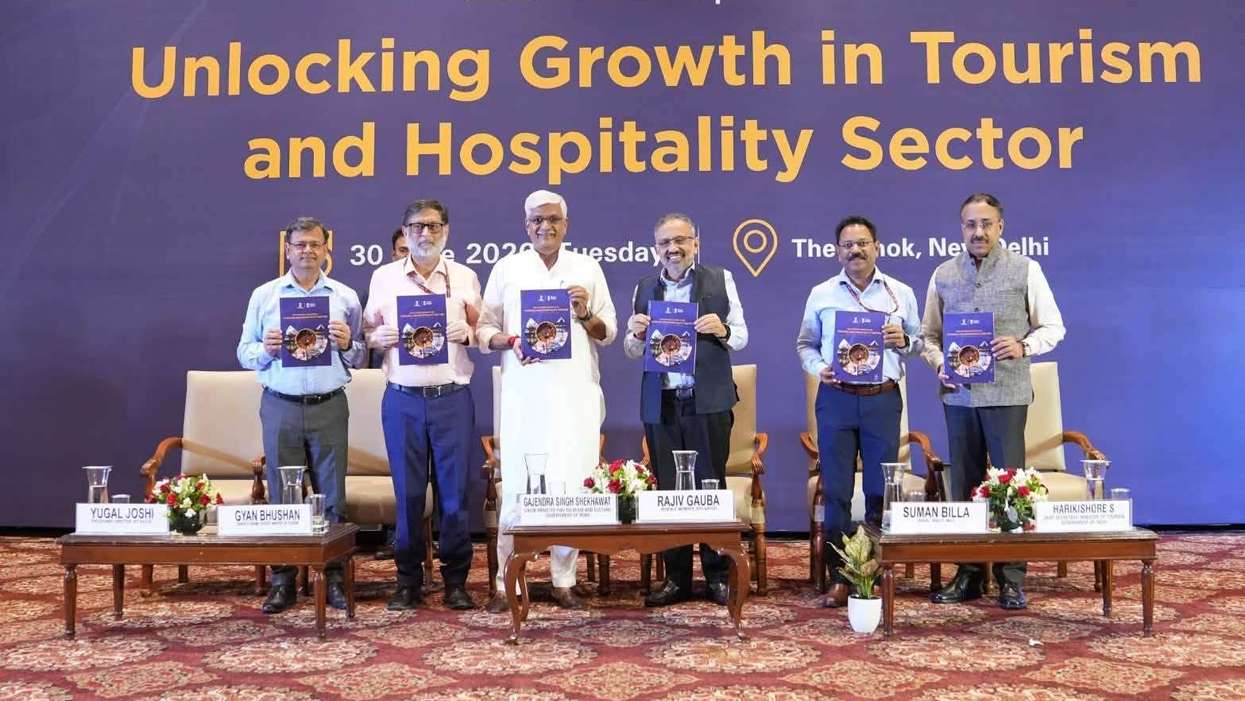

- NITI Aayog recommends visa-on-arrival for select countries.
- Hotel projects need close to 50 approvals across their lifecycle.
- India targets 100 million inbound tourists by 2047.
“Indian tourism has now reached a stage where institutional efficiency becomes more powerful than investment,” Gajendra Singh Shekhawat, Union tourism minister said at the report’s launch. “If policy clarity is added and the pace of decision-making becomes adequate, it creates investor confidence, and once confidence is established, progress can accelerate.”
The report's core recommendations focus mainly on visa policy. India currently scores below the global average on visa openness. Visa-free entry is limited to Nepal, Bhutan and the Maldives and visa-on-arrival is mainly available only to Japanese and South Korean travelers.
Slowly moving to a 90-day, multiple-entry visa-on-arrival system for some countries, along with biometric registration and digital authorization, is one suggestion. Singapore's SG Arrival Card and the U.S. ESTA program are cited as models that combine easy entry with security screening. It also suggests cutting the e-Visa's nine sub-categories down to five and making the e-Visa portal easier to use.
On accommodation, the report suggested several changes. These include raising base floor area ratios and easing parking norms. It also recommends combining multiple licenses into one. The homestay room cap would rise from six to nine rooms. And the local body No-Objection Certificate, requirement for homestay registration would be removed.
Hotel projects in India can need almost 50 approvals over their lifetime and operators must get at least 60 licenses from local, state and central authorities, the report noted. A typical Indian hotel project takes 36 to 48 months from approval to commissioning, compared with 12 to 18 months in competing ASEAN markets.
The report says India's tourism growth depends less on spending and more on cutting red tape, simplifying approvals and digitizing processes to attract private investment.
Another report, by CRISIL Intelligence, found that India's domestic tourism sector has not yet reached its full economic potential due to weak supply-side conditions like infrastructure, service quality, and MSME capacity.