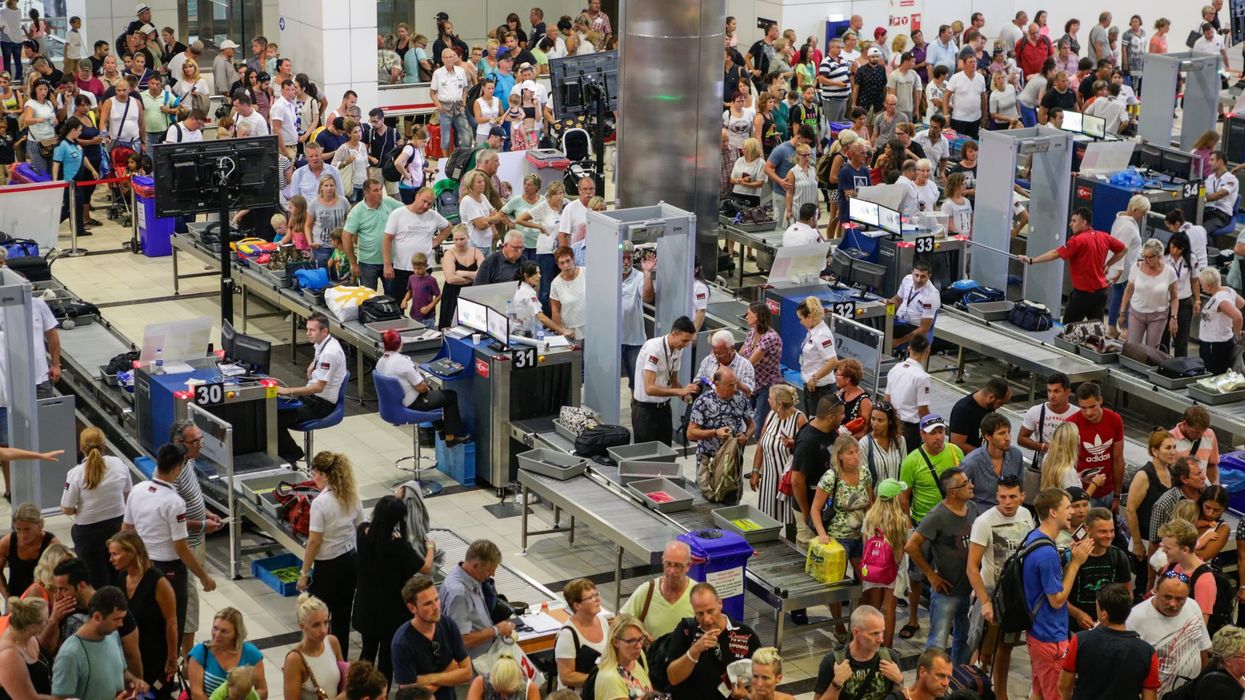

AIR TRAVEL HASSLES lead fliers to skip an average of two trips annually, which will result in 27 million avoided trips and a $71 billion loss for the U.S. economy in the coming year, according to a recent report by U.S. Travel Association and Ipsos. The impact of traveler frustrations also leads to a loss of $4.5 billion in tax revenue. The federal government must prioritize improvements throughout the air travel ecosystem to foster greater growth, the association has said.
"When almost 60 percent of recent air travelers equate the experience to or find it worse than going to the DMV, it's a worrisome sign that requires action," said Geoff Freeman, USTA president and CEO. "With targeted efforts, the federal government can certainly enhance the entire travel system."
Half of travelers said they would increase air travel in the next six months if the experience were less of a hassle, the poll revealed. Similarly, business travelers would take an average of two more trips annually if travel frictions improved, resulting in 18 million additional trips and $52 billion in economic impact.
According to the report, various areas where the federal government is falling short for travelers include outdated security screening technology, inconsistent waits at customs and airport security checkpoints, and months (or years)-long delays for U.S. visitor visas.
"The security screening experience travelers face today is essentially unchanged from 21 years ago when the TSA was established," Freeman said. "Despite air travel being safer than ever, the process has not advanced for most travelers. Screening methods and technologies in the United States lag behind those in other countries. It's time to take the lead."
Freeman identified two immediate steps for the U.S. to enhance air travel: securing a long-term FAA reauthorization bill and adopting successful practices from global counterparts, like Spain and the U.K.'s use of advanced security technology to eliminate the liquid ban in carry-on luggage.
Around two-thirds of recent air travelers are open to sharing their biometric data with either the government, a private corporation, or both, the report said. This presents a significant opportunity for the U.S. to adopt biometric technology more widely and enhance efficiency, as has been done in other countries.
"A strong partnership between the government and the travel industry can greatly enhance the air travel system's experience and efficiency, yielding long-term economic benefits," Freeman added.
This survey follows closely on the heels of Congress passing a short-term funding measure for the Federal Aviation Administration, as a long-term reauthorization bill for the agency awaits approval in the Senate.
In June, USTA projected that air travel demand would surpass pre-pandemic levels, reaching unprecedented heights this summer with airlines, airports, and the TSA gearing up for the busy travel season. However, the current air travel system is ill-equipped to handle this immense demand, it said.