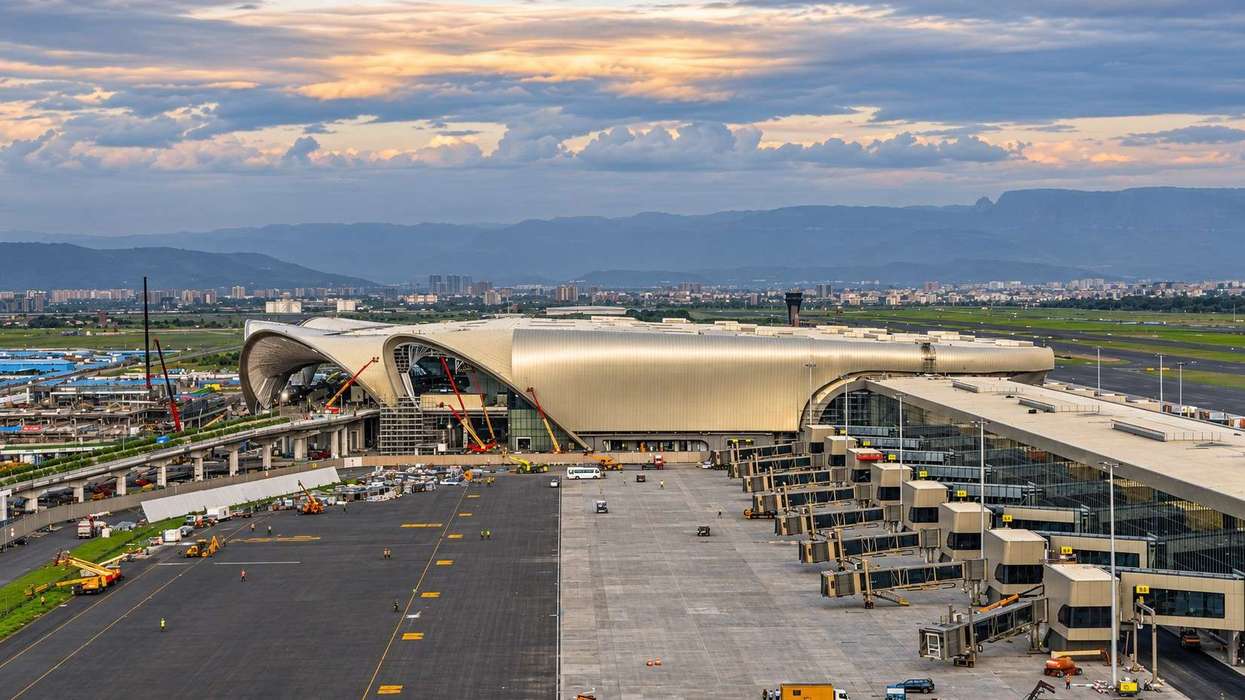

- NMIA handled 4.1 million passengers in 11 months.
- Cargo reaches 40,868 metric tons by Nov. 15.
- Jeddah flights to begin Dec. 15.
NAVI MUMBAI INTERNATIONAL Airport handled more than 4 million passengers in less than 11 months of commercial operations, ahead of its first anniversary next month. The airport recorded 4,101,409 passengers since opening on Dec. 25, 2025, operator Navi Mumbai International Airport Pvt. Ltd. said in a statement.
Domestic passengers totaled 4,088,840 and international passengers 12,569, according to the statement. Arrivals stood at 2,023,241 and departures at 2,078,168. International travelers made up about 0.3 percent of the total.
"Crossing the 4 million passenger threshold ahead of our first anniversary is a testament to the trust our passengers and airline partners have placed in Navi Mumbai International Airport," an NMIA spokesperson said. "In less than a year, we have not only built a state-of-the-art facility but have also seamlessly integrated it into the regional and global aviation network. This milestone is just the beginning of our journey to redefine air travel in the Mumbai Metropolitan Region. As we look ahead, our focus remains on scaling world-class infrastructure, expanding direct connectivity, and delivering an unmatched, passenger-first experience."
The airport recorded 31,043 passenger aircraft movements, of which 30,940 were domestic and 103 international. IndiGo accounted for 24,777 movements, followed by Akasa Air with 3,125, Air India Express with 2,955, Fly91 with 132 and Star Air with 54, IANS reported. NMIA also handled 1,092 general aviation movements.
Cargo and network expansion
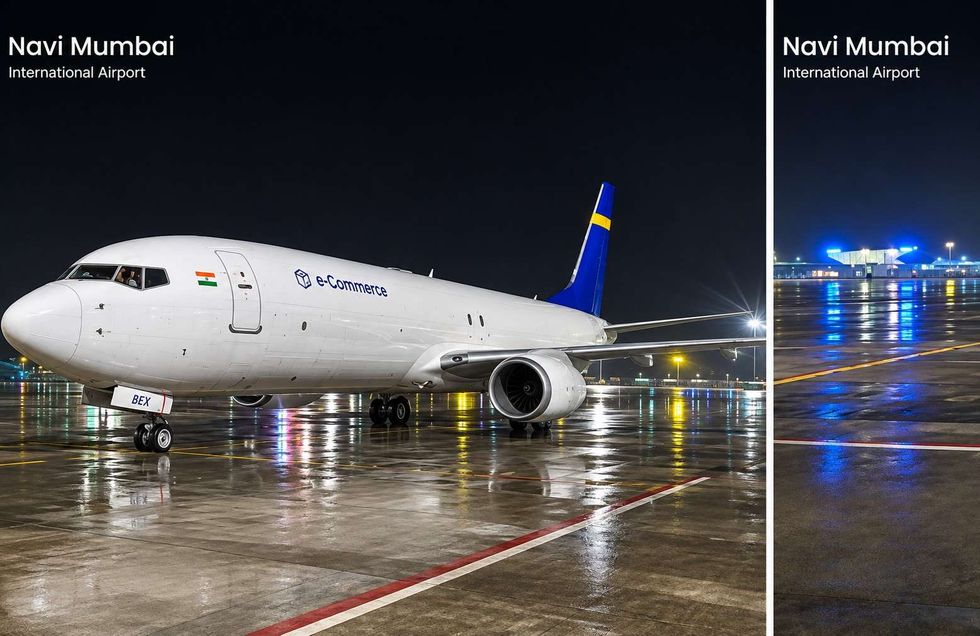 NMIA's expanding cargo operations strengthen international connectivity, as freighter services support the airport's growing global network.Photo credit: Afcom Holdings Ltd.
NMIA handled 40,868 metric tons of cargo as of Nov. 15, including 31,652 metric tons of international and 9,216 metric tons of domestic cargo, National Herald reported. Its freighter network of 18 airlines connects the airport to 24 cargo destinations worldwide, including Amsterdam, Frankfurt, Hong Kong, Singapore, Baku and Addis Ababa.
Through Oct. 31, the airport moved 7,558.63 metric tons of exports, including 664.47 metric tons of pharmaceuticals, and 11,091.45 metric tons of imports. It also handled inbound perishable cargo.
NMIA's Winter 2026 schedule covers 45 domestic and two international destinations, including nine new domestic destinations: Bagdogra, Darbhanga, Guwahati, Jalgaon, Jodhpur, Ranchi, Sindhudurg, Udaipur and Agatti, which will be served via Goa's Mopa airport. The airport's first summer schedule planned flights to 46 domestic destinations.
Scheduled flights to Jeddah, Saudi Arabia, will begin Dec. 15, making it the airport's second international destination after Abu Dhabi, where Air India Express began service in July. The airport said the route will serve business, leisure and religious pilgrimage travel from the Mumbai region.
NMIA's first phase is designed to handle 20 million passengers and 500,000 metric tons of cargo a year. At full build-out, capacity will rise to 90 million passengers and 3.2 million metric tons of cargo.
NMIA, Mumbai's second airport after Chhatrapati Shivaji Maharaj International Airport, served more than 4,000 passengers on its first day, when Adani Group Chairman Gautam Adani welcomed passengers from the inaugural IndiGo flight. Adani Airport Holdings Ltd., a subsidiary of Adani Enterprises Ltd., develops and operates the airport.
Adani Group's Mumbai International Airport Ltd. holds 74 percent of the operator, and the Maharashtra government's City and Industrial Development Corp. holds the remaining 26 percent.
Separately, Noida International Airport in Jewar, Uttar Pradesh, about 50 miles southeast of New Delhi, began commercial operations on June 15, after Prime Minister Narendra Modi inaugurated it on March 28. The airport is the National Capital Region's second and made Uttar Pradesh the first Indian state with five international airports. In October, the state cabinet approved renaming it Narendra Modi International Airport, Noida-Jewar.