
- Roaming confidence falls on multi-country trips.
- Employer-provided eSIMs lead in North America.
- Corporate buyers weigh how hotels help travelers work.
BUSINESS TRAVELERS WHO rely on international roaming are less confident their phones will support their work than those using eSIMs, according to Holafly, a Dublin-based eSIM provider. The gap puts connectivity in focus for U.S. hotel owners, as the U.S. ranked among the top three destinations for business travelers in summer 2026.
Holafly’s “2026 Summer Travel and eSIM Report” found 76.6 percent of eSIM users said their connection helps them get work done, compared with 43.1 percent of roaming users, the lowest of any connection method surveyed. The 33.5-percentage-point gap applies to travelers who had both options available, compared with 25.5 points in the broader sample.
Confidence among roaming users fell to 41.2 percent on multi-country trips from 47.1 percent on single-country trips. Trips by U.S. tech professionals from San Francisco or San Jose often cover two or three markets, such as Tokyo, Seoul and Singapore, in one week, and each border requires the phone to reconnect to a new network, the report said.
Habit keeps roaming in use
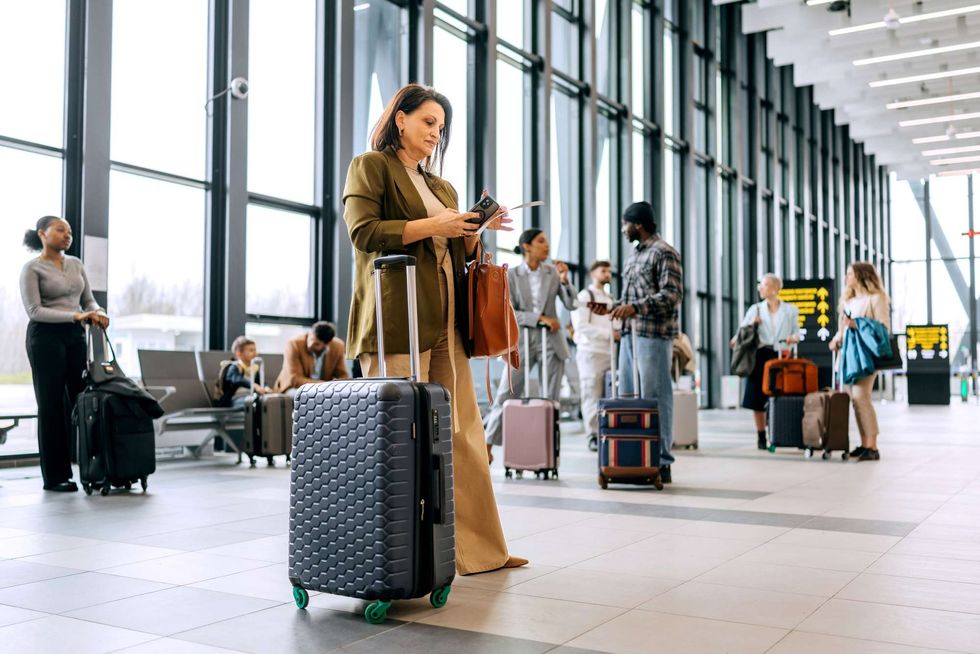 Approximately 59 percent of roaming users stick with familiar services, while 23 percent remain unaware of eSIM alternatives, highlighting adoption barriers.Photo credit: iStock
Among roaming users, 59 percent cited habit, while 23 percent did not know an eSIM was an option. Most business travelers still manage their own connection trip by trip, relying on carrier roaming rather than comparing services.
Employers are starting to change that, as company-provided eSIMs became the fastest-growing connection method, led by North America at 29.3 percent, ahead of Europe and Oceania. Company-managed eSIMs were still projected to reach only 21.2 percent of business travelers in summer 2026, while roaming and company-issued SIM cards remained more common.
Cost is driving the shift: U.S. employers face some of the highest international roaming fees, and California is among the states with the most to gain from switching, the report said. Major U.S. carriers charge about $12 a day for travel passes, a fee that multiplies on two-week trips through Europe or Asia. Some carriers also slow data after daily limits, prompting travelers to use public Wi-Fi networks that may pose security risks.
Companies are responding by centralizing international data. Travel managers assign eSIM plans to employees before departure, replacing individual carrier arrangements, surprise roaming charges and post-trip expense claims.
What it means for hotels
 Reliable hotel Wi-Fi remains essential for business travelers, making connectivity a competitive advantage and infrastructure priority for hotels.Photo credit: iStock
Guests arriving in the U.S. without reliable mobile data often depend on hotel Wi-Fi to answer emails, message colleagues or join virtual meetings. That makes network coverage and capacity across guest rooms, meeting spaces and public areas part of how properties compete for corporate business.
The findings align with shifting expectations among corporate travel buyers.
A Global Business Travel Association and Accor snapshot found buyers increasingly view the traveler’s experience as an important part of a hotel program, seeking stays that help employees work well and rest properly. The snapshot also found 44 percent expect to need accommodation in new markets.
For owners, investors and developers, the trend points to connectivity as infrastructure rather than an amenity. With employer eSIM programs still a minority and nearly a quarter of roaming users unaware of the option, hotel networks will remain the fallback for many business guests in the near term. The same report found more than half of business travelers manage their own internet access, which raises separate cybersecurity questions for hotel companies.
The findings are based on Holafly’s survey of 3,048 travelers across multiple markets in May 2026, reflecting stated travel intentions for June through August 2026. Productivity and awareness findings came from the business traveler subset, and carrier pricing reflected publicly listed rates from major U.S. carriers as of 2026.