
- Demand up 7.8 percent in largest gain since February 2022.
- Room revenue increased 12.9 percent to $1.897 billion.
- RevPAR rose 8.1 percent, below 8.9 percent comparable-hotel gain.
EXTENDED-STAY HOTELS in the U.S. posted their strongest monthly gains in years in September, according to The Highland Group. Demand rose 7.8 percent, outpacing supply for the eighth consecutive month, while room revenue climbed 12.9 percent.
The group’s “US Extended-Stay Hotels Bulletin: September 2026” found the demand gain was the largest since February 2022, while room revenue, occupancy, ADR and RevPAR posted their biggest increases in three to four and a half years.
“With relatively low supply growth expected to continue and multiple new monthly performance records achieved in September, the outlook for more extended-stay hotel [RevPAR] gains is very good,” Mark Skinner, partner at Highland Group, said in a statement.
Demand and revenue growth
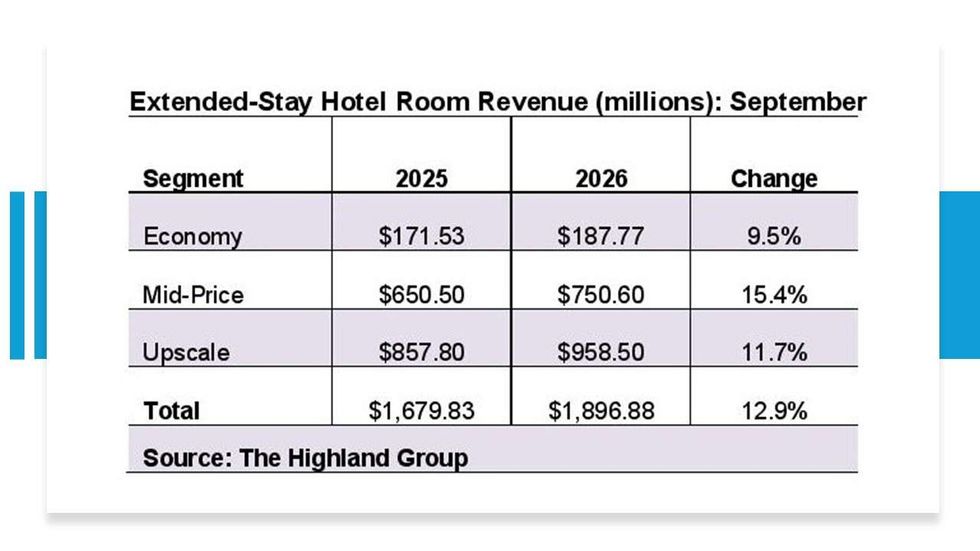 Room revenue jumped 12.9 percent to $1.897 billion, fastest since February 2023.Data source: The Highland Group
Demand growth exceeded the 5 percent long-term average annual increase for the eighth consecutive month, Highland Group found. Demand for comparable hotel classes rose 6.1 percent, according to STR/CoStar. After adjusting for the extra day in February 2024, extended-stay demand has increased year over year in 45 of the past 46 months.
Room revenue rose to $1.897 billion from $1.680 billion a year earlier, the fastest growth since February 2023. That outpaced the 11.9 percent increase STR/CoStar reported for the overall hotel industry and the 9.9 percent gain excluding luxury and upper-upscale hotels, which have negligible extended-stay supply.
Mid-price extended-stay hotels led with a 15.4 percent revenue increase, ahead of the 12 percent gain STR/CoStar reported for all midscale hotels. Economy extended-stay revenue rose 9.5 percent, compared with 6.7 percent for all economy hotels. Upscale extended-stay revenue rose 11.7 percent, slightly below the 12.1 percent for all upscale hotels.
Occupancy, rates and RevPAR
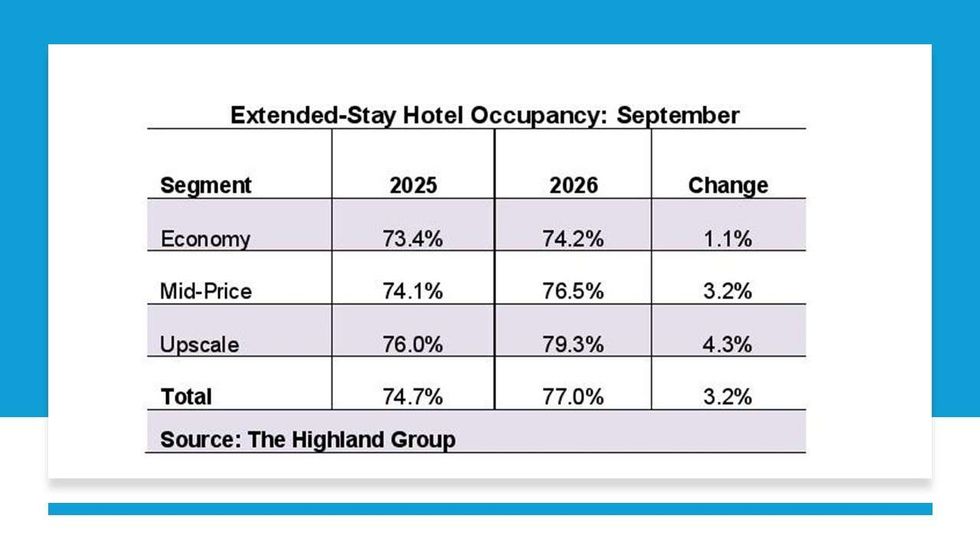 Occupancy climbed to 77 percent, its biggest gain in 4.5 years.Data source: The Highland Group
Occupancy rose to 77 percent from 74.7 percent, a 3.2 percent increase and the largest in four and a half years, the report said. It was 11.1 percentage points above the 65.9 percent average for comparable hotel classes, excluding luxury and upper-upscale properties. Upscale extended-stay hotels had the highest occupancy at 79.3 percent, followed by mid-price at 76.5 percent and economy at 74.2 percent.
ADR rose 4.7 percent to $125.27, the largest gain since May 2023 and ahead of the 3.6 percent increase for comparable hotel classes. Mid-price ADR rose 5 percent, while economy and upscale each gained 4.3 percent.
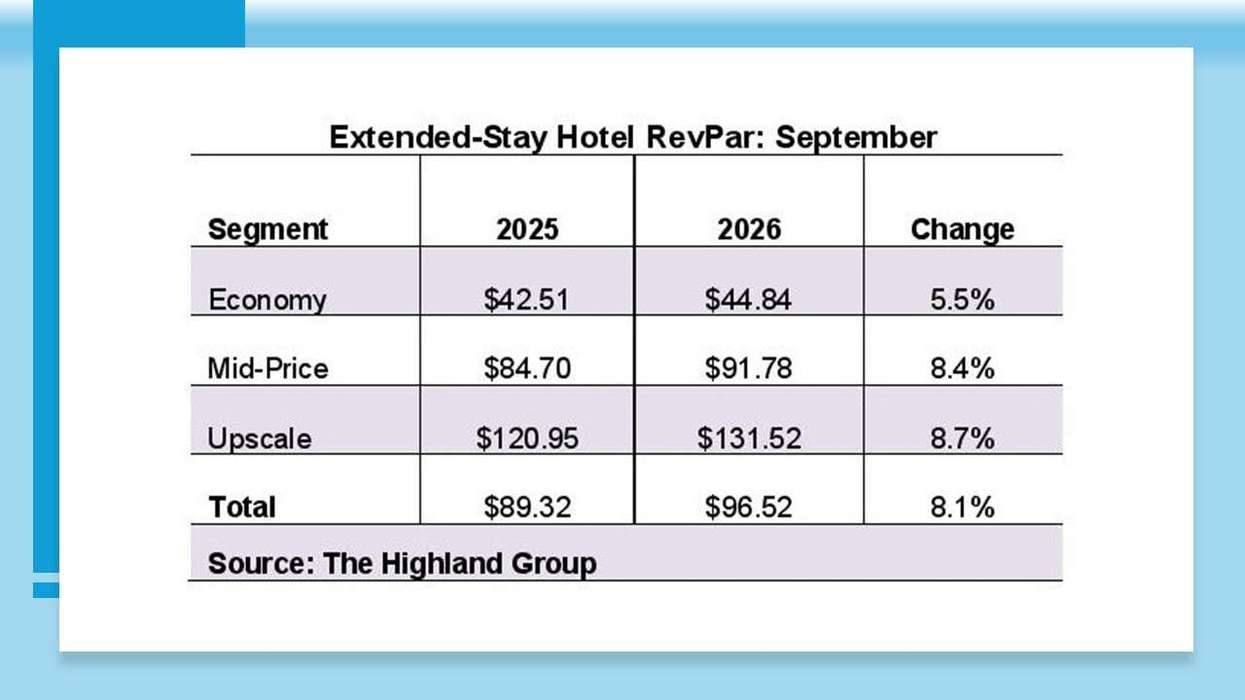
RevPAR rose 8.1 percent to $96.52, the largest gain in three and a half years but below the 8.9 percent increase for comparable hotels. Extended-stay RevPAR rose 5.5 percent in economy, 8.4 percent in mid-price and 8.7 percent in upscale. Each trailed STR/CoStar’s figures for all hotels in those classes: 7.6 percent, 10.3 percent and 10.1 percent, respectively.
Occupancy, ADR and RevPAR each rose for the eighth consecutive month.
Supply growth remains below average
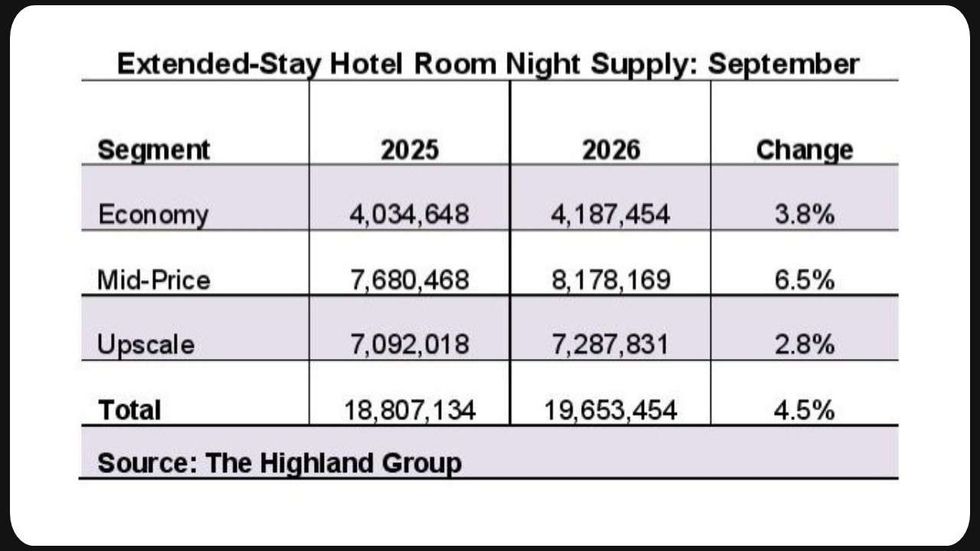 Extended-stay supply growth is expected to remain below average in 2026.Data source: The Highland Group
Extended-stay room nights available rose 4.5 percent to 19.65 million. Mid-price supply grew 6.5 percent, economy 3.8 percent and upscale 2.8 percent.
Supply growth rose above 5 percent in the second half of 2025 but has stayed below that level every month this year, averaging 4.6 percent over the first nine months. Annual supply growth ranged from 2.1 percent to 4 percent over the past three years. Both measures are below the long-term annual average.
With fewer extended-stay rooms under construction, Highland Group expects full-year 2026 supply growth to remain below the long-term average.
In August, extended-stay demand rose 5.3 percent and room revenue 7.7 percent, while occupancy reached 77.8 percent, 12.3 percentage points above comparable hotel classes, according to the group’s August report. Demand growth exceeded supply growth for the seventh consecutive month.