
Skip to content

Search

Latest Stories

CoStar: U.S. hotels demonstrate mixed trends in accordance with seasonal patterns

Minneapolis achieved a 19.1 percent YOY surge in occupancy to 74.4 percent

CoStar: U.S. hotels demonstrate mixed trends in accordance with seasonal patterns

U.S. HOTEL PERFORMANCE maintained a mixed trend compared to the previous week, in line with ongoing seasonal patterns, according to CoStar. However, there were positive year-over-year comparisons, signaling signs of recovery.

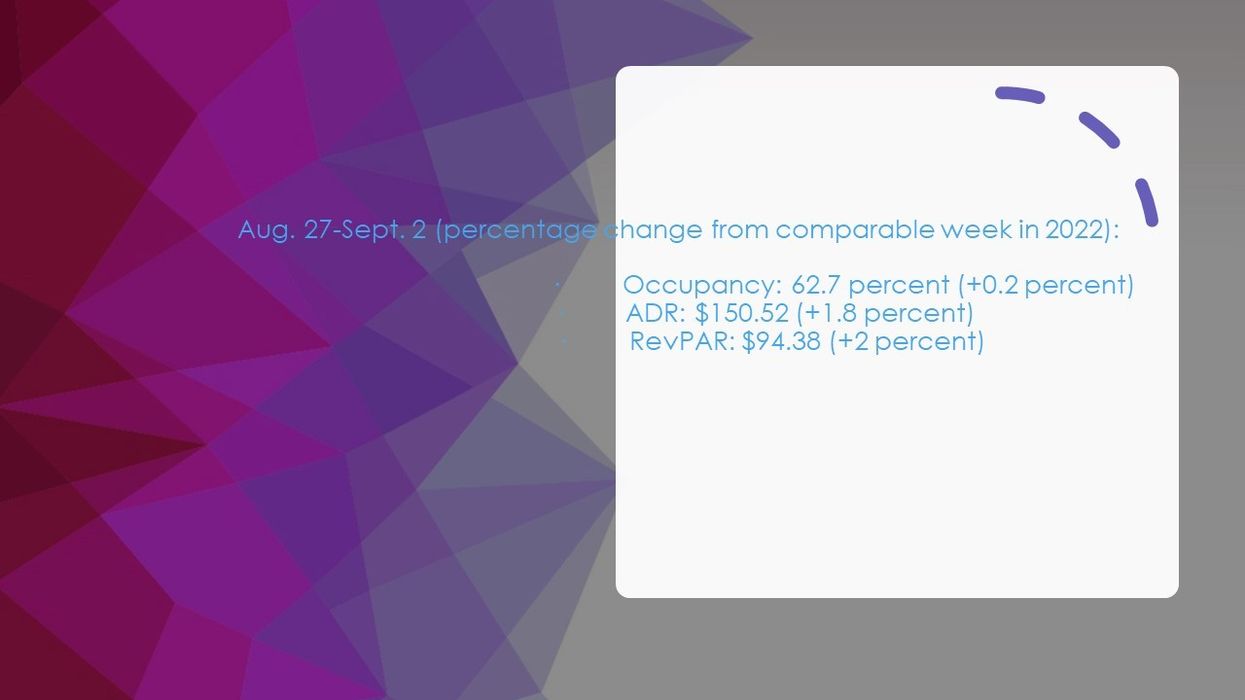
Occupancy was 62.7 percent for the week ending Sept. 2, down from the prior week's 65 percent but it showed a 0.2 percent increase compared to 2022, part of the seasonal pattern. ADR stood at $150.52, a slight drop from the previous week's $150.23, though it displayed a 1.8 percent growth compared to the same period last year. RevPAR was $94.38, lower than the prior week's $97.62, yet it still indicated a 2 percent rise from 2022.


Among the top 25 markets, Minneapolis recorded significant year-over-year gains in occupancy, surging 19.1 percent to hit 74.4 percent, while RevPAR increased by 26.7 percent, reaching $101.06.

Las Vegas posted the highest rise in ADR, increasing by 9 percent to $181.61. It also experienced the second-largest growth in occupancy, up by 15.9 percent to reach 74.4 percent, and RevPAR increased by 26.3 percent to $135.07.

New Orleans experienced the steepest RevPAR decline, dropping by 17.2 percent to $61.20.

More for you

Trump policies took center stage in 2025
Photo by Win McNamee/Getty Images

Trump policies took center stage in 2025

Summary:

  • Policy shifts and trade tensions shaped the U.S. hospitality industry.
  • A congressional deadlock triggered a federal shutdown from Oct. 1 to Nov. 12.
  • Visa limitations and the immigration crackdown dampened international travel.

THE U.S. HOSPITALITY industry navigated a year of policy shifts, leadership changes, trade tensions and reflection. From Washington’s decisions affecting travel and tourism to industry gatherings and the loss of influential figures, these stories dominated conversation and shaped the sector.

Policy uncertainty took center stage as Washington ground to a halt. A congressional deadlock over healthcare subsidies and spending priorities triggered a federal government shutdown that began on Oct. 1 and lasted until Nov. 12. The U.S. Travel Association warned the shutdown could cost the travel economy up to $1 billion per week, citing disruptions at federal agencies and the Transportation Security Administration. Industry leaders said prolonged gridlock would further strain hotels already facing rising costs and workforce challenges.

Keep ReadingShow less