
AS THE HOSPITALITY industry continues to struggle with a labor shortage, hotel owners and operators must address any issue that affects employee retention. According to a recent survey from communications technology company Relay, that includes updating the walkie-talkie radios they use on the job.
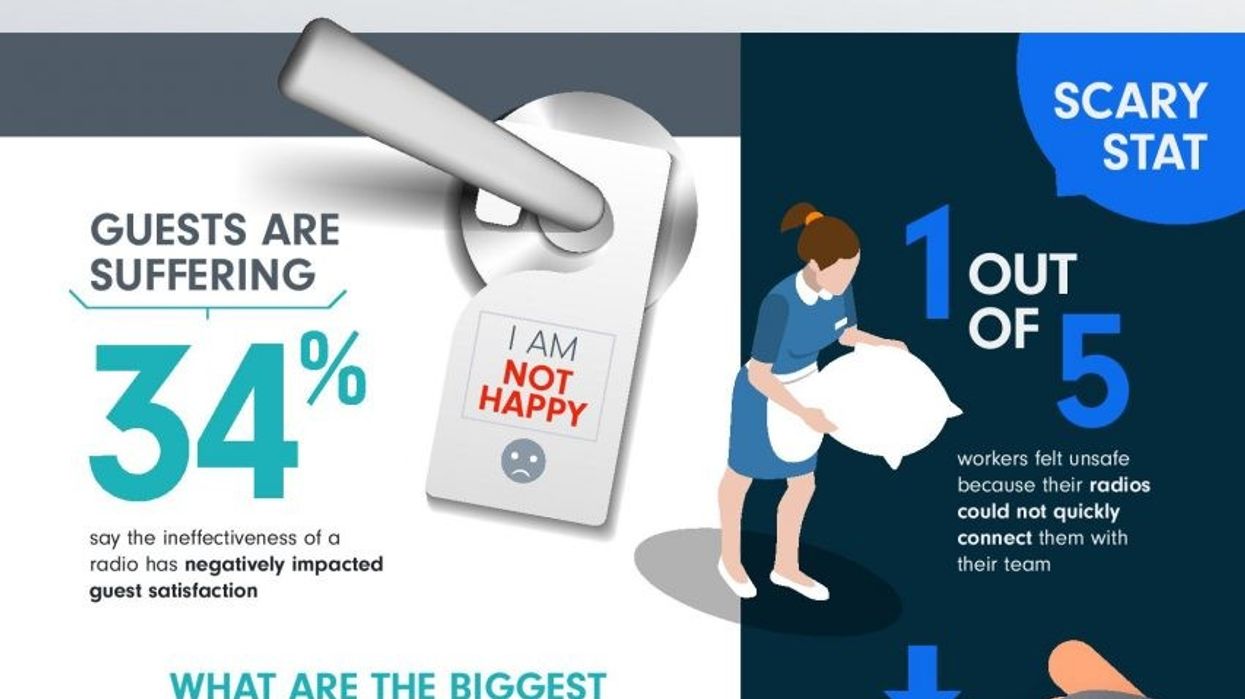
Relay’s survey of 250 U.S. hospitality employees found that one in five felt unsafe at work because of faulty radios that failed to connect quickly, were out of range or did not connect to the right channel. More than 70 percent have resorted to using personal smartphones on-the-job because of radio malfunctions. Close to 50 percent of respondents would consider quitting their jobs for better, safer workplace communication technology.
“It’s become clear that traditional radios often cause more operational problems than they solve,” said Chris Chuang, CEO of Relay. “Increasingly though, innovative workplace technology is gaining greater appeal as a driving factor of retention, and it’s essential that these employees can perform their responsibilities, safely and without any shortcuts.”
Additional findings from the survey include:
- Almost 40 percent of employees have had an operational issue or guest request take too long because of failure to connect effectively over traditional radios.
- More than a third of employees have admitted that guest satisfaction scores have suffered because of slow response times over faulty radios.
- Nearly 90 percent of employees stated they would feel better if their current employer updated their radios to something more reliable and capable of increasing guest satisfaction.
Relay’s products include voice-first technology for workers on the move throughout the hotel using a mobile app and desktop dashboard. It also recently launched a panic-button feature on its products to maintain on-the-job safety and facilities management as an increased number of state and local panic button mandates come to pass.
Another communications technology company, React Mobile, suggested in an article released last year that panic buttons, which allow an employee in trouble from a guest or other person to summon help quickly, would help improve employee retention for hotels. Making the technology available to workers improves employee contentment, the article said.