
- Marriott tests first net-zero energy hotel.
- Runs fully on electricity, no gas lines.
- Energy efficiency is top ESG priority.
SUGAR HOUSE HOTEL, a Tribute Portfolio hotel, opened in Winooski, Vermont, as Marriott International’s first property worldwide designed to achieve all-electric, net-zero energy operations and LEED Platinum certification. The 115-room hotel runs entirely on electricity, using geothermal wells and rooftop solar panels.
The project tests whether a branded hotel, including its commercial kitchen, can operate without gas lines or fuel tanks, Marriott said in a statement. For owners, investors and developers, it offers a working model as energy costs and lender requirements push energy performance into investment decisions.
 Mindful design and sustainable practices can create more meaningful guest experiences, said Peggy Roe, Marriott's executive vice president and chief customer officer.Photo courtesy of Peggy Roe/LinkedIn
“What I love about Sugar House Hotel is how a sense of care is reflected in the experience itself, from the thoughtful design and materials to the way the hotel uses energy,” said Peggy Roe, Marriott executive vice president and chief customer officer. “It’s a wonderful example of how being mindful of our impact can be part of creating an even more meaningful stay for our guests.”
Rooftop solar panels generate about one-third of the building’s energy needs, the statement said. A geothermal well system provides heating and cooling and supports hot-water production, while water-efficient fixtures, such as low-flow showerheads, reduce water use.
The hotel will offer eight electric-vehicle charging stations and an all-electric Volkswagen shuttle serving Patrick Leahy Burlington International Airport and downtown Burlington. Reclaimed timbers from Vermont’s North Hero drawbridge are used in the Treetops bar and elevator lobby tables.
Nedde Real Estate and Lodging Capital Partners developed the hotel and Fathom Companies operates it.
Doug Nedde, principal of Nedde Real Estate, said the goal was to create a building “not just in Vermont, but of Vermont.”
Local design and amenities
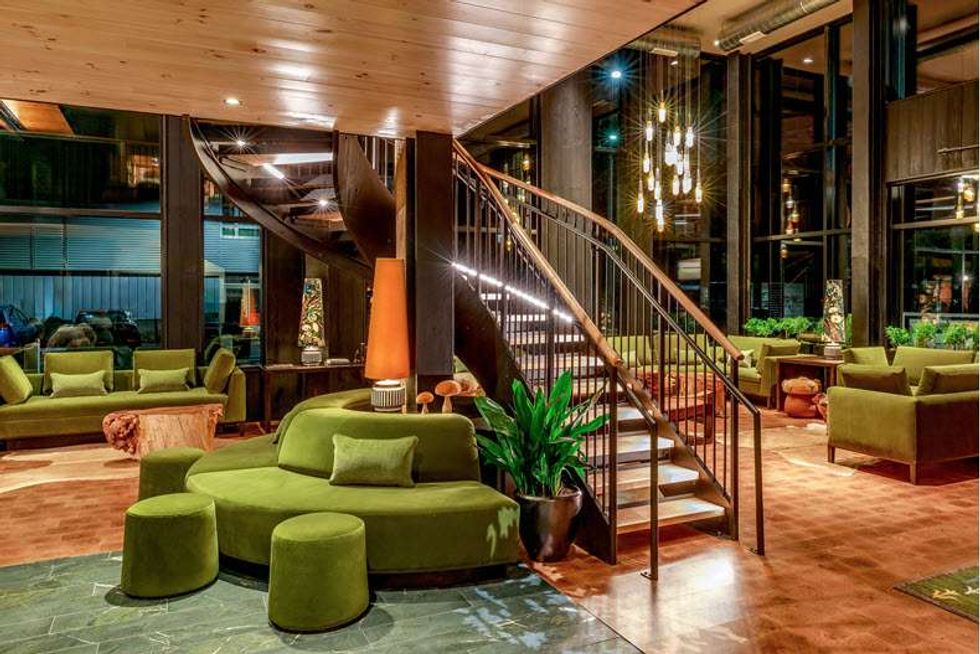 Hotel blends Vermont's maple heritage with its riverside setting and downtown location.Photo credit: Marriott International
Sugar House is the first hotel in the mill city of Winooski. Its design draws on Vermont’s maple sugarhouse traditions and local makers under the concept “nature out back, city out front.” The property sits beside a 104-acre nature preserve and the Winooski River, near Winooski’s downtown circle.
A living roof tops the porte-cochère. Guests check in at a make-your-own maple creemee station, and the central lounge features a 20,000-pound Green Mountain Schist boulder hearth and a 20-foot indoor maple tree with a spiral staircase to a mezzanine library.
Each guestroom is named for a Vermont sugarhouse and features timber-paneled walls, custom glass-blown sconces and works by local makers, Marriott said.
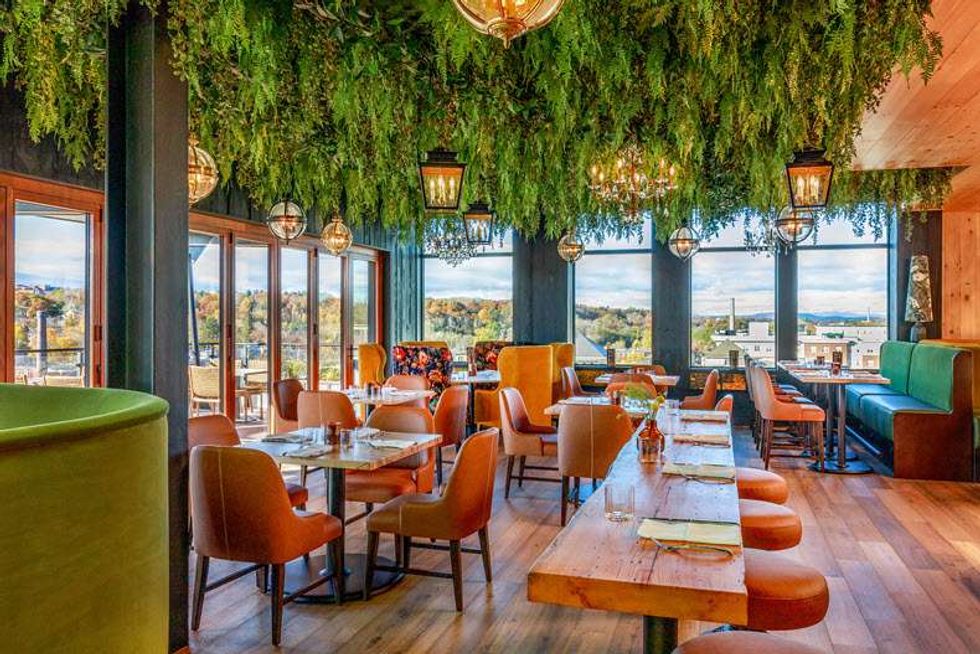
Treetops Restaurant serves seasonal cuisine with an outdoor terrace. MOSS Café + Bar, beneath the lobby maple tree, serves coffee, locally baked maple pastries, deli fare, small bites and seasonal cocktails throughout the day.
A 180-foot wooden bridge links the hotel to a 1.2-mile loop trail through Winooski Gorge Natural Area and the Salmon Hole fly-fishing waters. Planned programming includes wellness sessions, guided naturalist walks and artisan workshops with local partners.
Energy performance enters underwriting
 Banks increasingly factor ESG into lending decisions, making compliance essential for securing financing.Photo credit: Marriott International
The Energy & Environment Alliance’s February 2025 report, “How Important is ESG in Hospitality Investment Decisions?”, which focuses on the European market, is based on interviews with investors responsible for more than $360 billion in hotel assets. It found that energy efficiency is investors’ primary ESG focus, driven by rising energy costs and regulatory pressure.
The report also found that banks are incorporating ESG into financing terms, and that addressing these issues matters more for access to finance than for better commercial terms. For owners, that means energy design can affect refinancing and exit options, not only utility bills. Hotels built without fossil-fuel systems may avoid retrofit costs as standards tighten, though they can require more capital up front.
Other companies are moving the same way. Radisson Hotel Group aims to have 100 hotels reach net-zero status by 2030, Asian Hospitality reported, and pitches the program to owners as a way to future-proof their properties. Whether Sugar House reaches its net-zero and LEED Platinum targets will show if Marriott and its owners can repeat the model.