
- Hotel profit growth faces rising cost pressure.
- Labor hours fell while compensation costs increased.
- Managers use technology to track daily operations.
Hotel teams also use several systems to manage daily work and share information between properties and corporate offices. Tasks include checking financial records, tracking staff hours and reviewing reports. Automation can handle some of these tasks, while employees focus on problems that need their attention.
Hotel profit growth faces cost pressure
CoStar and Tourism Economics expect U.S. hotel gross operating profit per available room to grow 1 percent in 2027. This follows a 2026 performance that was better than most forecasts. STR data cited in the Otelier paper shows GOPPAR was about 10 percent higher than in 2019 before adjusting for inflation, but about 20 percent lower after inflation.
“So, in real terms, GOPPAR has indeed declined,” said Jan Freitag, CoStar’s national director of hospitality analytics. “Just because your top line is growing above inflation doesn’t say a whole lot about what’s going on in the middle of the P&L.”
A CBRE analysis of about 2,600 hotels, cited by Otelier, found that hours worked at the typical U.S. hotel fell 7.4 percent from 2019, while compensation increased 22.1 percent. It also found that 91 percent of hotel organizations still use some manual reporting.
Amanda Hite, STR president, said expenses are expected to increase faster than the rate of inflation in both 2026 and 2027.
Automating daily work
Accounting is one area where hotels can use automation. Night audits, which close a hotel's daily financial records, are often handled by employees working overnight. Mistakes can place revenue in the wrong account and require accounting teams to correct them later.
Tasks that can be automated include preparing reports, digital sign-offs and storing documents. MCR Hotels uses automation to improve night audit reporting, while Aimbridge Hospitality uses its labor insight & forecasting tool to compare staffing levels with demand.
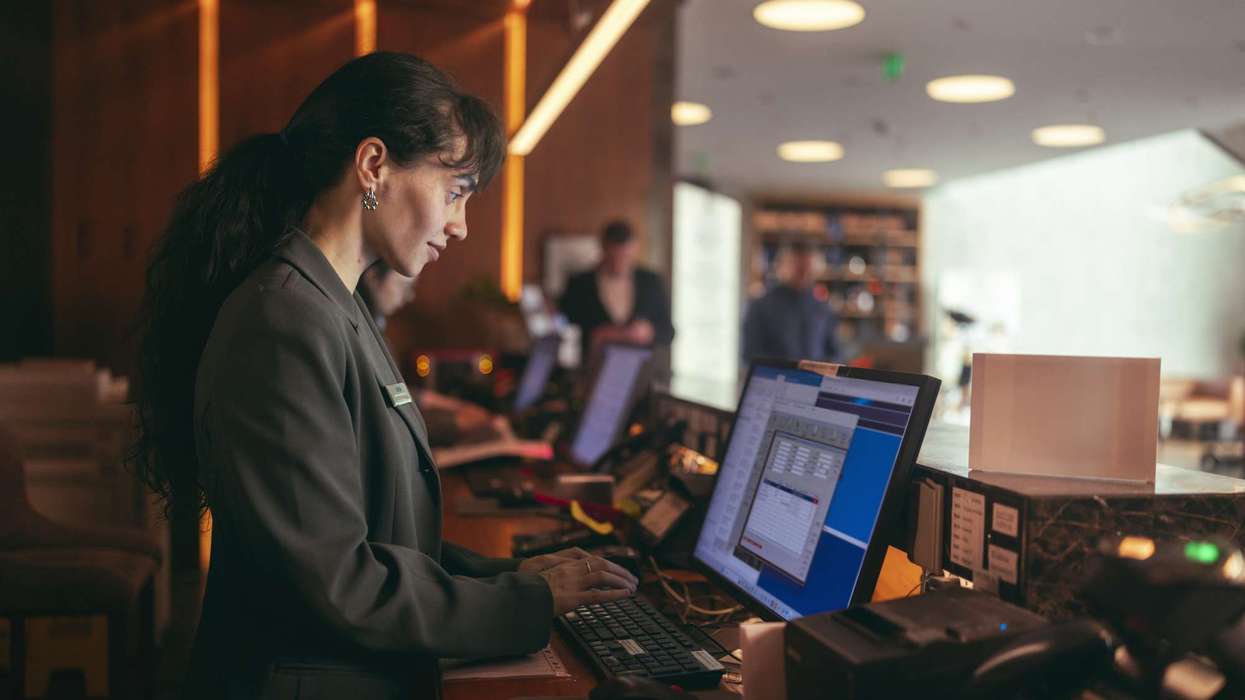
 Hotels use automation to simplify accounting and daily reporting.Photo credit: iStock
Kyle McCaig, MCR vice president of technology operations, questioned the practice of relying on inexperienced overnight employees to complete night audits.
Otelier's 2026 Hotel Operations Index found that 27 percent of operators use more than seven platforms. It also found that 27 percent spend more than 11 hours a week combining and checking data, while only 11 percent have a fully connected technology system.
Other tasks that can be automated include matching payments with bank deposits, posting daily income records and finding errors in online travel agency commissions. This allows accounting teams to check problems instead of handling every payment and record by hand.
Helping managers decide
Hotel general managers handle reports, approvals and paperwork along with their daily duties. Instead of sending managers large daily reports, hotels can use alerts to point out issues that need attention. This can help managers focus on the problems that need action.
 Hotels use technology to flag issues and guide staff decisions.Photo credit: iStock
Hotel finance and commercial teams also use dashboards to check business results. Technology can help identify possible problems and suggest what needs to be done, rather than only showing past results.
Todd Wood, vice president of technology in the Americas at Mandarin Oriental Hotel Group, said technology should provide recommendations rather than just display data.
Automated systems can find staffing gaps, differences in revenue records and errors in online travel agency commissions. They can send these issues to the right employees or handle routine tasks under set rules. Employees would still make decisions that need human judgment and check any problems.
A separate report by NYU, RateGain and HEDNA found that more than 80 percent of hotel commercial teams spend one to two days a week preparing reports manually. More than half of hotels use or are adopting generative AI, but fewer than 10 percent have cut manual work by more than 30 percent.