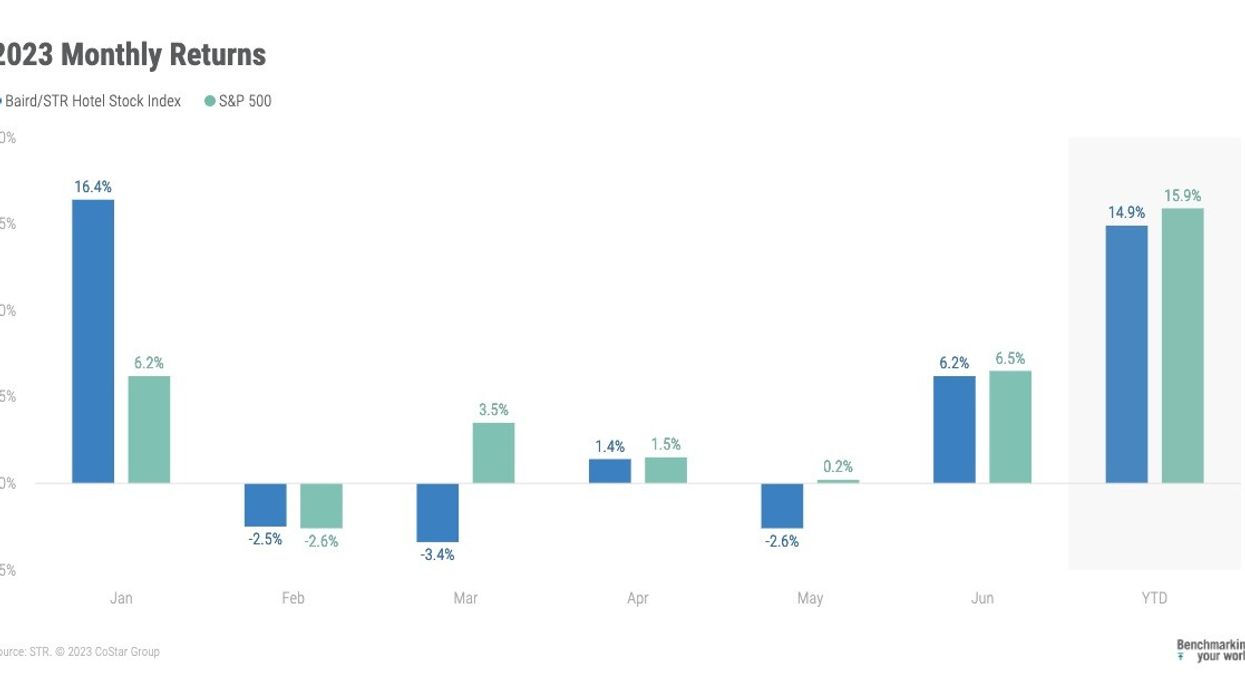

THE BAIRD/STR Hotel Stock Index rose 6.2 percent in June, reaching a level of 5,615, according to STR. Economists with both agencies say this is a sign the chances of recession this year is lower.
“Hotel stocks extended their year-to-date gains in June as the broader market moved higher on fading recession fears,” said Michael Bellisario, senior hotel research analyst and director at Baird. “Macroeconomic concerns have continued to subside, but recently normalizing leisure travel patterns domestically have weighed on the hotel REITs’ relative performance, particularly compared to the global hotel brands that are still benefitting from recovering international markets and cross-border demand.”
During May, the Hotel Stock Index witnessed a 2.6 percent decline, reaching a level of 5,287.
“U.S. hotel room demand fell 0.3 percent in the second quarter, a result of a calendar shift in April along with flat year-over-year comparisons in May and June,” said Amanda Hite, STR president. “While concerning, we believe the recent demand trends signal a return to industry normalcy as the traveler mix, market blend and day-of-week levels stabilize. Conversely, RevPAR grew 2.5 percent in the second quarter, slightly below our expectations, while up 8.7 percent year to date, which is ahead of our full-year forecast.”
In June, the Baird/STR hotel stock Index trailed the S&P 500, which rose 6.5 percent, but surpassed the MSCI US REIT Index, which rose 4.3 percent. The hotel brand sub-index surged by 7.4 percent in May, reaching 10,545, while the Hotel REIT sub-index experienced a growth of 1.8 percent, totaling 1,072.