
- SBA bars green card holders and other non-U.S. citizens from 7(a) loans.
- Indian immigrants likely to be hit hardest by the SBA’s revision.
- Democratic leaders call the move an attack on immigrant entrepreneurship.
THE SMALL BUSINESS Administration is barring green card holders and other non-U.S. citizens from its main lending program, reinforcing the Trump administration’s “America First” agenda. Starting March 1, only U.S. citizens or nationals with a principal residence in the U.S. or its territories will be eligible for the 7(a) program.
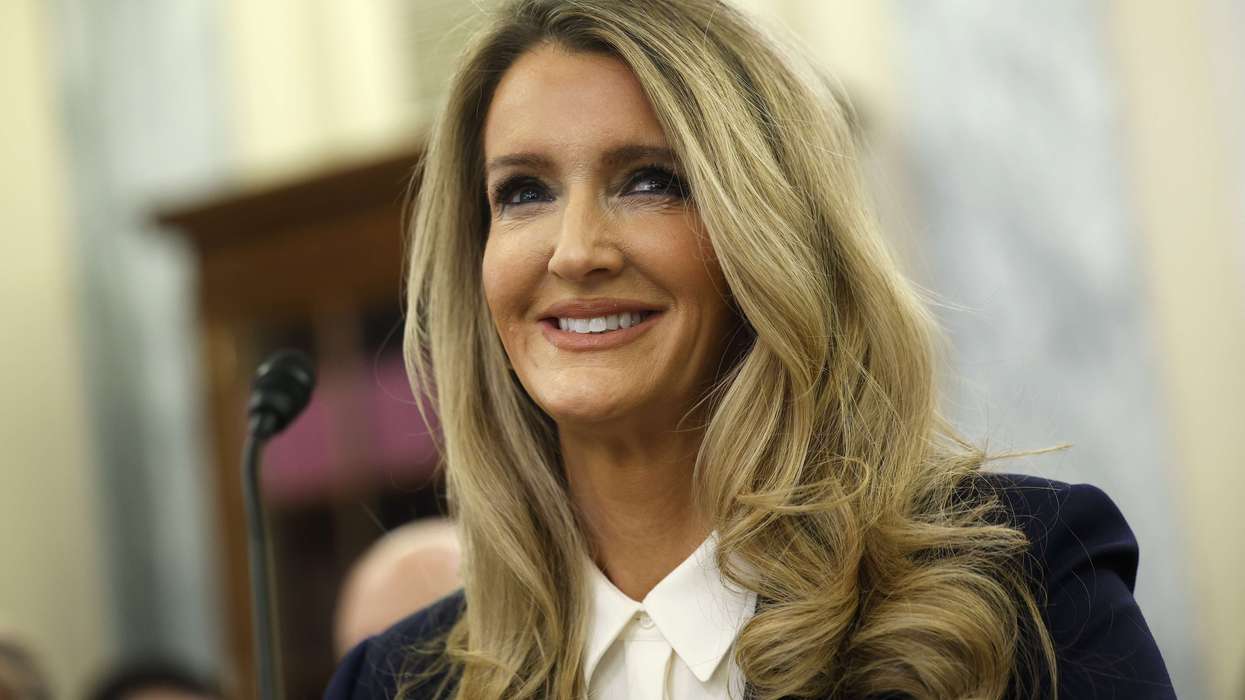
“SBA is requiring that all direct and indirect owners of a small business applicant be U.S. Citizens or U.S. Nationals with their principal residence in the United States, its territories or possessions,” said SBA Administrator Kelly Loeffler in the policy notice.
According to Title 13 of the CFR, a small business applicant must:
- Be an operating business (except for loans to Eligible Passive Companies)
- Be organized for profit
- Be located in the U.S.
- Be small under the size requirements of part 121 (including affiliates); see subpart H for 504 loans
- Demonstrate a need for the desired credit
Immigrants from India are likely to be heavily affected by the SBA’s revision of SOP 50 10 8 guidance on businesses owned by non-U.S. citizens, as India is the largest source of migrants worldwide. U.S. Citizenship and Immigration Services data show India was the second-largest source of green card recipients in fiscal year 2024.
Most hotel properties in the U.S. are owned and operated by Indian entrepreneurs. AAHOA represents nearly 20,000 hoteliers and more than 36,000 member-owned hotels employing over 1 million people, forming a significant part of the U.S. economy, according to Oxford Economics.
Among the top five countries of birth for people naturalizing in 2024, Mexico led with 13.1 percent of all naturalizations, followed by India, 6.1 percent; the Philippines, 5 percent, the Dominican Republic, 4.9 percent and Vietnam, 4.1 percent, the USCIS report said.
A 2022 report by the National Foundation for American Policy found Indian American-owned companies generate $150 billion in revenue and employ over 800,000 people nationwide, India Weekly reported.
‘Protecting American against invasion’ theory
Under a December SBA notice, up to 5 percent of a small business could be owned by foreign nationals or legal permanent residents and still qualify for a loan. The SBA said the new rules follow President Trump’s January 2025 executive order, “Protecting the American People Against Invasion,” which the White House said aimed to enforce U.S. immigration laws and ensure public safety.
Maggie Clemmons, an SBA spokesperson, said the agency’s guidance is intended to create jobs for U.S. citizens.
"The Trump SBA is committed to driving economic growth and job creation for American citizens – which is why effective March 1, the agency will no longer guarantee loans for small businesses owned by foreign nationals," she said in a statement to CBS News. "Across every program, the SBA is ensuring that every taxpayer dollar entrusted to this agency goes to support U.S. job creators and innovators."
Clemmons said the SBA expects to be able to offer small businesses more capital in the near future if legislation passes to increase its loan limits.
However, democratic leaders condemned the revision. Senate Small Business Committee Ranking Member Edward Markey and House Small Business Committee Ranking Member Nydia Velázquez called the policy an attack on immigrant entrepreneurship.
The 7(a) program provides loan guarantees to lenders serving small businesses, allowing owners to borrow up to $5 million for working capital, debt refinancing, equipment, or real estate purchases and upgrades. In January, Greg Friedman-led Peachtree Group completed the acquisition of First Western SBLC, which operates as PMC Commercial Trust, a direct lender of SBA loans.
Immigration and deportation policies
The guidance revision comes as the Trump administration continues its immigration and deportation policies. The new notice rescinds Procedural Notice 5000-872050, which updated SOP 50 10 8 on citizenship and residency requirements for applicants.
Under the now-revoked December 2025 notice, a borrower could have up to 5 percent ownership by foreign nationals, U.S. citizens, U.S. nationals, or LPRs with a principal residence outside the U.S., its territories, or possessions, including Aliens with Conditional LPR status. Chinese nationals were specifically excluded from this 5 percent ownership.
Separately, Trump plans to cut tariffs on Indian goods from 25 percent to 18 percent after Prime Minister Narendra Modi agreed to stop buying Russian oil, ending a trade dispute that began in August.