
- Ground stop puts $26 billion at risk.
- 37 percent of leisure flyers less likely to fly.
- 63 percent back air traffic control funding.
MORE THAN A third of U.S. leisure flyers say the Nov. 13 nationwide ground stop has made them less likely to fly in the next year, putting an estimated $26 billion in travel spending at risk, according to the U.S. Travel Association. For hotels in airport and fly-in markets, the finding points to demand risk tied to a system owners cannot control.
In a Morning Consult survey of 2,200 U.S. adults commissioned by U.S. Travel and conducted Nov. 16 to 17, 37 percent of leisure flyers said the ground stop made them somewhat or a lot less likely to fly for vacation in the next 12 months. Among business flyers, 31 percent said they were somewhat or a lot less likely to fly for work, while 63 percent of Americans supported additional congressional funding to modernize air traffic control.
 USTA President and CEO Geoff Freeman warned that aviation disruptions erode traveler confidence, discouraging bookings and harming the broader economy.Photo credit: USTA
“America’s aviation system remains the safest in the world. But Friday’s ground stop showed travelers a system that is becoming less reliable. When Americans stop trusting the air travel system to run reliably, they stop booking trips, and the damage cascades through the American economy,” said Geoff Freeman, USTA’s president and CEO.
Trips and spending at risk
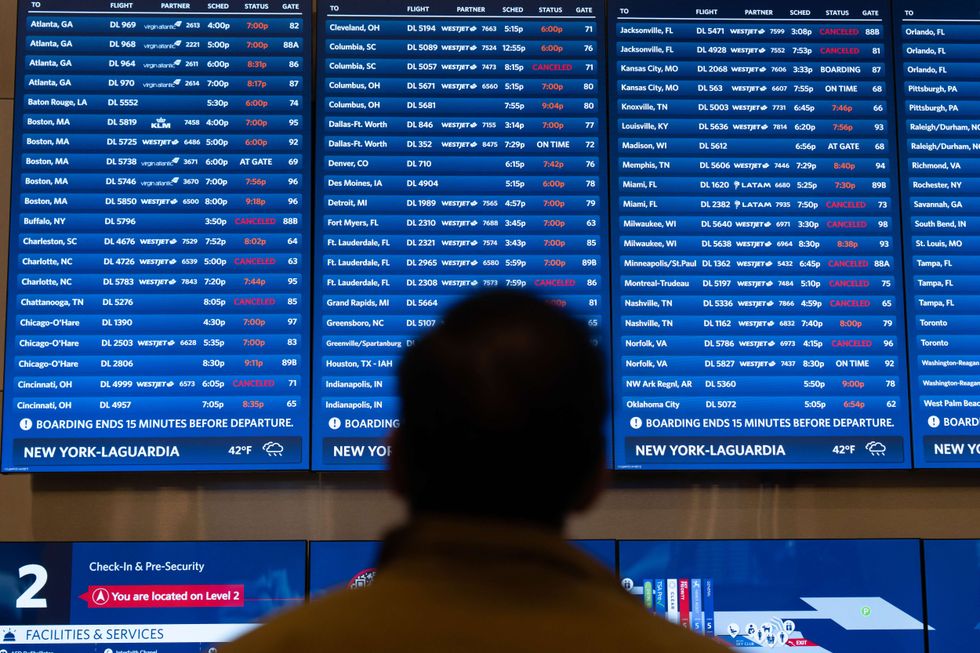 USTA warned potential trip cancellations could jeopardize $26 billion in travel spending, threatening businesses across the tourism sector. Photo by Adam Gray/Getty Images
USTA estimated that if one-third of leisure and business travelers skip one trip in 2027, air trips would fall by about 21 million, putting $26 billion in travel spending at risk. The association said survey responses reflect stated likelihood to fly, not confirmed cancellations or an economic forecast.
USTA, which represents the $1.3 trillion travel industry, said the losses would extend to hotels, restaurants, ground transportation, attractions and small businesses that depend on travelers. Hotels near airports and in destinations reached mainly by air carry the most exposure, while the business-flyer finding points to risk in corporate demand that supports midweek occupancy and rates.
The FAA halted departures nationwide for more than four hours on Nov. 13 after a communications failure hit all 22 of its Air Route Traffic Control Centers. More than 3,200 flights were canceled and more than 10,000 delayed by that evening. It was the second nationwide halt of U.S. departures since the Sept. 11 attacks.
A separate YouGov poll found 31 percent of Americans less likely to fly after the ground stop, while 45 percent said it had affected their confidence in the safety and reliability of U.S. air travel a great deal or a fair amount. Only 7 percent planned to fly for Thanksgiving, against 19 percent planning to drive.
Funding and reliability
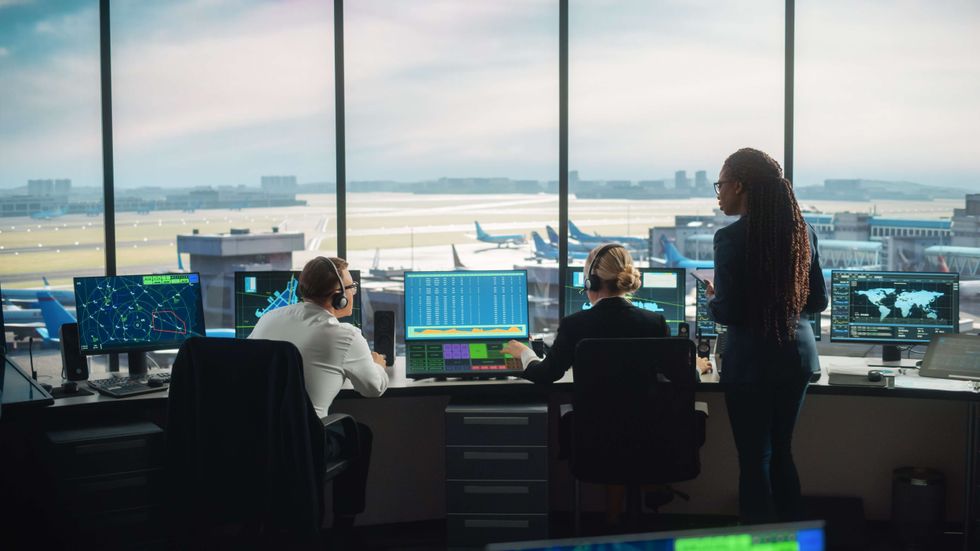 The association urged modernization, citing bipartisan funding support, but said Congress’s $12.5 billion commitment falls short of completing upgrades.Photo credit: iStock
Freeman said government shutdowns and a lack of funding from Congress are eroding Americans’ confidence in the aviation system.
“The warning alarms are blaring. Congress can’t afford to wait until lost confidence becomes lasting economic damage,” he said.
USTA said outdated technology is reducing the system’s reliability and called for greater upfront investment to expand capacity and restore operational reliability. Transportation Secretary Sean Duffy blamed old hardware overloaded with data, though the precise cause remains under investigation.
Support for more funding crosses party lines, with 76 percent of Republicans, 64 percent of Democrats and 53 percent of independents in favor, according to the survey. Congress has committed $12.5 billion to air traffic control modernization, which U.S. Travel called an important down payment but not enough to finish the job.
The White House and the Transportation Department have asked Congress for another $30.1 billion. For owners, investors and developers, the funding outcome and holiday air traffic will show whether lost confidence turns into lost bookings, a risk to weigh in 2027 budgets and underwriting for airport-dependent hotels.