
- BRICS adopted tourism declaration.
- It covers AI, skills, investment, data and travel.
- India held talks with Brazil, Iran, South Africa and UAE.
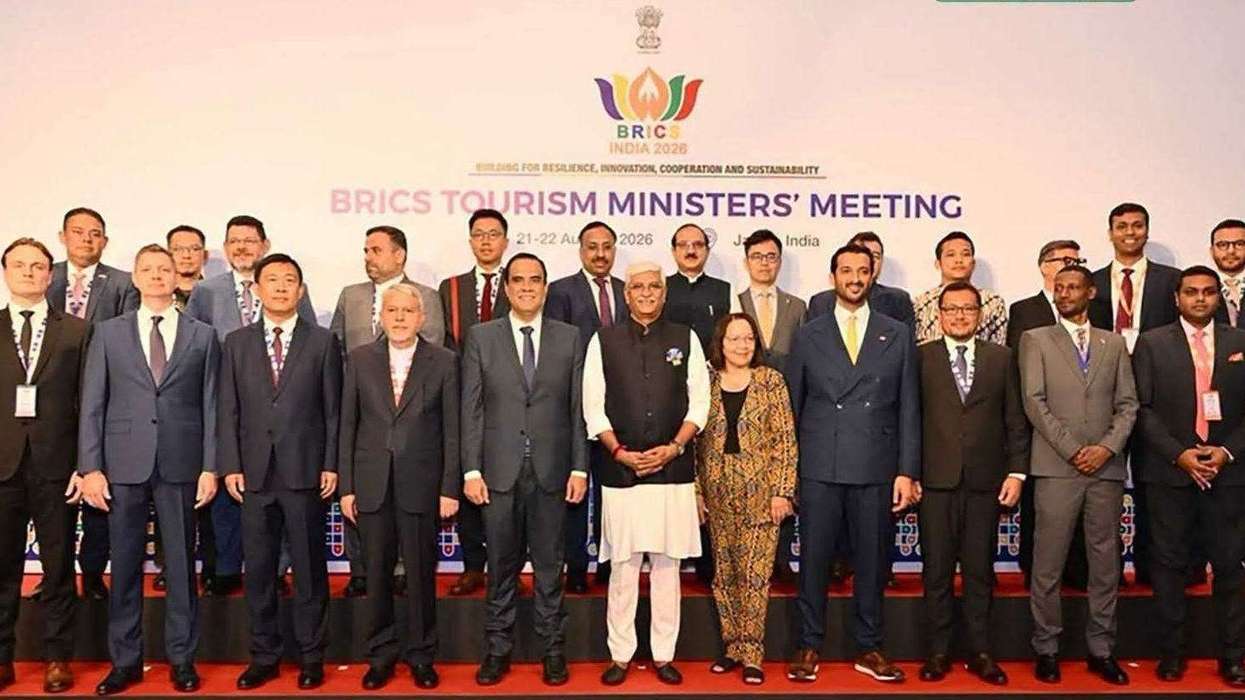
BRICS TOURISM MINISTERS adopted the Jaipur Declaration on Aug. 21 to strengthen cooperation among member countries. It covers artificial intelligence, sustainable tourism, skills, investment, data exchange and travel facilitation.
The declaration followed a BRICS Tourism Working Group meeting under India’s chairship. The group focused on four priorities: AI and tourism, sustainable and responsible tourism, skills and capacity building, and tourism exchanges and travel facilitation.
“Tourism ultimately connects people. It creates opportunities for communities, enables cultural exchange and allows citizens of our countries to understand one another beyond the formal relationships between governments,” said Gajendra Singh Shekhawat, India’s minister for culture and tourism.
The declaration supports cooperation on tourism planning, destination management, visitor services, multilingual communication and travel facilitation, including responsible use of AI and digital technologies. It also covers sustainable tourism, heritage protection, investment and infrastructure, tourism products, workforce training, industry-academia partnerships, tourism data, best-practice exchanges and people-to-people ties.
India’s BRICS tourism track was held under the theme “Building for Resilience, Innovation, Cooperation and Sustainability.” Nine BRICS members participated, with tourism ministers from Brazil, Iran, South Africa and the United Arab Emirates and heads of delegation from China, Ethiopia, Indonesia and Russia.
Shekhawat said tourism can extend economic activity beyond major centers to towns, villages and remote regions. He said the sector creates opportunities for hotels, homestays, taxi operators, guides, artisans, weavers, farmers, entrepreneurs and families.
India held bilateral meetings with Brazil, Iran, South Africa and the United Arab Emirates on the sidelines to advance tourism cooperation. The Indian delegation included Tourism Secretary Bhuvnesh Kumar and Joint Secretary Harikishore S., among other officials.
In January, the Reserve Bank of India proposed linking BRICS countries’ digital currencies to speed up cross-border trade and tourism payments, Reuters reported. The proposal could reduce reliance on the U.S. dollar.