
- Trump plans to cut tariffs on Indian goods from 25 to 18 percent.
- AAHOA said the move advances U.S.–India economic ties.
- India agreed to cut tariffs on U.S. goods to zero and remove non-tariff barriers.
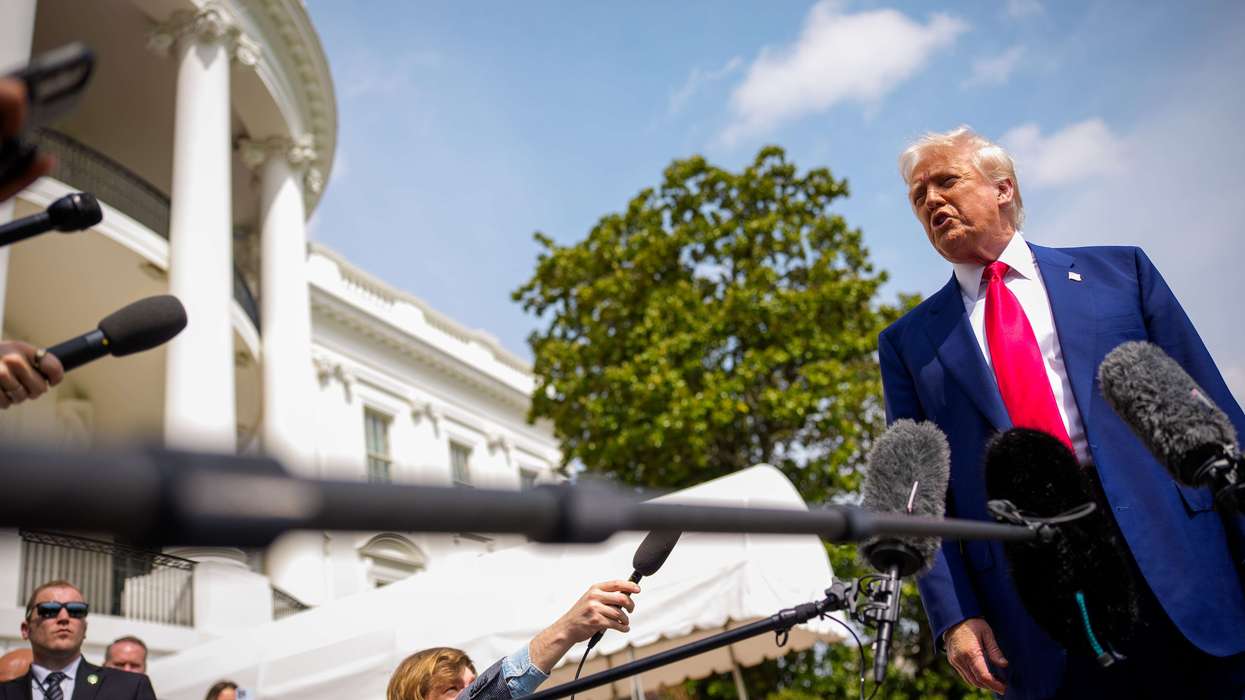
PRESIDENT DONALD TRUMP plans to cut tariffs on Indian goods from 25 percent to 18 percent after Prime Minister Narendra Modi agreed to stop buying Russian oil. The leaders spoke Monday, ending the trade dispute that began in August.
Trump said in a social media post that he spoke Monday morning with Modi, who agreed to replace Russian crude imports with oil from Venezuela and the U.S.
“Out of friendship and respect for Prime Minister Modi, and as per his request, effective immediately, we agreed to a trade deal between the U.S. and India, whereby the U.S. will charge a reduced reciprocal tariff, lowering it from 25 percent to 18 percent,” Trump wrote on Truth Social.
The move follows months of Trump urging India to reduce its reliance on Russian crude, according to CNN Business. The country has been importing about 1.5 million barrels of Russian oil a day, even months after Trump imposed tariffs on Indian goods, CNN reported, citing a global trade data provider. Trump’s 50 percent tariff on Indian goods took effect on Aug. 27, while Modi urged citizens to follow the “Vocal for Local” campaign.
"Wonderful to speak with my dear friend President Trump today,” Modi wrote on X. “Delighted that Made in India products will now have a reduced tariff of 18 percent. Big thanks to President Trump on behalf of the 1.4 billion people of India for this wonderful announcement. When two large economies and the world’s largest democracies work together, it benefits our people and unlocks immense opportunities for mutually beneficial cooperation. President Trump’s leadership is vital for global peace, stability, and prosperity. India fully supports his efforts for peace. I look forward to working closely with him to take our partnership to unprecedented heights."
AAHOA’s reflection
AAHOA called the agreement a major step in bilateral trade, reducing reciprocal tariffs and expanding engagement. The association said the announcement follows direct talks between Trump and Modi and signals renewed U.S.–India economic ties.
"This agreement between the United States and India is a geoeconomic breakthrough that strengthens two democracies while reshaping global trade," said Kamalesh "KP" Patel, AAHOA chairman. "When barriers fall between markets representing nearly one-quarter of the world's population, investment accelerates, travel expands and small business owners, including hotel operators, gain the confidence to grow, hire and build lasting prosperity."
Laura Lee Blake, AAHOA president and CEO, said that with the U.S. and India generating nearly $30 trillion in economic output, the deal is a key moment for global commerce.
"Lower tariffs do not just move products,” she said. “They unlock momentum for tourism, hospitality and the entrepreneurs who depend on strong international partnerships."
Deal faces ‘hard reality’
There are doubts that Venezuela will provide enough oil to satisfy the needs of India, the world's third-largest oil importer, according to Reuters. The country’s oil exports jumped to about 800,000 barrels per day in January from 498,000 bpd in December, after Trump overthrew its strongman leader, Nicholas Maduro.
However, Venezuelan production remains limited at around 900,000 bpd and will take months, if not years, to recover. Furthermore, Venezuela’s heavy sulfurous crude oil, which is harder to refine, was previously only attractive to Asian nations because American sanctions led to deep discounts, Reuters said.
“Unless Venezuela sharply ramps up its output to the point that U.S. refiners cannot absorb the excess volumes, leading Venezuelan producers to offer larger discounts, Asia will likely remain a marginal market for Caracas,” Reuters Energy Columnist said in the article. “India is also unlikely to be a major buyer of U.S. oil anytime soon. The country's price-sensitive buyers purchased an average of only 320,000 bpd of U.S. oil last year, the equivalent of around $7.5 billion. Significantly increasing that appears unfeasible due to higher freight costs and the reality that the U.S. government has limited power over market dynamics.”
‘Greatest friend’
Trump, calling Modi “one of my greatest friends,” said India also agreed to cut tariffs on U.S. goods to zero and remove unspecified non-tariff barriers. He, however, did not specify which barriers, which often include taxes on U.S. services or value-added taxes on goods.
“They will likewise move forward to reduce their tariffs and non-tariff barriers against the U.S., to zero,” the president wrote. “The prime minister also committed to ‘buy American,’ at a much higher level, in addition to over $500 billion of U.S. energy, technology, agriculture, coal, and other products. Our relationship with India will be even stronger going forward. Prime Minister Modi and I are two people that get things done, something that cannot be said for most. Thank you for your attention to this matter!”
A White House spokesperson told CNN the additional tariff will be removed and the reciprocal tariff reduced.
Although India is not one of the U.S.’ largest trading partners, the tariff reduction could have an impact, according to CNN. The U.S. imported $95.5 billion in goods from India through November 2025, or 3 percent of total imports and exported $42 billion in goods there, according to the U.S. Census Bureau.
Top U.S. imports from India last year included computers and other electronics, pharmaceuticals, apparel and chemicals. Jewelry prices in the U.S. have risen in recent months partly due to tariffs on India. India’s top imports from the United States were oil, gas, aircraft and aircraft parts.
Beyond goods, U.S. companies have grown more reliant on India, CNN reported. Companies including American Express, JPMorgan Chase, Microsoft and Google have expanded operations there, hiring workers locally instead of sponsoring U.S. visas and opening new offices.
In December, two separate U.S. delegations, led by Allison Hooker, Under Secretary of State for Political Affairs and Deputy U.S. Trade Rep. Rick Switzer, visited New Delhi to meet Indian officials and discuss bilateral ties as a trade deal remains unresolved.