
U.S. HOTEL PERFORMANCE in the first week of May continued to register mixed results from the previous week, according to STR. However, the year-over-year performance increased similarly to last week.
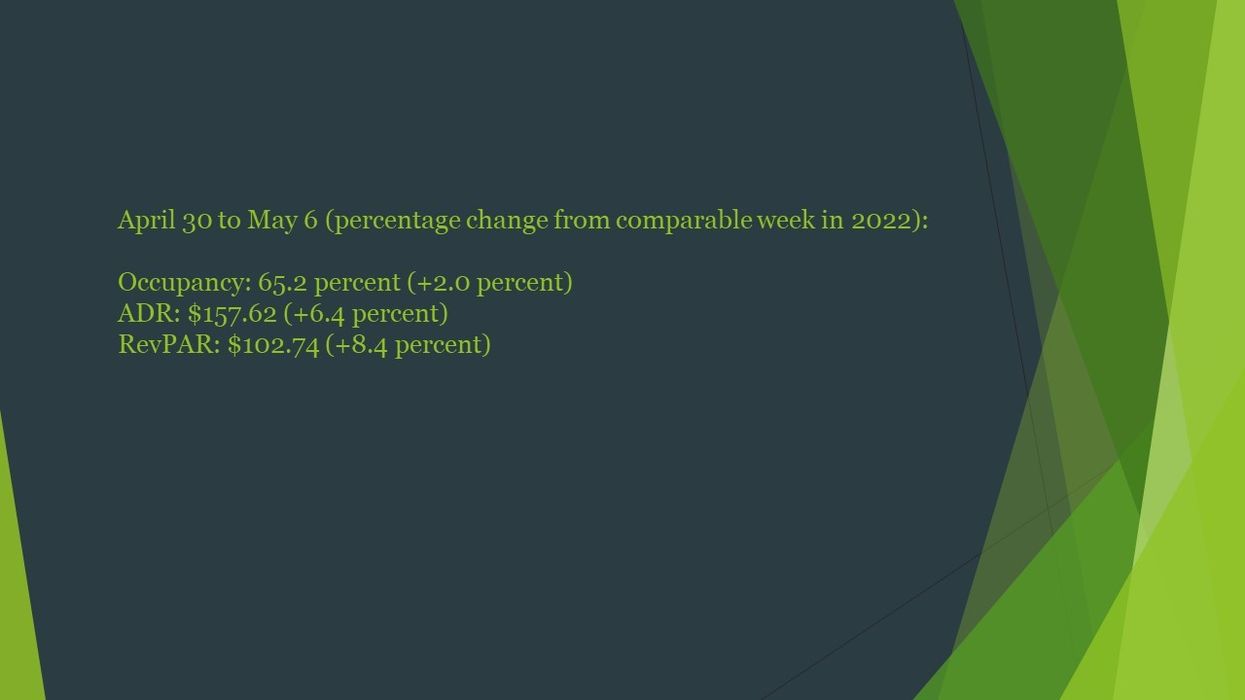
Occupancy came in at 65.2 percent for the week ending May 6, down from 66.6 percent the week before and increased 2 percent over the comparable week in 2022. ADR was $157.62, up from $156.14, and increased 6.4 percent from 2022. RevPAR stood at $102.74 in the last week, declined from $104.01 percent the week before and rose 8.4 percent against the same period in 2022.
Among the Top 25 Markets, Chicago posted the highest year-over-year increase in occupancy in the first week of the month, up 14.7 percent to 67.7 percent and RevPAR rose 36.2 percent to $116.98.
Of note, New York City (85.1 percent) and Oahu Island (80.2 percent) were the only two markets to report occupancy above 80 percent. Meanwhile, New York’s occupancy stood at 87.8 percent last week.
Helped by Taylor Swift’s Eras Tour, Nashville reported the largest increase in ADR, up 27.9 percent to $227.79 and the second-highest jump in RevPAR, rose 33.2 percent to $174.20.
The only RevPAR declines were reported in Miami, down 9.9 percent to $197.12 and San Francisco, declined 2.4 percent to $141.18.