Summary:
- Americans enter 2026 cautious about international travel, according to YouGov.
- Global travel next year will be driven by affordability rather than desire.
- International travelers see the U.S. as worse value for money across all markets.
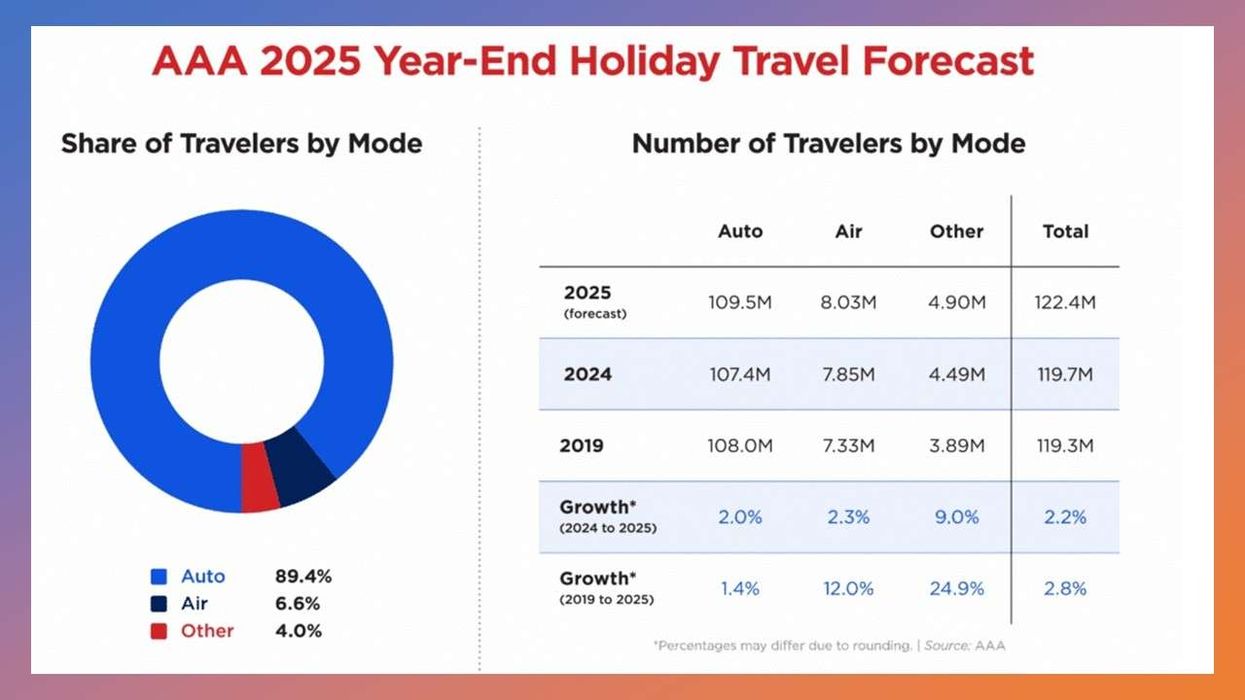
AMERICANS ARE ENTERING 2026 more cautious about international travel, with 60 percent never traveling overseas for leisure, according to a YouGov report. Global travel next year will be shaped by affordability rather than desire as economic pressures rise.
YouGov’s “US International Traveler Outlook 2026” found that Americans prioritize value for money over wanderlust, influencing where they go, how far in advance they book and what they cut when budgets tighten. Travel providers, airlines and destinations can expect a more value-driven traveler in 2026, one who weighs every dollar against the experience.
“Americans’ appetite for international travel hasn’t disappeared; it has simply become more selective,” said Kenton Barello, YouGov America’s vice president. “Travelers are scrutinizing value more closely, stretching budgets further and adjusting plans based on cost, whether that means going off-peak, choosing alternative accommodations, or substituting domestic trips. Brands that clearly communicate value without compromising experience will be best positioned in 2026.”
Even among Americans who travel internationally, momentum has slowed, the report found. Around 43 percent traveled abroad less over the past year, with the pullback strongest among Gen Xers and Baby Boomers, half of whom report traveling less. Economic uncertainty, cited by 28 percent, rising travel costs, cited by 18 percent and personal factors are key contributors, reflecting an environment where discretionary travel is more closely scrutinized.
Among higher-income Americans, the share who never travel abroad drops to 24 percent, highlighting income-based differences in global mobility, the report said. International travel frequency is declining, with 40 percent going abroad less this year. The pullback is sharper among Gen X and Boomers, at 50 percent, driven by personal factors, economic uncertainty and rising travel costs.
Cost pressures are reshaping decisions, with 43 percent of international travelers saying rising costs affected their plans, most often in transport, dining and accommodations, the study said. Around 41 percent say higher prices in 2026 would lead them to take fewer trips or switch to domestic destinations, while 25 percent of higher-income travelers plan to maintain international travel compared with 8 percent of lower-income travelers.
Value perceptions are also declining, with most major international destinations now seen as offering worse value than last year, YouGov said. Among European destinations, negative perceptions are highest for the UK at 29 percent versus 5 percent seeing better value; France at 28 percent versus 5 percent; Italy at 23 percent versus 6 percent; Germany at 23 percent versus 5 percent and Spain at 22 percent versus 7 percent.
Meanwhile, international travelers view the U.S. as worse value for money across all markets: Australia 41 percent versus 21 percent; Mexico 42 percent versus 21 percent; Spain 37 percent versus 12 percent; Great Britain 43 percent versus 6 percent and Canada 62 percent versus 8 percent.
Separately, A recent Marriott International report found that about 91 percent of Americans plan to travel in 2026, with 49 percent aiming to travel more than in 2025. Around 67 percent say they will prioritize experiences like travel over material purchases.