
Summary:
- India will launch its first bullet train in 2027, Union Railways Minister Ashwini Vaishnaw said.
- The 508-km corridor runs through Gujarat, Dadra and Nagar Haveli, and Maharashtra.
- The corridor will have 12 stations, with Sabarmati as the terminal in Gujarat.
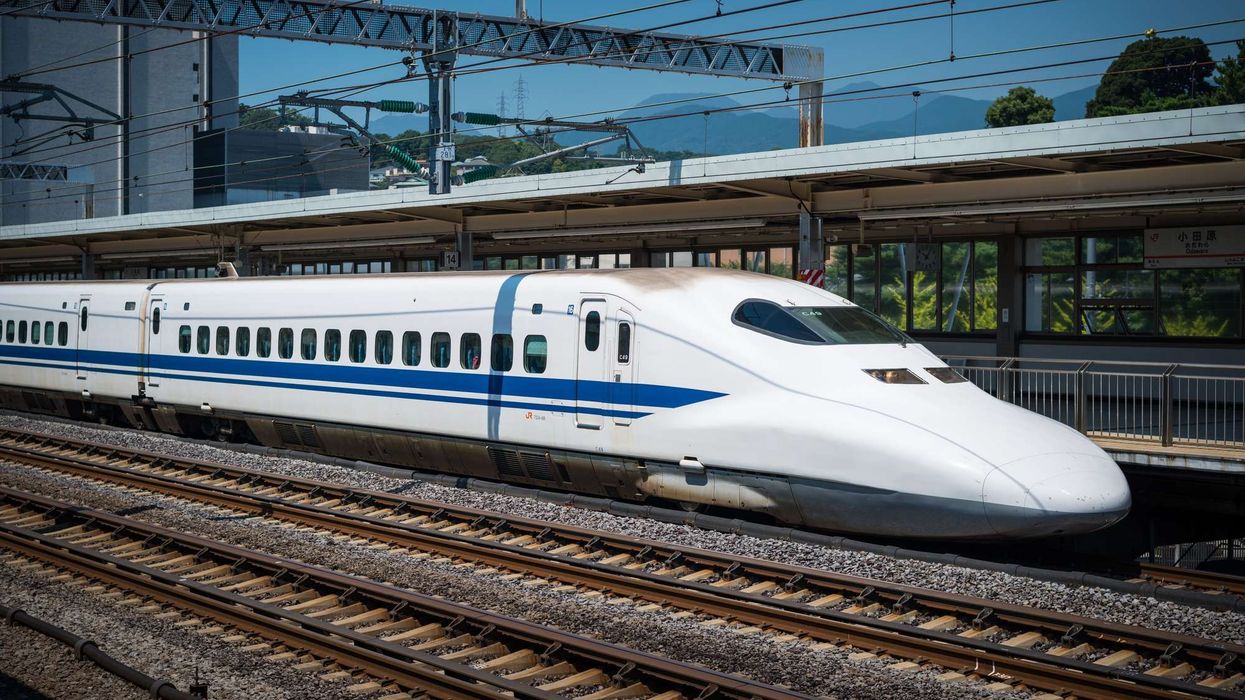
INDIA IS SET to enter a new era of high-speed rail travel with the launch of its first bullet train in August 2027, Union Minister of Railways Ashwini Vaishnaw said. The inaugural run will operate on a section of the Mumbai–Ahmedabad High-Speed Rail Corridor, marking India’s entry into high-speed rail travel.
The corridor is expected to be fully operational by 2029.
Speaking at a cabinet briefing, Vaishnaw said the bullet train project, developed with Japan using Shinkansen technology, will be commissioned in phases, according to ANI. The first section will run between Surat and Bilimora, followed by Vapi–Surat, Vapi–Ahmedabad, Thane–Ahmedabad and finally the full Mumbai–Ahmedabad route.
“The bullet train will be ready on Aug. 15, 2027,” the minister said, underlining the government’s commitment to the revised deadline. “For the bullet train ... you can buy a ticket now itself.”
The Mumbai–Ahmedabad High-Speed Rail Corridor spans 508 kilometers, with 352 km in Gujarat and Dadra and Nagar Haveli and 156 kilometers in Maharashtra. Once operational, trains are expected to run at about 300 km/h, with a design speed of 320 km/h, reducing travel time between Mumbai and Ahmedabad to less than two hours.
According to the National High-Speed Rail Corporation Ltd, construction has progressed across much of the corridor. Mor than 85 percent of the alignment—about 465 kilometers —is on elevated viaducts. More than 326 kilometers of these structures and 17 of 25 river bridges are complete. Tunnelling, stations, electrification and track-bed work are ongoing.
The project’s first mountain tunnel has been completed. Work is also underway on the 21- kilometer underground and undersea tunnel between BKC in Mumbai and Shilphata, with about 5 kilometers finished.
The corridor will have 12 stations, with Sabarmati as the terminal in Gujarat and Bandra Kurla Complex as the terminal in Mumbai. Three depots are under construction. The 47- kilometer Surat–Bilimora section has completed civil works and track-bed preparation.
During his November visit to Gujarat, Prime Minister Narendra Modi reviewed the project and inspected the Surat Bullet Train station, inspired by the city’s diamond industry. Structural work is complete, while interior finishing and passenger amenities are underway.
Vaishnaw said the success of Vande Bharat Express trains has created “a new sense of confidence across the country” for high-speed rail. He also announced the launch of the first Vande Bharat Sleeper train for overnight journeys.
“Requests are now coming in from all over India to run Vande Bharat trains, and almost every MP wants one. With the same comfort, safety and standards, a new overnight journey will begin with the Vande Bharat Sleeper,” he said. The sleeper version is scheduled to be inaugurated in early 2026.
According to officials, the bullet train project advances rail technology, safety and infrastructure, integrating Japanese expertise with Indian engineering. The corridor is expected to boost regional economic activity, employment and urban development, marking the start of high-speed rail travel in the country.
Navi Mumbai International Airport began commercial operations on Dec. 25, expanding Mumbai’s aviation network. NMIA is one of India’s largest greenfield airport projects.