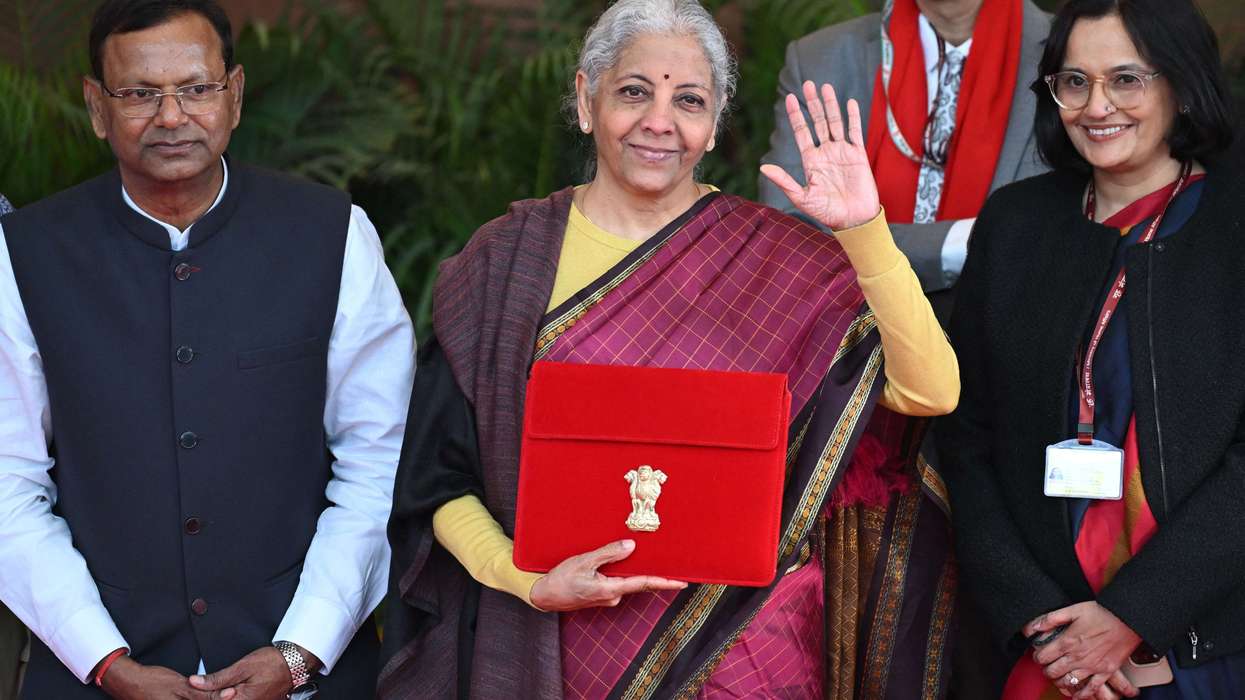

- India’s Union Budget makes tourism a driver of jobs and regional development.
- The Council for Hotel Management becoming the Institute of Hospitality.
- The hospitality industry’s push for infrastructure status remains unmet.
INDIA’S UNION BUDGET 2026–27 makes tourism central to employment, infrastructure and regional development. However, the industry’s long-standing demand for infrastructure status remains unmet.
Finance Minister Nirmala Sitharaman shifted focus from destination promotion to long-term capacity building, combining investments in skills, heritage, digital systems and connectivity with demand-side measures to support global travel and mobility.
“Budget 2026–27 reflects a strong focus on accelerating and sustaining economic growth, with a decisive push on infrastructure, both of which are critical drivers for the tourism sector, where growth is closely linked to these factors,” said K.B. Kachru, Hotel Association of India president and Radisson Hotel Group chairman for south Asia. “The renewed emphasis on the services sector, coupled with recognition of tourism’s potential to generate employment, boost foreign exchange earnings and expand local economies, is encouraging.”
However, he reiterated the need for wider infrastructure recognition for tourism projects and GST rationalisation to improve access to capital and enhance competitiveness.
“HAI remains committed to supporting the government’s goal of expanding the tourism economy to 10 percent of GDP by 2047 and potentially sooner,” he said.
On the demand side, the Budget rationalized Tax Collected at Source on foreign remittances. TCS on overseas tour packages has been reduced to 2 percent, while TCS under the Liberalized Remittance Scheme for education and medical purposes has been cut from 5 percent to 2 percent. The change is expected to ease upfront cash outflows and improve travel sentiment.
Rajesh Magow, FICCI Tourism Committee chair and MakeMyTrip co-founder and group CEO, described the move as a necessary correction.
“The rationalization of TCS on overseas tour packages is a welcome step that addresses upfront liquidity issues for Indian outbound travelers,” he said. “As demand for travel broadens across segments, reducing friction at the planning and payment stage will help sustain momentum.”
Magow also that infrastructure-led investments have already played a critical role in supporting domestic tourism growth.”
Key announcements
A central announcement is the creation of a National Destination Digital Knowledge Grid to document India’s cultural, spiritual and heritage assets. The platform will serve as a unified national repository to support destination planning, visitor management, interpretation and discoverability while enabling data-driven decision-making by states and local bodies. The initiative is also expected to generate employment for researchers, historians, content creators and technology partners.
The government announced the establishment of the National Institute of Hospitality by upgrading the National Council for Hotel Management and Catering Technology to align hospitality education with industry needs and policy priorities. In parallel, a pilot program will train 10,000 tourist guides across 20 iconic sites through a standardized 12-week hybrid course developed with an Indian Institute of Management.
From a hospitality perspective, Jyotsna Suri, Lalit Suri Hospitality Group CMD and vice chairman of the WTTC India Initiative, said the budget acknowledges tourism’s role in job creation, foreign exchange earnings and local economic development, supported by capability-building measures.
“We welcome the establishment of the National Institute of Hospitality, large-scale guide upskilling and the creation of a National Destination Digital Knowledge Grid, which will strengthen storytelling, enhance the visitor experience and reinforce India’s long-term competitiveness as a global tourism destination,” she said, according to The Economic Times.
Cultural booster
The budget plans to develop 15 archaeological and heritage sites into cultural tourism destinations, including Lothal and Dholavira in Gujarat, Rakhigarhi in Haryana, Adichanallur in Tamil Nadu, Sarnath and Hastinapur in Uttar Pradesh and Leh Palace in Ladakh. The plan includes upgraded visitor infrastructure, walkways, conservation labs, interpretation centers and storytelling tools aligned with international cultural tourism standards.
"By curating 15 iconic archaeological sites and Buddhist circuits as immersive cultural hubs, the government is unlocking the high-yield potential of India’s civilisational assets," said Aalap Bansal, partner, G&PS, Industrial & Infrastructure Development Advisory and Lead—Tourism, Sports and Leisure, KPMG in India. "This isn’t just about footfall; it’s about value capture. Integrating the National Destination Digital Knowledge Grid with infrastructure—such as the Seaplane VGF scheme and sustainable trekking corridors—creates a premium ecosystem. India’s Orange Economy and heritage sectors are becoming significant employment engines for local communities."
Sustainability-linked initiatives include mountain trails in Himachal Pradesh, Uttarakhand, Jammu and Kashmir, Araku Valley in the Eastern Ghats and Podhigai Malai in the Western Ghats. Turtle Trails will be developed along nesting sites in Odisha, Karnataka and Kerala, along with bird-watching trails around Pulikat Lake in Andhra Pradesh and Tamil Nadu. India will also host the first Global Big Cat Summit, bringing together representatives from 95 range countries.
The budget introduces a scheme to develop Buddhist circuits in the Northeast, covering Arunachal Pradesh, Sikkim, Assam, Manipur, Mizoram and Tripura, focusing on temple conservation, connectivity, pilgrim amenities and interpretation infrastructure.
Medical tourism, inland waterways
It proposes establishing five Regional Medical Tourism Hubs in partnership with the private sector. The hubs will integrate hospitals, education and research facilities, AYUSH centers, diagnostics, rehabilitation infrastructure and Medical Value Tourism Facilitation Centers.
Inland waterways and aviation-linked tourism were also addressed. The government plans to establish regional centers of excellence to train manpower along key waterways and raise waterways and coastal shipping’s modal share to 12 percent by 2047. Incentives for indigenized seaplane manufacturing and funding support for seaplane operations aim to improve access to remote destinations.
A Hotelogix report found that India’s mid-scale hotel market could see large brands control up to 80 percent of rooms by 2030, with around 30 percent of Indian mid-scale brands expanding globally.