
Summary:
- The U.S. government cancelled or delayed H-1B visa interviews amid tighter scrutiny.
- Social media profiles of the applicants are being monitored.
- FIIDS has warned that visa restrictions are disrupting U.S. industry.
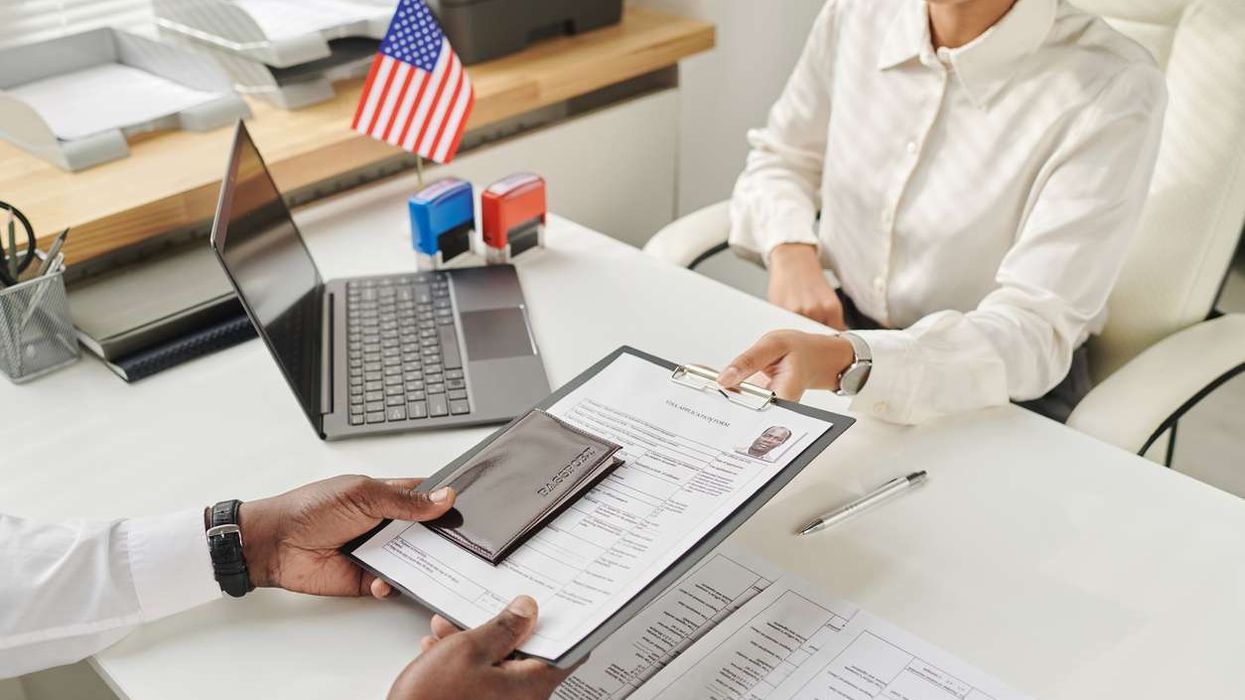
THE U.S. GOVERNMENT tightened scrutiny of non-immigrant visa holders. This has led to delays in visa interviews, restricting where applicants can seek visa stamping and expanding social media vetting.
Thousands of Indians who had returned to India to renew their American work permits are now stranded. Appointments between Dec. 15 and 26 were either abruptly cancelled or rescheduled, according to the Print.
According to U.S. immigration attorney Aparna Dave, the changes have already begun affecting visa applicants across categories, including H-1B, F-1 and J-1 visas.
“My recommendation is if you really don't have to travel, if there is no emergency, it's best to stay put in the U.S.,” Dave told IANS in an interview, warning that international travel now carries heightened risk even for those with valid visas.
Dave said the new rules have effectively ended the long-standing practice of applying for U.S. visa stamps in third countries.
Meanwhile, the U.S. embassy in India, in a statement released Monday, urged “applicants to apply as early as they can and anticipate additional processing time” for H-1B and H-4 visa applications.
The Foundation for India and Indian Diaspora Studies, an Indian American policy organization, has urged the U.S. administration to adopt a more calibrated approach to expanded social media vetting for H-1B and H-4 visa applicants. They warned that widespread cancellations and delays in visa appointments are disrupting U.S. industry and stranding thousands of high-skilled workers abroad, as reported by Siasat.
In its letter, FIIDS noted that Indian professionals account for “70 to 75 percent of approvals,” making them particularly vulnerable to the sudden appointment bottlenecks.
Google informed staff that it plans to significantly scale up its green card sponsorship process in 2026, a move that could bring relief to many H-1B visa holders who have been stuck in uncertainty for the past two years, as reported by India Today. According to an internal December newsletter circulated among employees, Google said it will begin “ramping up” PERM applications next year for those who meet its eligibility criteria.
The U.S. Department of Labor, according to Economic Times, sent a proposal to revise wage rules for the H-1B visa and PERM labor certification programs to the Office of Management and Budget for review.
This marks the first formal step in the federal rulemaking process. If approved, the proposal could raise the minimum wages employers must pay H-1B workers and offer in employment-based permanent residence cases.
Dave also highlighted expanded scrutiny of visa applicants' online presence. “What the government has said is that they have the right to check people's social media,” Dave said. “Everybody's social media is going to be checked.” She said that applicants may be required to make their accounts public.
For Indian nationals and families, she advised caution and restraint. “Maintain a low profile,” Dave said. “Refrain from posting anything on social media, which is political, religious... it's sometimes just not worth it.”
Indians form the largest group of H-1B and F-1 visa holders in the U.S., particularly in technology, healthcare and higher education. In recent years, visa backlogs, security checks and travel disruptions have increasingly affected Indian professionals and students, according to the Economic Times.
Indian-origin U.S. Rep. Raja Krishnamoorthi had recently reintroduced legislation proposing to raise the H-1B visa cap to 130,000. The Halting International Relocation of Employment Act would raise the annual H-1B cap from 65,000 (plus 20,000 for advanced degree holders) to 130,000.